Best Trolling Motor Options for a Canoe in 2026
Answering practical buyer questions: the right trolling motor for a canoe balances weight, thrust, efficiency, and durability. This guide highlights five top picks suited for small boats, kayaks, and canoes, focusing on freshwater use, quiet operation, and reliable mounting. Ideal buyers include casual anglers, weekend paddlers, and anyone needing hands-free propulsion with good maneuverability. Below is a quick product comparison to help you decide at a glance.
| Product | Thrust | Shaft | Best For |
|---|---|---|---|
| Minn Kota Endura C2 Transom-Mount 30 Lb | 30 lb | 30 in | Casual fishing, light tackle setups |
| Newport NV-Series 36lb | 36 lb | 30 in | Smaller boats, portability |
| Newport NV-Series 55lb | 55 lb | 30 in | Better torque for bigger canoes |
| ATAUEFHEY 45lb Saltwater | 45 lb | Not specified | Saltwater-capable, rugged durability |
| Minn Kota Edge Bow-Mount 45 lb | 45 lb | 36 in | Bow-mount precision, foot-pedal control |
Minn Kota Endura C2 Transom-Mount 30 Lb. Trolling Motor
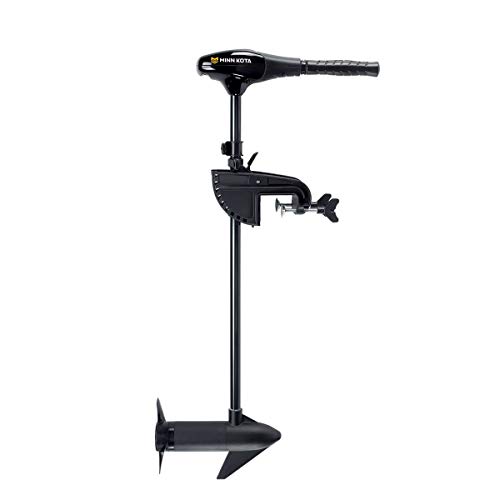
This transom-mount model offers 30 pounds of thrust and a 30-inch shaft, suitable for lightweight canoe setups. Key features include a 6-inch telescoping tiller for comfortable control, a push-to-test battery meter, and a lever-lock bracket for quick angle adjustment. The reinforced composite construction resists flexing and UV damage, while the Power Prop improves performance in vegetation. Best for anglers seeking reliable, simple propulsion on calm to moderate-water outings. Limitations: lower thrust than larger models, so heavier boats or choppier waters may require more power.
Newport NV-Series 36lb Trolling Motor

Designed for kayaks, canoes, and small boats, this 36-pound thrust model combines lightweight operation with saltwater capability. It features a 12V or 24V setup, corrosion-resistant construction, and a two-blade propeller optimized for battery life. Best for lighter craft where efficiency and portability matter most. Caution: higher thrust options may be preferred on larger canoes or breezy days.
Newport NV-Series 55lb Saltwater Transom Motor
This 55-pound thrust model delivers strong force with a 30-inch shaft, LED battery meter, and a 6-inch telescoping tiller for comfortable control. It offers eight speeds (five forward, three reverse), adjustable mount height and direction, and a three-blade propeller for solid low-end torque. Best for larger canoes or demanding conditions where extra power is beneficial. Limitation: heavier setup may reduce battery life on small, lightweight rigs.
ATAUEFHEY 45lb Saltwater Transom Trolling Motor

This 45-pound thrust transom motor emphasizes durability with a pure copper motor and a multi-gear system—five forward gears and two reverse—giving precise speed control. It’s designed for saltwater environments and can be a solid choice for anglers who need reliable performance in varied water conditions. Best for those who prioritize gear options and rugged build. Limitation: data on shaft length is not specified, which may affect mounting on longer-projected canoes.
Minn Kota Edge Bow-Mount With Foot Pedal
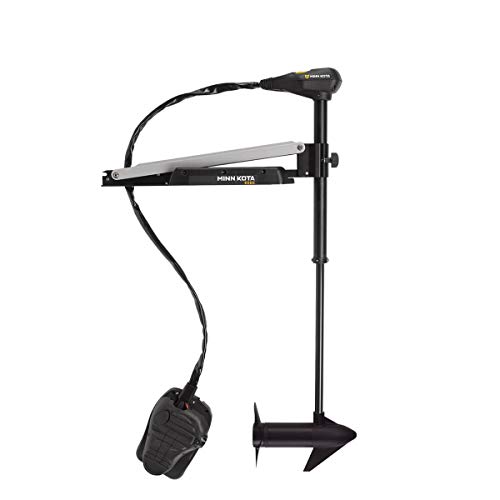
This bow-mount model features a 45-pound thrust and a 36-inch shaft, with a heel-toe/cable-steer foot pedal for precise propulsion control. It includes a latch-and-door bracket for easy stowage and a built-in directional indicator to stay oriented. Best for canoeists who want bow control and reliable steering in calm to moderate conditions. Caution: bow-mount setups can require more mounting space and skill to install securely.
Buying Guide
What matters most when choosing a canoe trolling motor?
- Thrust vs. boat size: Heavier boats need more thrust to move efficiently; smaller canoes often do well with 30–36 lb, while larger or windier days may justify 45–55 lb units.
- Shaft length: A 30-inch shaft suits most canoes; longer shafts help in rough water or high transom installations.
- Mount style: Transom mounts are versatile; bow-mounts offer precise control but require more space and rigging.
- Control features: Telescoping tiller, foot pedals, and battery meters improve handling and monitoring on long trips.
- Durability: Look for corrosion resistance for saltwater use and UV-resistant housings for sun exposure.
- Battery compatibility: Verify voltage (12V vs. 24V) and battery life expectations with your typical trip length.
Quick decision tips
- Choose this if you paddle small, calm-water trips and want easy installation and light weight.
- Choose this if you frequently fish in breezy or choppy water and need extra thrust.
- Avoid this if your canoe is unusually large or heavy and you require higher-end, long-range propulsion.
Frequently Asked Questions
- What is the best trolling motor for a lightweight canoe? — A model with 30–36 lb thrust and a 30-inch shaft is typically ideal for lightweight canoes.
- Do I need a saltwater-rated motor for a freshwater canoe? — Not necessary; saltwater motors are more durable for corrosion-prone environments but freshwater units work fine in lakes and rivers.
- Is a bow-mount better than a transom-mount for canoes? — Bow-mounts offer precise steering but are more complex to install; transom-mounts are simpler and cost-effective for many setups.
- How important is a telescoping tiller? — Helpful for comfort and control over long sessions, especially when you’re standing or moving around the canoe.
- How does battery life affect trolling motor selection? — Higher thrust motors typically draw more power; plan battery capacity to cover your typical trip duration without frequent recharges.
- Can I upgrade a canoe with a motor later? — Yes, most trolling motors are compatible with standard transom or bow mounts and can be added as a retrofit.