Best Rubber Coating for Boats: Durable Waterproof Solutions
Answering the common buyer question: which rubber coating works best on boats to seal, protect, and extend life? This guide highlights top choices tailored for boat owners, marinas, and DIYers tackling hulls, decks, and non-skid surfaces. Each product is selected for marine relevance, ease of use, and flexible performance in wet environments. The table below compares key options to help you choose quickly.
| Product | ||
|---|---|---|
| Flex Seal Liquid (16 oz, Clear) | Liquid rubber coating | Small repairs, leaks, and flexible sealing on decks or hull seams |
| Flex Seal MAX (17 oz, 2-Pack, Clear) | Spray-on rubber sealant | Cracks, holes, and fast, watertight coatings on larger areas |
| Tuff Coat Medium Texture | Water-based non-skid coating | Non-slip boat decks, docks, and high-traffic marine surfaces |
| Flex Seal Liquid (32 oz, Gray) | Liquid rubber coating | Watertight protective coating for larger marine projects |
| Liquid Rubber Deck Coating (Neutral Beige, 1 gal) | Polyurethane deck coating | Durable deck and plywood/wood surfaces with waterproof protection |
Buyer profiles: small boat owners may prefer brush-on liquids for spot repairs; DIY enthusiasts often choose spray or textured options for quick coverage and safety; marinas or frequent boaters may favor durable deck coatings for long-lasting traction. Use this guide to match product strengths with your boat’s surfaces and climate.
Flex Seal Liquid, 16 oz — Clear

Features: Flex Seal Liquid is liquid rubber in a can. It can be brushed, rolled, dipped, or poured on, making it versatile for sealing wet areas. It provides a watertight, flexible rubberized coating that goes on smooth and covers quickly, sealing out water, air and moisture.
Best for: boat owners needing quick, flexible seals on seams, small cracks, hatch rims, or deck joints. The liquid format supports irregular shapes without heavy preparation.
Why selected: its fluid application adapts to curved or complex surfaces common in boats, offering a fast repair option when access is limited. Caution: for submerged or permanently submerged repairs, verify suitability and follow curing guidelines to avoid incomplete sealing.
Flex Seal MAX, 17 oz, 2-Pack — Clear

Features: A spray-on rubber coating that stops leaks instantly. Once dry, it can be painted any color and seeps into cracks and holes, forming a watertight, flexible coating that remains pliable for years.
Best for: larger exterior surfaces or areas requiring rapid sealing, such as hull seams, around fasteners, or roof patches on marine trailers and boats. Caution: spray coatings can overspray; use proper masking for adjacent areas and ensure adequate ventilation during application.
Tuff Coat Medium Texture Non-Skid Coating
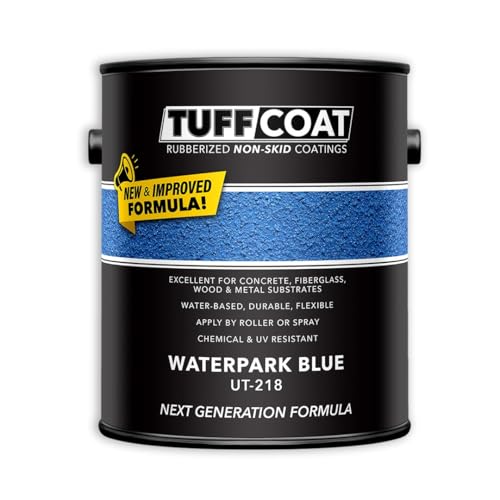
Features: A single-component, flexible, water-based non-skid coating created with cross-linked urethanes, acrylics, co-polymers, and recycled rubber granules. Delivers a durable, slip-resistant finish designed for wet marine environments.
Best for: boat decks, docks, ramps, and other high-traffic areas where slip resistance is critical. Caution: it dries to a textured finish; plan for color and texture consistency across surfaces to achieve uniform traction.
Flex Seal Liquid, 32 oz — Gray

Features: Similar to the 16 oz version, this larger container enables broader coverage for marine projects. It remains a flexible, waterproof coating that seals out water, air, and moisture.
Best for: boat hulls or larger patches where a liquid coating provides efficient coverage and a continuous seal. Caution: larger volumes require careful surface prep to maximize adhesion and curing quality.
Liquid Rubber Deck Coating (Neutral Beige) — 1 Gallon

Features: A polyurethane deck coating designed to outperform traditional paints with 10x strength. Engineered for decks, stairs, and trailers; ideal for wood, concrete, and plywood. Provides durable, waterproof protection with a choice of finish and a typical coverage rate per gallon.
Best for: replacing old deck finishes on boats or installing long-term waterproof protection on exterior wood and plywood surfaces. Caution: surface preparation is key for adhesion; verify the substrate and consider two to three coats for high-traffic areas.
Buying Guide: Key Considerations for Marine Rubber Coatings
- Surface type and area: Determine if you need a liquid sealant for curved surfaces, a spray for quick patches, or a textured non-slip coating for decks.
- Exposure and environment: Consider UV exposure, saltwater spray, and temperature cycles. Durable coatings with flexibility perform better under expansion and contraction.
- Non-slip needs: For decks and marina walkways, prioritize non-skid finishes to reduce slip risk in wet conditions.
- Application method and cure time: Brushing or rolling liquids work well for irregular hull sections; sprays cover large areas quickly but require masking. Cure time affects project timing and boat usage.
- Maintenance and repaint cycles: Some coatings maintain flexibility and resist peeling longer; others may require reapplication after a season or two in harsh climates.
- Transparency vs color options: Clear coatings blend with existing hulls; tinted or gray/beige options can help match decks and trim while hiding wear.
Frequently Asked Questions
- Q: Can these coatings be used underwater or on submerged surfaces?
A: Most consumer rubber coatings are designed for above-water use. Check product specifications and apply only to surfaces exposed to air during application and curing. - Q: Do these coatings require priming?
A: Some projects benefit from a primer or clean surface prep; always follow the manufacturer’s instructions for best adhesion. - Q: Are there safety considerations?
A: Use in well-ventilated areas, wear gloves, and avoid contact with skin and eyes. Follow curing times and disposal guidelines for the product. - Q: How many coats are recommended?
A: Most deck coatings suggest 2-3 coats for durability, while liquids may be applied in multiple thin layers depending on the surface and product. - Q: Can I paint over these coatings?
A: Some coatings accept paint after curing; check if the product allows painting and choose compatible paints or coatings. - Q: Which product is best for a slippery boat deck?
A: A textured non-skid coating like Tuff Coat is ideal for decks requiring high traction in wet conditions.