Best Solar Panels for Yachts: Efficient Off-Grid Power on the Water
Answering the question for marine professionals and recreational sailors: these solar panel kits are designed to keep yachts powered when dockside electricity is scarce. The top picks below fit different needs—from compact 20W setups for small vessels to larger 200W kits for mid-sized yachts. Best for: overnight anchorage users needing reliable trickle charging; sailors with limited roof space; boat owners seeking durable, weather-ready panels.
| Product | Best On | Capacity | Notes |
|---|---|---|---|
| ECO-WORTHY 200W Kit | Mid-size yachts | 200W | High efficiency monocrystalline; durable frame; IP65; 2400Pa wind / 5400Pa snow |
| Voltset 200W 2-Pack | Biggest power on deck | 200W per panel | High efficiency 23–30%; light and easy to mount |
| T0PENS TSQ20W Kit | Small auxiliary systems | 20W | Includes mounting hardware; 24V system compatibility; robust frame |
| SOLPERK 20W Kit + MPPT | Trickle charging & maintenance | 20W | Waterproof; smart MPPT controller; 12V batteries |
| XINPUGUANG 100W Flexible Panel | Curved or irregular surfaces | 100W | Ultra-light, flexible, IP67; folds onto curved surfaces |
ECO-WORTHY 200 Watts Solar Panel Kit
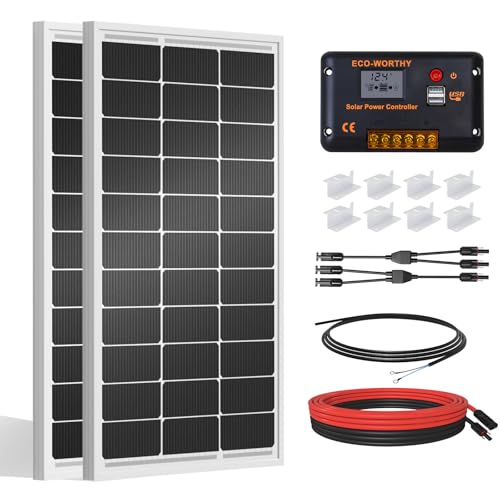
Best for: mid-size yachts and larger cabin setups that need reliable daily output. This kit uses high-performance monocrystalline cells with up to 21.5% higher efficiency in suitable light. It features a corrosion-resistant aluminum frame and is rated to withstand strong wind and snow loads, making it a durable long-term yacht solution. The IP65 junction box adds protection in harsh marine environments.
Why selected: high efficiency, robust construction, and marine-ready durability suit boats with moderate sun exposure and space for a 35.2 by 23.1 by 1.37 inch panel footprint.
Limitations: performance depends on sun angle and weather; ensure proper mounting to maximize shade-free exposure. The included PWM controller is adequate for straightforward battery setups but may be outpaced by higher-end MPPT systems in variable lighting.
Voltset 200W 12V Solar Panels (2-Pack)
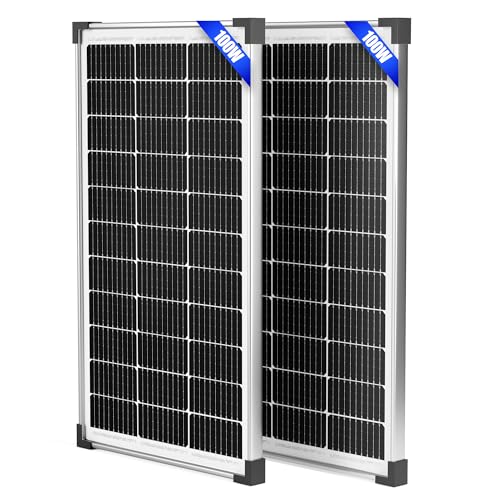
Best for: yachts with ample deck space seeking higher daily energy delivery. Each 100W panel (two-pack total 200W) uses high-efficiency Grade A+ monocrystalline cells with 23–30% conversion efficiency and a 25-year lifespan, offering strong performance under sunny conditions. Lightweight and mounting-friendly with pre-drilled holes for quick installation.
Why selected: high efficiency and long lifespan, plus easy hookup with standard mounting hardware. If space allows, pairing both panels can significantly boost daily output for auxiliary systems or refrigeration on longer trips.
Caution: the 200W total output may be limited by low sun angles; plan the array orientation to maximize midday sun exposure for best results.
TOPENS TSQ20W Solar Panel Kit (20W, 24V)

Best for: yacht gate openers, marine lighting, and small 24V battery systems. This kit uses a 20W 24V monocrystalline panel with corrosion-resistant framing and tempered glass for outdoor use. It includes full mounting hardware with pre-drilled holes for quick DIY setup. Compatible with standard lead-acid, GEL, AGM, and flooded batteries (not lithium-ion).
Why selected: compact, easy to install, and specifically suited for 24V boat applications where space is limited but steady charging is needed. It’s a reliable choice for maintaining small but essential 24V loads on board.
Caution: excludes a charge controller; you’ll need to add one suitable to your battery type and capacity. Not ideal for large energy draws on yachts with big power demands.
SOLPERK Solar Panel Kit 20W With MPPT
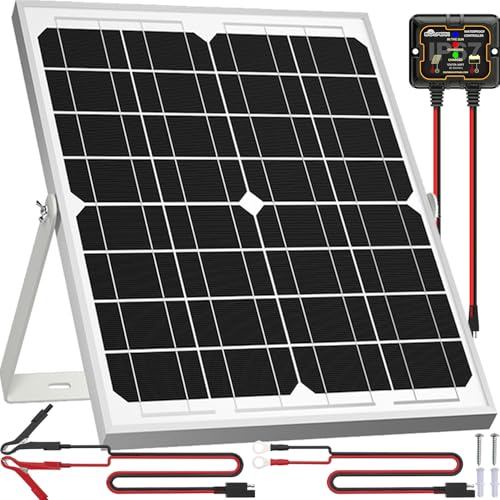
Best for: daily maintenance charging on small boats or as a back-up charger for RVs and yachts with limited roof space. The kit includes a smart MPPT controller and durable 20W panel, designed to optimize charging under various light conditions. The panel is waterproof and resistant to weather exposure for marine environments.
Why selected: MPPT adds efficiency over a standard PWM setup, helping to extract more energy during partial sun. The integrated maintenance charging makes it suitable for keeping 12V battery banks topped up when the yacht isn’t in continuous use.
Caution: 20W is a low-power option; it should be paired with a battery system that’s sized appropriately for your auxiliary loads to avoid undercharging in poor weather.
XINPUGUANG 100W Flexible Panel For Yacht

Best for: yachts with curved or irregular roof surfaces where rigid panels won’t fit. This 100W flexible panel uses high-efficiency 210mm monocrystalline cells and bends up to 260 degrees for installation on RVs, boats, or cabins. It’s IP67 rated and designed to endure heavy snow and high wind loads.
Why selected: the flexible form factor enables installation on curved hulls or cabin tops where rigid panels cannot mount. Lightweight and easy to handle for seasonal setups or retrofits on boats with tight space.
Caution: flexible panels can be more delicate at the edges and may require careful mounting to avoid stress cracks. Ensure compatible wiring and connectors for marine use.
Buying Guide: Key Considerations For Yacht Solar Installations
- System size and power needs: Assess daily energy consumption (in watt-hours) for lights, refrigeration, pumps, and electronics. Choose a kit that comfortably meets or exceeds daily draw with some headroom for cloudy days.
- Panel type and performance: Monocrystalline panels offer higher efficiency in limited space, which is typical on yachts. Flexible panels suit curved decks, while rigid panels are durable and easier to mount and service.
- Durability and marine suitability: Look for corrosion-resistant frames, IP ratings for moisture, and ability to withstand wind and salt spray. Thick glass and robust junction boxes extend lifespan in harsh environments.
- Charge controller choice: PWM controllers are simple and affordable; MPPT controllers extract more energy, especially in variable light. For boats with large battery banks or limited sun, MPPT is usually advantageous.
- Installation and space considerations: Measure roof space or deck mounting areas. Plan for shade-free exposure around midday and account for self-dapping or stacking if needed.
- Battery compatibility: Match panel output to the battery type (lead-acid, AGM, GEL, flooded, Li-ion). Ensure wiring and fuses are sized for the system’s maximum current.
- Maintenance and warranties: Marine-grade equipment often carries longer lifespans. Inspect panels for sea spray exposure and clean them periodically to maintain performance.
Frequently Asked Questions
- Can solar panels power a yacht during long passages?
Yes, solar panels can support essential loads and help maintain battery banks, reducing generator use. Pair with a suitable controller and a well-sized battery system. - Is a 20W panel enough for a yacht?
A 20W panel is best for small auxiliary loads or as a maintenance charger. Larger boats usually require higher wattage or multiple panels for meaningful daily output. - What is the difference between PWM and MPPT controllers?
PWM is simple and inexpensive but less efficient in variable light. MPPT optimizes voltage and current, yielding more energy in diverse sun conditions. - Should I choose flexible or rigid panels for a yacht?
Flexible panels fit curved surfaces more easily; rigid panels are typically more durable and easier to replace. Choose based on deck geometry and mounting options. - Can solar panels work in cloudy conditions?
Yes, but output is reduced. Panels often still generate usable energy, especially when paired with a smart controller and adequate battery storage. - Do I need a battery to use solar on a yacht?
Yes. Solar systems charge batteries that then run onboard electronics. A properly sized battery bank is essential for consistent operation.