Best Marine Fuel Flow Sensors for Accurate in-Boat Readings
Need a reliable marine fuel flow sensor to monitor consumption, optimize engine performance, and detect fuel issues early? This guide highlights five top options. Each product is evaluated for boaters, anglers, and professional captains who want clear data, easy installation, and dependable operation on the water. The top picks cover a mix of flow meters, fuel/water sensors, and compatible systems to fit different vessels and installations. Below is a quick summary table of the selected products to compare at a glance.
| Product | Brand | Type | Key Fit | Notes |
|---|---|---|---|---|
| Garmin GFS 10 Fuel Sensor | Garmin | Fuel Sensor | Small to midboat EFI systems | Standard marine option |
| Lowrance Fuel Flow Sensor w/ 10′ Cable | Lowrance | Fuel Flow Sensor | LMF and HDS units | Long cable for flexible routing |
| Lowrance Fuel Flow Sensor PK | Lowrance | Fuel Flow Sensor | LMF-200, LMF-400, HDS | Includes 10″ cable / T-connector |
| DIGITEN G3/8″ Fuel Flow Meter | DIGITEN | Flow Meter | General fuel lines | 3-12V DC; 1-30 L/min range |
| Quicksilver Water in Fuel Sensor | Quicksilver | Water in Fuel Sensor | Mercury 75-400hp outboards | Outboard-specific compatibility |
Garmin GFS 10 Fuel Sensor
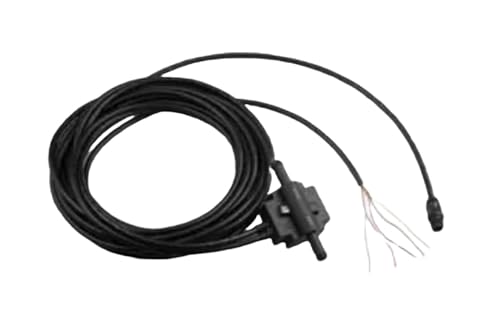
The Garmin GFS 10 Fuel Sensor is designed for marine fuel-flow monitoring with compatible Garmin systems. It is a compact option suitable for small to mid-size boats, offering straightforward installation with included components. Best for boaters who already use Garmin electronics and want seamless data integration.
- Best for Garmin-enabled boats seeking integrated fuel data
- Simple installation with item and manual included
- Useful for basic fuel-flow awareness and trend tracking
Caution: Ensure compatibility with your Garmin display and engine setup before installation. It may require specific adapters or peripherals for full data convergence.
Lowrance Fuel Flow Sensor PK

The Lowrance PK fuel flow sensor includes a 10 ft cable and a T-connector, designed to pair with LMF-200, LMF-400, and HDS units. It’s a versatile choice for boats with existing Lowrance electronics that require reliable real-time fuel data alongside other sensors.
- Best for Lowrance systems needing a longer run and T-connector
- Integrates with LMF-200/400 and HDS family
- Package includes 10 ft cable for flexible routing
Caution: Verify that your vessel’s gauge or display supports Lowrance fuel-flow data and that your wiring path adheres to the provided cable length.
Lowrance Fuel Flow Sensor w/ 10′ Cable

This Lowrance variant emphasizes a longer cable length and a robust sensor build for boats with extended routing paths. It’s better for installations where the sensor needs to sit away from the display or engine bay to minimize vibration exposure and keep wiring tidy.
- Better for long cable routes on larger boats
- Works with compatible Lowrance displays
- Clear data flow for real-time monitoring
Caution: The product listing includes an unusual placeholder in features; confirm the actual specifications and wiring requirements with the seller before purchase.
Maretron Fuel Flow Sensor – 2-100 LPH

The Maretron fuel flow sensor covers a wide flow range (2-100 LPH), making it suitable for moderate to high-demand marine applications. It is compact and part of Maretron’s monitoring ecosystem, which is preferred by crews seeking integrated sensor networks.
- Best for vessels using Maretron monitoring systems
- Wide flow range supports various engine sizes
- Compact form factor fits tight engine rooms
Caution: Confirm compatibility with your existing Maretron network and power supply requirements before installation.
DIGITEN G3/8″ Fuel Flow Meter

The DIGITEN G3/8″ fuel flow meter is a general-purpose flow sensor suitable for hoses, with a 1-30 L/min range and 3-12V DC power. It’s a practical option for custom installations where a compact inline meter is required and wiring is straightforward.
- Best for custom installations on small- to mid-size lines
- Direct wiring with simple power and pulse outputs
- Affordable option for DIY marine projects
Caution: The indicator uses a pulse signal; ensure your display or data logger can interpret the pulse output accurately.
Quicksilver Water in Fuel Sensor

The Quicksilver water-in-fuel sensor is designed for Mercury outboard installations, focusing on detecting water presence in the fuel line. It’s best for outboard enthusiasts who need a straightforward alert mechanism alongside fuel monitoring to prevent water-related engine issues.
- Best for Mercury outboards and water-in-fuel alerts
- Simple installation with outboard-specific compatibility
- Provides essential protection against water contamination
Caution: Verify exact Mercury model compatibility and installation guidance with your engine’s service manual.
SUKATC Mercury-Compatible Fuel & Water Sensor

The SUKATC unit is marketed as compatible with Mercury Marine 75-400HP Outboards, offering a bundled fuel and water sensing capability. It suits boaters who run Mercury engines and want a ready-made sensor solution that targets common outboard configurations.
- Best for Mercury engine-focused installations
- Part numbers indicate compatibility with multiple Mercury models
- Package includes a fuel and water sensor assembly
Caution: Double-check the exact model number and installation notes against your engine’s manual to ensure correct fitment.
Fuel Tank Sending Unit (240-33 Ohms)

This sending unit is a robust option for marine fuel level measurement, offering 240-33 ohm output and stainless steel construction. It’s appropriate for boats, autos, trucks, and RVs that require a durable fuel level sensor integration with gauges.
- Best for replacing worn fuel level senders with a rugged stainless design
- Wide applicability beyond marine use
- No calibration needed for standard fuel gauges
Caution: This unit is primarily a level sensor, not a direct flow sensor. Use it in combination with a flow sensor if you need both data streams.
Buying Guide
What should you consider when selecting a marine fuel flow sensor?
- Compatibility: Confirm your boat’s engine type, display system, and wiring harness compatibility. Some sensors integrate with specific brands (Garmin, Lowrance, Maretron, etc.).
- Flow range and wiring: Check the expected flow range (e.g., 1-30 L/min) and whether your installation needs a longer cable, a T-connector, or a simple inline meter.
- Installation location: Inline meters are common on fuel lines; sensors with longer cables suit installations where the sensor sits away from the display or cockpit area.
- Power and signal: Ensure your power supply (often 3-12V DC) matches the sensor requirements and that the signal is compatible with your data logger or display.
- System goals: Decide if you mainly need real-time flow data, fuel contamination alerts, or integrated monitoring within an existing sensor network.
- Durability and environment: Look for marine-grade materials and corrosion resistance, especially stainless steel bodies or IP-rated components.
How to choose among the top options?
- Best for Garmin ecosystems: Garmin GFS 10 for seamless data fusion with Garmin displays.
- Best for Lowrance ecosystems: Choose the Lowrance PK or Long-Cable variants for LMF/HDS setups.
- Best for versatile DIY or non-brand specific runs: DIGITEN G3/8″ for flexible inline installation.
- Best for water-in-fuel alerts on Mercury: Quicksilver or SUKATC sensors tied to Mercury engines.
Frequently Asked Questions
- What is a marine fuel flow sensor used for?
A marine fuel flow sensor measures the rate of fuel flow in your vessel’s fuel line, helping you monitor consumption, detect anomalies, and optimize engine efficiency.
- Do I need a flow sensor if I already have a fuel gauge?
A fuel gauge shows remaining fuel, while a flow sensor provides real-time consumption data. Using both gives a fuller picture of fuel usage and potential issues.
- Can I install these sensors myself?
Many sensors are designed for DIY installation, but some require professional installation for proper wiring and integration with marine electronics.
- Are water-in-fuel sensors necessary?
Water-in-fuel sensors help detect water intrusion in the fuel system, protecting engines from damage caused by contaminated fuel.
- Will a flow sensor work with any brand display?
Some sensors are brand-specific for best integration. Verify compatibility with your display, or opt for a sensor designed for multi-brand data logging.
- How do I know what flow range I need?
Match the sensor’s flow range to your engine’s typical consumption. A sensor that’s too small may miss high flow events, while one that’s too large could be less precise at low flow.