Best Bilge Paints for Boats: Durable Epoxy Solutions for Bilges and Bulkheads
Answering the common question: which bilge paints stand up to harsh marine conditions while making bilges easier to inspect? This guide focuses on epoxy-based bilge paints that resist chemicals, oils, and solvents, and that are suitable for bilges, bulkheads, engine rooms, and locker areas. It highlights top options from TotalBoat and Interlux, detailing who each product is best for, plus practical cautions. The listed choices emphasize easy application, strong coverage, and color options to brighten spaces for quicker inspections.
Buyer-focused summary table of selected products:
| Product | Brand | Color | Best For |
|---|---|---|---|
| TotalBoat TotalBilge Epoxy Based Bilge Paint (Gray, Quart) | TotalBoat | Gray | Small to mid-size bilges and bulkheads; durable epoxy coating |
| TotalBoat TotalBilge Epoxy Based Bilge Paint (White, Quart) | TotalBoat | White | Bright bilges for easier inspection; good coverage |
| TotalBoat TotalBilge Epoxy Based Bilge Paint (White, Gallon) | TotalBoat | White | Large bilges and engine rooms; higher quantity requirement |
| Interlux YMA102 Bilgekote – White, Quart | Interlux | White | Best-in-class bilge protection with proven performance |
| Interlux YMA100 Bilgekote – Gray, Quart | Interlux | Gray | Quiet gray shade with strong safety and durability claims |
TotalBoat TotalBilge Epoxy Based Bilge Paint — Gray, Quart

Best for: Small to mid-sized bilges or locker areas where a waterproof, chemical-resistant epoxy coating is needed. The gray color helps hide minor marks while brightening the space for inspection.
- Resists chemicals, oils, acids, alkyds, and solvents; hard, durable epoxy coating.
- Easy to apply: 1-2 coats by brush, roller, or spray. Prime metal with TotalProtect; fiberglass priming recommended as well.
- Platforms: Bilges, engine rooms, lazarettes, bulkheads, and stowage areas.
Best for: builders or boat owners who want a tough, waterproof bilge coating that accepts multiple application methods and pairs well with existing prep work.
Caution: Ensure proper surface preparation; metal priming is recommended to maximize adhesion. Color may slightly alter in extreme conditions; follow the manufacturer’s priming guidance for best results.
TotalBoat TotalBilge Epoxy Based Bilge Paint — White, Quart

Best for: Areas that benefit from a bright white surface to highlight leaks or issues during inspections, in mid-sized bilges or storage compartments.
- Same durable epoxy formula as gray variant; suitable for bilges, bulkheads, and engine rooms.
- Easy application: 1-2 coats; primers recommended for metals or fiberglass as noted by TotalBoat guidance.
Best for: users who prefer a high-contrast bilge surface that improves visibility during inspections and maintenance tasks.
Caution: White surfaces can show staining sooner; regular maintenance may be required in oily or dirty bilge environments.
Interlux YMA102/QT Bilgekote — White, Quart

Best for: Marine environments requiring a top-tier bilge coating with a long-standing reputation for protection and durability in white bilge spaces.
- Best in class bilge protection; designed specifically for bilge conditions.
- Color: White; intended for bilges, engine rooms, and similar areas.
Caution: Data does not specify application nuances here; verify surface prep and priming recommendations with the product guide for optimal results.
Interlux YMA100/QT Bilgekote — Gray, Quart
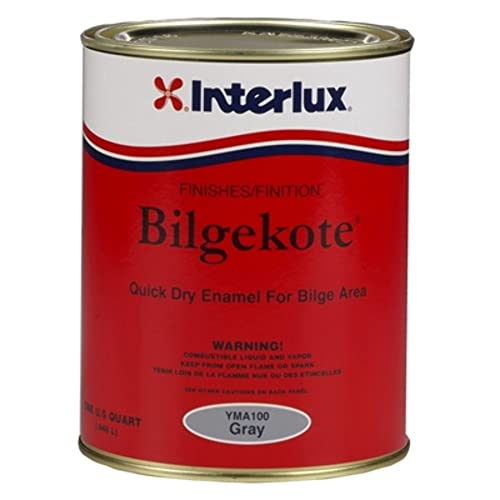
Best for: Boat owners seeking a subtle gray bilge color with robust bilge protection for frequent-use vessels or boats with large engine compartments.
- Best-in-class performance claim aligns with Interlux’s Bilgekote line.
- Gray color options can help disguise minor imperfections while maintaining visibility of critical components.
Caution: As with any bilge coating, ensure complete surface preparation and follow recommended priming steps to maximize adhesion and durability.
Buying Guide: Bilge Paint Decisions
- What is the main purpose of bilge paint?
- Protection against water, oil, and solvents; ease of inspection; and brightening of the bilge space.
- Epoxy vs. non-epoxy: Which should I pick?
- Epoxy-based bilge paints offer superior chemical resistance and durability, making them ideal for engine rooms and heavily used bilges.
- Color choice: Gray or White?
- White can brighten spaces and reveal leaks; gray hides minor stains and blends with engine components.
- Finish and application: What’s practical?
- Most bilge paints require 1-2 coats; surface prep and priming are critical for adhesion on metal, fiberglass, and wood.
- Size and budgeting: When to pick gallons vs. quarts?
- Quarts fit smaller spaces or touch-ups; gallons cover larger bilges but require more mixing and curing considerations.
Frequently Asked Questions
- Q: Can I use bilge paint on a metal surface without priming?
A: Priming is typically recommended to maximize adhesion, especially on bare metal. - Q: Is white bilge paint harder to keep clean?
A: White surfaces may show stains more easily, requiring more frequent cleaning or maintenance. - Q: How many coats should I apply?
A: Most applications call for 1-2 coats for adequate coverage and durability. - Q: Are these paints safe for fiberglass and wood?
A: Yes, the listed products are designed for fiberglass, wood, and metal surfaces when prepared correctly. - Q: Do these products help with leak detection?
A: Bilge paints brighten or contrast areas, which can aid leak identification during inspections. - Q: How long does curing take?
A: Curing times vary; follow manufacturer guidelines for ambient temperature and ventilation.