Best Outboard Motor Kicker Bracket Options for Small Boats and Trolling
Finding the right outboard motor kicker bracket helps you maintain balance, improve boat handling, and run a dependable auxiliary motor. This guide highlights five solid brackets suitable for 7.5–20 HP engines, targeting small to mid-sized boats and yachts. Each option is described with who it’s best for, why it stands out, and a practical caveat. Use this to compare mounting compatibility, weight support, and adjustability before you buy.
| Product | Best For | Key Benefit |
|---|---|---|
| Marinebaby Aluminum Bracket | Budget-conscious cruisers | Solid overall construction with multi-position height adjustment |
| YaeMarine 2-Stroke Bracket | Rugged 2-stroke setups | Stainless build with clear dimensions and lift range |
| Haida 2-Stroke Bracket | Simple, light-duty builds | 304 stainless base and robust mounting footprint |
| FUTURUP Aluminum Bracket | Stability-focused, longer-term use | Reinforced frame and wide track body |
| Mojiate Heavy-Duty Bracket | Two-stroke enthusiasts | Anodized aluminum with solid lift range |
Marinebaby Heavy Duty Aluminum Motor Bracket
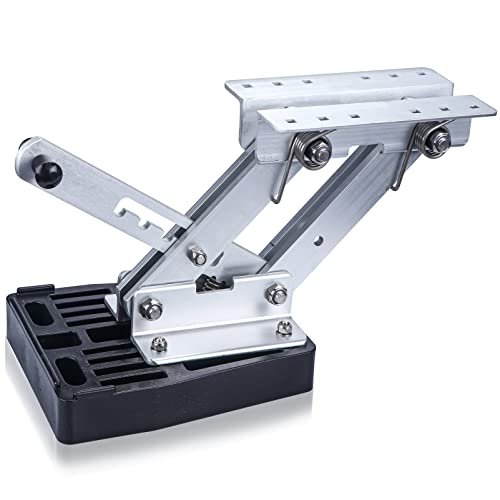
Brand: Marinebaby. This bracket supports 7.5 HP to 20 HP two-stroke motors with a sturdy aluminum frame and a solid polypropylene mounting board. A stainless steel spring counter-balance helps with weight and balance, and the height adjusts across five positions from 195mm to 320mm. Best for boaters who want a reliable, mid-range option with straightforward setup. Limitation: designed for two-stroke engines; not ideal for four-stroke motors.
YaeMarine 2 Stroke Bracket Kicker

Brand: YaeMarine. This stainless stamped bracket is built for 2-stroke motors up to 110 lbs. It features a 7.9″ wide motor pad, precise side lengths, a 10.5″ vertical lift, and a transom mounting width of 5-3/4″. Best for boats using lighter two-stroke auxiliary motors where corrosion resistance and durability matter. Better for moderate loads; not recommended for four-stroke engines.
Haida 2 Stroke Outboard Bracket Kicker

Brand: Haida. This 2-stroke rated bracket uses 304 stainless steel with a plastic base. Mounting footprint is 4-7/16″ by 5-11/16″ with a roller size of 8-1/4″ by 10-3/8″, suitable for motors up to 20 HP. Best for users who want a corrosion-resistant frame with a simple lifting mechanism. Caution: manual lifting required to raise and lower the motor; not ideal if you need hands-free operation.
FUTURUP Aluminum Bracket

Brand: FUTURUP. An aluminum bracket with a plastic base, supporting 7.5–20 HP engines and a maximum weight around 115 lbs. Features a 4-position locking height adjustment and a wide track body for stability. Best for sailors needing a balance of lightness and rigidity; not ideal for very heavy long-term loads. Note: aluminum construction is common; ensure mounting hardware matches your transom.
Marinetech Panther 55-0410 Auxiliary Bracket

Brand: Marinetech. This aluminum bracket supports five vertical positions for trolling or auxiliary motors, with a long or short shaft compatibility. It features an anodized finish, stainless steel torsion springs, a 2″-thick mounting board, and heavy-duty aircraft-grade hardware. Best for users needing strong, adjustable support for larger two-stroke or small four-stroke motors. Caution: ensure your motor weight aligns with the stated load for optimal balance.
Marinetech Panther Marine Bracket – 35HP

Brand: Marinetech. Fixed stainless steel bracket designed for up to 35 HP, suitable for heavier auxiliary installations. Best for boaters who want a robust, corrosion-resistant solution with a fixed position for reliable weight distribution. Limitation: fixed brackets offer less adjustability than multi-position options; verify compatibility with your transom and motor shaft height.
Buying Guide: How to Choose the Right Outboard Bracket
- Engine compatibility: Confirm HP rating and motor type (two-stroke vs four-stroke). Many brackets specify suitability for 7.5–20 HP two-stroke motors; ensure yours falls within the supported range.
- Weight capacity: Compare maximum motor weight and overall bracket load. Overloading can affect balance and handling, especially on smaller boats.
- Mounting footprint: Check mounting hole patterns and transom width to ensure secure installation. A wider mounting base improves stability on rough waters.
- Adjustability: Height and lift range influence how you position the motor for different seas and loads. Five-position or more is common for custom tuning.
- Materials and corrosion resistance: Aluminum and stainless steel are standard. Anodized finishes and stainless fasteners extend lifespan in saltwater environments.
- Ease of operation: Some brackets require manual lifting; others pair with assisted lift or counterbalance systems. Consider your typical use and strength needs.
- Installation considerations: Verify boat hull material, available space, and whether you need a retractable or fixed option for mooring, docking, or storage.
Frequently Asked Questions
- What is an outboard kicker bracket used for?
It provides a dedicated mounting point for an auxiliary motor, helping with steering stability, fuel efficiency, and trolling control.
- Can I install a 4-stroke motor on these brackets?
Some brackets are optimized for 2-stroke engines; verify the HP range and motor type before purchasing. A few models support 4-stroke setups, but always check the manufacturer’s specs.
- Is a heavier bracket always better?
Not necessarily. Heavier brackets can improve stability but may add weight and affect trim. Match weight capacity to your motor and boat size.
- How important is the lift height adjustment?
Lift height helps position the motor for optimal immersion and balance in varying water conditions. Five-position adjustments are common and useful for different loads.
- What maintenance is needed for these brackets?
Regularly inspect bolts and welds, lubricate moving parts, and rinse with fresh water after saltwater use to prevent corrosion.