Best 12V Marine Fuel Pumps for Diesel Boats
Answering the needs of boat owners and marine technicians seeking dependable 12V fuel pumps for diesel or mixed-fuel engines. This guide highlights five reliable options, explains who each product is best for, and clarifies where to choose one over another. Ideal for boaters, small-scale mariners, and trailerable craft that require compact, low-pressure transfer or onboard fueling support.
| Product | Brand | Type | Key Use |
|---|---|---|---|
| ENGINEMAN Universal Electric Fuel Pump 12V 2.5-4.5 PSI | ENGINEMAN | Inline External | Boats, carbureted engines, dual-fuel support |
| ENGINEMAN 12D Micro Electric Diesel Fuel Pump | ENGINEMAN | Inline/Compact | Diesel transfer, small engines, marine use |
| SEACHOICE Dura-Lift Electronic Fuel Pump | SEACHOICE | Solid-state | Universal, reliable fuel delivery |
| Orion Motor Tech Diesel Transfer Pump | Orion Motor Tech | Portable transfer | Oil changes, any low-viscosity diesel transfer |
| 12V DC Diesel Transfer Pump by Gottinfurt | Gottinfurt | Inline Transfer Kit | Diesel transfer to trucks, boats, RVs |
ENGINEMAN Universal Electric Fuel Pump 12V 2.5-4.5 PSI

Best for general marine carburetor setups and mixed-fuel environments. This pump delivers 2.5-4.5 PSI at 25-30 GPH, offering a stable transfer while remaining compact for cramped engine bays. The copper motor material and wide temperature tolerance enable operation in diverse marine climates. A built-in check valve reduces backflow, extending pump longevity. Suitable as a booster, standby, or standalone unit where a moderate pressure is enough for consistent fuel delivery.
Who it’s best for: boat owners with carbureted marine engines needing a versatile inline pump that works with gasoline and diesel. Choose this if you want a robust, low-pressure option that’s easy to install in limited spaces.
Limitation: Not designed for high-pressure fuel injection systems or very high-demand applications where higher PSI is required.
ENGINEMAN 12D Micro Electric Diesel Fuel Pump
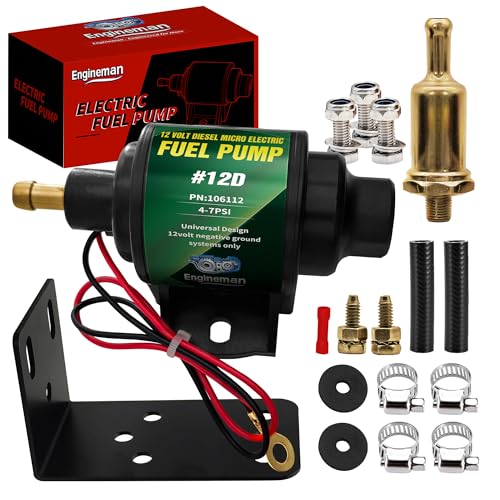
Best for diesel-specific transfer with compact sizing. Engineered for diesel systems, it delivers about 35 GPH at 4-7 PSI. The kit comes with mounting bracket, fuel filter, hoses, and wiring for straightforward DIY installation. Its small profile makes it suitable for crowded engine bays in boats, trucks, and generators, while providing reliable flow for cold starts and steady operation.
Who it’s best for: operators needing a diesel-focused pump with a complete installation package and a compact footprint. Choose this if you’re prioritizing diesel reliability in tight spaces.
Limitation: Although versatile, it’s optimized for diesel; performance with gasoline may be different, and users should verify compatibility with their system.
SEACHOICE Dura-Lift Electronic Fuel Pump
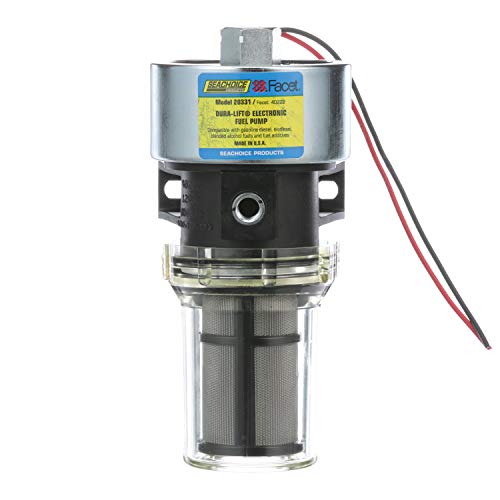
Best for varied fuels in multiple applications. This solid-state pump supports gasoline, diesel, biodiesel blends, and fuel additives. It includes self-regulating operation, an internal check valve, and protection against voltage spikes, with a four-hour dry-run capability. Its design aims for dependable delivery across marine, automotive, and industrial tasks.
Who it’s best for: buyers seeking a versatile pump that can handle different fuels and environmental conditions, with built-in protections for safety and reliability.
Limitation: The self-regulating mechanism may be less transparent for users who want explicit PSI specifications; ensure compatibility with your exact system pressure needs.
Orion Motor Tech Diesel Transfer Pump

Best for on-site diesel transfers and oil changes. This 12V pump can move up to 12 GPM with a 16.4 ft suction and up to 32 ft lift, making it practical for garages and boats alike. A metal strainer and bypass valve protect the motor from clogs and pressure spikes, supporting safer, continuous operation.
Who it’s best for: professionals or DIYers performing frequent diesel transfers in small workshops or on vessels, needing a balance of portability and transfer speed.
Limitation: It does not include diesel fuel in the kit; users must supply their own fluids and hoses as appropriate for the setup.
Gottinfurt 12V Diesel Transfer Kit

Best all-in-one kit for diesel transfer to trucks, boats, and RVs. It combines a high-flow 15 GPM pump with durable hoses, leak-proof connectors, an adjustable nozzle, and a filter designed to resist clogs. It requires no manual priming, offering a quick, tool-assisted setup for fast fueling on site.
Who it’s best for: users who want a complete, ready-to-use diesel transfer system with minimal assembly, ideal for fleet fueling, marine refueling, or on-road service setups.
Limitation: It’s a full kit, which means more components to manage; ensure storage space and handling fit your use-case.
Buying Guide: How to Choose a 12V Marine Fuel Pump
- Fuel type compatibility: Confirm the pump supports gasoline, diesel, or both. Some pumps are diesel-dedicated, which can improve reliability for marine diesel engines.
- Flow and pressure needs: For carbureted marine engines, low to moderate PSI (2.5–9 PSI) with sufficient GPH is usually adequate. Higher pressure is needed for modern fuel-injected systems.
- Mounting and space: Compact inline pumps fit tighter engine bays. Check inlet/outlet sizes (commonly 5/16 inch) and included mounting hardware.
- Durability and materials: Copper windings and temperature-resistant components improve longevity in marine environments. Built-in check valves reduce backflow risks.
- Installation kit and accessories: Some pumps include hoses, filters, and brackets. A complete kit can shorten setup time and simplify maintenance.
- Safety and protection features: Look for dry-run protection, voltage spike protection, and bypass valves to prevent overpressure and motor damage.
- Portability vs. fixed installation: Portable pumps suit on-site transfers and toolboxes; inline pumps suit permanent installations on boats and fleets.
FAQ
- What is a typical PSI for marine fuel pumps? Most marine fuel pumps operate in the 2.5–9 PSI range, suitable for carbureted and some older fuel systems.
- Can these pumps handle diesel and gasoline? Several models are diesel-specific, while others are compatible with multiple fuels. Always verify the listed compatibility.
- Do I need an installation kit? Some pumps come with installation kits; others require separate hoses and fittings. A kit can simplify installation.
- Is a built-in check valve important? Yes, a check valve helps prevent backflow and protects the pump during operation.
- What maintenance is required? Regularly inspect filters and hoses for wear, clear debris, and replace seals as needed to maintain steady flow.
- Are these pumps marine-safe? Most pumps are designed for marine use or harsh environments; verify corrosion resistance and appropriate IP rating if exposed to water spray.