Best Ways to Tow a Kayak With a Bike for Adventure Trips
Answer: The best options for towing a kayak with a bike combine a sturdy trailer or towing accessory with secure attachment points and universal fit. This guide highlights five products that balance load capacity, ease of use, and versatility for bikers who want to haul kayaks to the water. The picks suit solo explorers, families on weekend trips, and adventurers who regularly switch between bikes and vehicles. The following table summarizes each recommended product and the typical use scenario.
| Product | Best For |
|---|---|
| Rambo Canoe and Kayak Trailer Cart | Heavy-duty transport to launch site; single-paddle trips |
| Unicoshape Vertical RV Kayak Rack and Bike Carrier | Family trips with multiple kayaks and bikes |
| RIGHT-ON TRAILER Ruff-Sport | All-around cargo including kayaks, boards, and bikes |
| TRAX PRO Towing System | Tool-free, quick-to-attach towing for various bikes |
| WIKE Towing Tee | Flexible towing for small watercraft and portable carts |
Rambo Canoe and Kayak Trailer Cart

The Rambo trailer cart is a heavy-duty option for towing kayaks with a bike or using it as a hand cart. Best for users who routinely haul up to 300 lbs to remote launch sites. It extends up to 10 feet and includes padded contact points to protect the kayak from dents on rough terrain. It ships with ratchet straps for securing load. This is a solid choice for solo trips where steady towing and load security are priorities. Limitations include assembly time and the need for compatible hitch or bike setup.
Unicoshape Vertical RV Kayak Rack and Bike Carrier
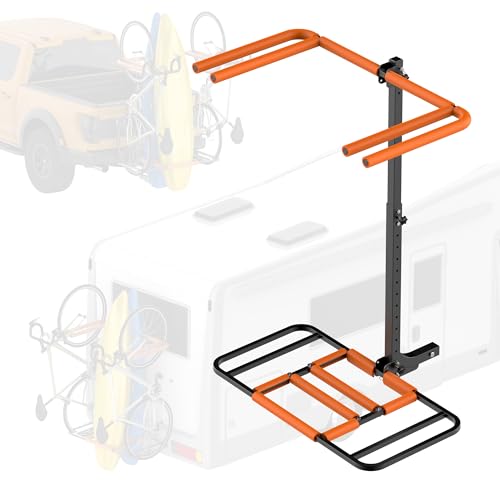
This 300 lbs load-capacity carrier is designed for two kayaks and two bikes, offering a robust, universal 2″ hitch installation. It emphasizes extra-thick alloy steel and rust-proofing for harsh weather. Best for families or groups on multi-gear trips, this option supports quick transitions with a tool-free setup. A potential drawback is size and weight for smaller vehicles or limited hitch space.
RIGHT-ON TRAILER Ruff-Sport

The Ruff-Sport features a galvanized steel frame with large 4.80 x 12″ wheels and crossbars to support a kayak, boards, SUPs, bicycles, and cargo boxes. Best for versatility and durability in mixed-use hauling. It is suitable for outdoor setups where equipment mounts from various roof rack brands can be integrated. A limitation is that it may require more space for storage and handling compared to lighter-duty options.
TRAX PRO Towing System

The TRAX PRO is a tool-less, universal towing solution for bikes, including e-bikes. It supports up to 130 kg and is designed for quick installation and removal. Best for riders who value lightweight setup and compatibility with multiple bike types. Consideration: verify compatibility with your bike geometry and ensure secure attachment for higher speeds or long trips.
WIKE Towing Tee Bicycle Tow Attachment

The WIKE Towing Tee offers a universal seat-post hitch and compatibility with most bicycles and Wike portage carts. Best for flexible, light-to-medium loads and for riders who frequently switch between watercraft and other gear. Limitation: it is a hitch-add-on rather than a complete trailer, so load capacity and stability can vary with cart compatibility.
Buying Guide
What should you consider when towing a kayak with a bike?
- Load Capacity: Ensure the carrier or trailer supports the combined weight of your kayak, gear, and rider. Look for 200–300 lbs or higher for most kayaks.
- Attachment Compatibility: Check hitch size (2″ is common) and verify compatibility with your bike or vehicle hitch.
- Stability and Contact Protection: Padded contact points and secure tie-downs prevent dents and movement on uneven terrain.
- Ease of Use: Tool-free installation and quick-release features save time during trips.
- Durability and Weather Resistance: Rust-proof materials and protective coatings extend life in wet or salty environments.
- Portability and Storage: Foldable or extendable designs reduce space needs when not in use.
How do you choose between a trailer and a tow attachment?
Trailers generally offer higher load capacity and easier loading/unloading, making them better for frequent, long-haul trips or multiple kayaks. Tow attachments are lighter and simpler, ideal for casual use or single kayak transport.
What safety steps ensure secure towing?
- Inspect all connectors, straps, and hardware before departure.
- Distribute weight evenly and secure load with ratchet straps.
- Use reflective items and warning flags when hauling near traffic.
- Test maneuverability at low speeds before heading onto roads or trails.
Who should consider each product?
- Rambo Canoe and Kayak Trailer Cart: Best for solo adventurers needing robust, extendable support for a single kayak and additional cargo.
- Unicoshape Vertical RV Kayak Rack and Bike Carrier: Best for families with two kayaks and two bikes, offering high capacity and a universal hitch.
- RIGHT-ON TRAILER Ruff-Sport: Best for versatile gear hauling, including kayaks, boards, bikes, and cargo boxes.
- TRAX PRO Towing System: Best for quick tool-free setup and compatibility with various bike types, including e-bikes.
- WIKE Towing Tee: Best for flexible attachment to seat posts and compatibility with different portage carts for lighter loads.
FAQ
- Do I need a special trailer to tow a kayak behind a bike? Yes, a trailer or towing accessory designed for watercraft provides secure attachment and weight distribution.
- Can I tow a kayak with any bike? Most setups work with standard bikes, but e-bikes and heavier bikes may require higher-capacity gear and reinforced hitch points.
- What is the typical load for a single kayak and gear? Most mid-sized kayaks plus gear fall within 60–200 lbs; check the product’s rated capacity.
- Is tool-free installation important? Yes, tool-free designs simplify setup and removal, especially for frequent trips.
- Are there weather considerations? Look for rust-proofing and corrosion resistance to handle rain, salt air, and sun exposure.
- How should I store the towing equipment when not in use? Store in a dry, sheltered area and consider a foldable model to save space.