Best Toddler Life Jacket USCG Approved: Safe Picks for Water Fun
Direct answer: For toddlers and young children, choose USCG-approved life jackets that fit weight ranges 30-50 pounds or 0-30 pounds depending on age and size, with secure straps, a headrest, and open-sided designs for comfortable movement. This guide compares five top options to help caregivers pick the right life vest for boating, pools, beaches, and lakes. It highlights who each jacket is best for, potential limitations, and why it stands out for safety and comfort.
| Product | Best For | Weight Range |
|---|---|---|
| Stearns Child Life Jacket with Heads-Up Flotation | Active toddlers who need face-up flotation | 30-50 lbs |
| Airhead TREASURE Life Jacket | Playful designs with secure, adjustable fit | 30-50 lbs |
| Oceans7 US Coast Guard-Approved Kids Life Jacket (Type III) | Open-sided design for flexible movement | 33-55 lbs |
| Stearns Kids Life Vest (Red) | Dedicated youth vest for boating and swimming | 30-50 lbs |
| SwimWays Disney Princess / Bluey Swim Trainer | Kids who benefit from learning aids and vests | 33-55 lbs |
Stearns Child Life Jacket with Heads-Up Flotation

Brand: STEARNS
USCG Approved: Yes. Weight range 30-50 pounds. Features a heads-up neck float designed for face-up flotation, helping keep a child’s head above water.
Best for: Toddlers who require reliable face-up support and easy confirmation of flotation. The neck float helps with orientation when the child is learning to float.
Caution: The Head-Up design adds buoyancy near the neck; ensure proper adjustment and check for a snug fit to prevent movement in water.
Airhead TREASURE Life Jacket for Kids

Brand: AIRHEAD
USCG Approved; closed-sided design for secure fit. Front zipper with adjustable waist belt and crotch strap enhances safety. Soft UV and stain-resistant 200-Denier Polyester provides durability for water play.
Best for: Families seeking a bright, secure vest with adjustable straps for a comfortable and snug fit during swimming and boating activities.
Caution: Closed-side design can be less forgiving for very small movers; ensure proper sizing and adjust all straps before use.
Oceans7 US Coast Guard-Approved Kids Life Jacket (Type III)
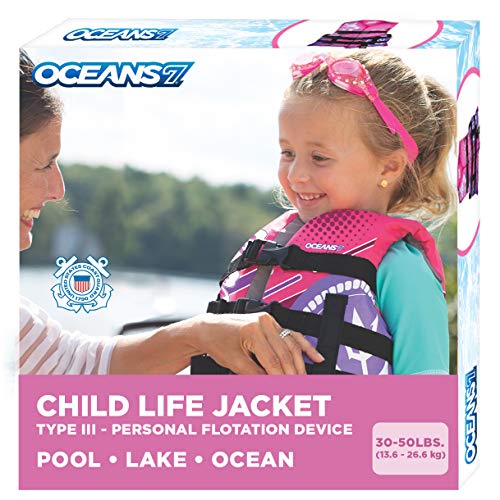
Brand: Aqua LEISURE
USCG Approved Type III; open-side design with three adjustable straps. Sized for children 33-55 pounds; provides a flexible fit while remaining Coast Guard compliant.
Best for: Kids who need a roomy, open-sided vest for comfortable arm movement and easier water entry during recreational activities.
Limitation: If a child weighs more than 45 pounds, consider a youth-size option for a better fit.
SwimWays Bluey Life Jacket

Brand: SwimWays
USCG Approved Life Vest for kids 33-55 lbs. 2-in-1 Swim Trainer that combines a safety vest with arm floaties. Bluey theme offers kid-friendly appeal and easy cleaning.
Best for: Young swimmers who enjoy a character-based design and benefit from a built-in swimming aid for confidence in the water.
Caution: Character-themed designs can be popular; verify sizing and ensure the vest remains properly secured during water activity.
SwimWays Disney Princess Swim Trainer Life Jacket

Brand: SwimWays
USCG Approved; 2-in-1 Swim Trainer with arm floaties and a soft fabric exterior. Sized for 33-55 pounds with a Disney Princess theme that may appeal to fans of the franchise.
Best for: Children who benefit from a familiar character motif to encourage water participation and practice swimming skills.
Caution: Like other trainer designs, verify that the vest remains centered and secure as the child moves through water activities.
Buying Guide
- Weight range and size: Prioritize vests within the child’s current weight range (often 30-50 lbs or 33-55 lbs). If a child nears the upper limit, consider the next size up to maintain buoyancy and comfort.
- Type and openness: Open-sided Type III vests allow more arm movement and are generally easier for older toddlers; closed-sided designs offer secure wraps for younger children or new swimmers.
- Safety features: Look for a secure crotch strap, adjustable waist straps, a snug neck float or headrest, and a grab strap or handle for quick assistance.
- Fit and adjustability: Adjustable shoulder, chest, and waist straps ensure a snug, non-slip fit. A snug fit prevents the vest from riding up if the child is face-down.
- Durability and materials: Durable nylon shells with foam flotation provide long-lasting wear and resistance to sun, saltwater, and chlorine.
- Design and comfort: Soft fabrics, UV resistance, and minimal bulk improve comfort and mobility during swimming and play.
- Intended use: For boating and guided water activities, select a vest with robust construction and a clear weight range. For pool play and learning to swim, consider training-style vests that aid flotation while enabling arm movement.
Frequently Asked Questions
- What weight range should I choose for a toddler life jacket? Choose based on weight: most toddlers fit 30-50 pounds, while younger infants may need a 0-30 pound infant vest. Always select a PFD labeled as USCG-approved and sized for weight ranges matching your child.
- Is a headrest or neck float necessary? A headrest helps with face-up buoyancy for younger children, but ensure the vest is correctly fitted and not overly reliant on neck buoyancy for safety.
- Can I use a life jacket as a swimming aid? Some jackets combine flotation with training features (arm floaties, trainer vests). Use them under supervision and as part of a swimming-learning plan, not as a substitute for supervision.
- How do I verify the fit? Fasten all straps snugly, check that the vest sits high on the chest, and lift the child slightly by the vest to ensure it doesn’t slip up. A proper fit should prevent the vest from turning the child face-down.
- Are open-sided vests better for kids learning to swim? Open-sided vests offer more arm mobility, which can help with swimming technique development, but ensure secure straps and an appropriate size for safety.
- Should I buy a USCG-approved vest? Yes. USCG approval indicates compliance with federal safety standards, and properly sized vests provide reliable buoyancy and performance at sea, on lakes, and in pools.