Best Ballast Pumps for Boats: Top Picks for 12V Systems
Looking for reliable ballast pumps for boats to fill or drain ballast tanks quickly? This guide highlights five 12V options that balance performance with durability. It’s ideal for wakeboard boats, fishing craft, and other small to mid-size vessels needing dependable ballast management. The top picks are best for: fast water transfer, easy maintenance, and versatile installation.
The following quick-reference table summarizes the five products, their primary use case, and a key strength:
| Product | Best For | Notable Strength |
|---|---|---|
| Jabsco 18220-1127 | All-around ballast pumping and quick fill/drain | Reversing switch offers fill and empty capability |
| SHURFLO 94-620-00 Kit | Repair and rebuild for livewell/auxiliary pumps | Includes rebuild parts for maintenance |
| FATSAC Supa Tsunami | High-flow water transfer | Compact, appropriate for newer ballast systems |
| Johnson Pumps Rogue 13.5 GPM | Wakeboard boats needing reliable 12V pumping | Run-dry capable and reversible |
| SEAFLO 12V Reversible | Versatile bilge and ballast tasks | Self-priming up to 4 feet and durable materials |
Jabsco 18220-1127 Marine Wakeboard Ballast Pump

Best for: boat owners who need a compact, versatile pump that can both fill and drain ballast tanks. The Jabsco 18220-1127 delivers a flow rate of about 9 gallons per minute (80 lbs. per minute), enabling rapid ballast changes. The unit is reversible, allowing seamless switching between filling and emptying operations, which helps maintain ballast accuracy during riding or docking scenarios.
Why selected: This pump sits in the middle ground of size and output, making it suitable for typical wakeboard ballast setups. Its reversing capability reduces the need for separate fill and drain lines, simplifying installation. A potential limitation is that performance claims are best realized with correctly sized hoses and minimal friction losses in the plumbing.
Caution: Ensure electrical wiring and fuse protection are appropriate for 12V DC operation and that the pump is mounted with adequate clearance for heat dissipation.
SHURFLO 94-620-00 Pump Repair Kit

Best for: current SHURFLO livewell or aerator pump users who want a straightforward rebuild option. This kit supports typical 12V pumps used in marine ballast and livewell systems, helping extend service life between replacements.
Why selected: It provides essential parts to service compatible SHURFLO pumps, reducing downtime. Limitations: It is a repair kit, not a complete pump, so its usefulness depends on matching the kit to the exact pump model and compatibility with the existing motor assembly.
Caution: Verify compatibility with your pump model and follow manufacturer guidance during disassembly and reassembly to avoid damage or leaks.
FATSAC Supa Tsunami Pump

Best for: boats requiring a robust high-flow ballast option with straightforward operation. The Supa Tsunami is a compact unit noted for delivering strong water transfer suitable for larger ballast volumes in a short time.
Why selected: It emphasizes high-capacity pumping in a small footprint, making it a good match for newer ballast configurations that prioritize speed. Caution: As a high-flow unit, ensure your ballast system’s plumbing and battery capacity can handle the increased draw without overheating.
Johnson Pumps Rogue Ballast Pump 13.5 Gpm
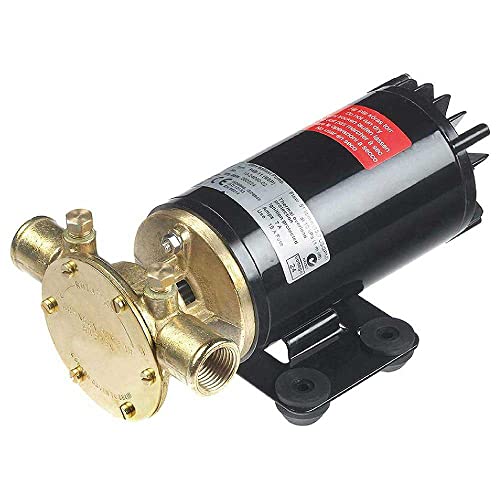
Best for: wakeboard and performance boats needing a reliable 12V supply with reversible operation. The Rogue pump handles fill and drain tasks with a 13.5 GPM flow rate, suitable for mid-to-large ballast tanks.
Why selected: It offers practical run-dry capability and dual-direction operation, which is helpful during quick ballast adjustments. Limitation: Availability and compatibility should be checked against your vessel’s electrical system and hose sizing to avoid mismatches.
Caution: Confirm motor and impeller materials are compatible with your water conditions to prevent premature wear.
SEAFLO 12V Reversible Ballast/Bilge Pump

Best for: boaters seeking a versatile, self-priming pump that can serve multiple tasks, including bilge draining and ballast filling. The SEAFLO SFSP1-080-003-02 model offers reversible operation and practical 8 GPM flow with a 3/4″ hose size.
Why selected: Self-priming capability up to 4 feet provides installation flexibility, especially in challenging mounting locations. The three-way capabilities support a range of plumbing setups. Limitation: Lower flow compared to some high-volume ballast pumps, so for very large ballast volumes you may prefer higher-capacity options.
Caution: Ensure proper venting and secure mounting to prevent vibration and noise in operation.
Buying Guide
What to consider when selecting ballast pumps for boats:
- Flow rate: Higher GPM speeds ballast filling and draining but may demand more power and produce more heat. Match the pump flow to your ballast tank size.
- Voltage and power: All models here are 12V DC; confirm your boat’s electrical capacity and fuse requirements to prevent overloading the circuit.
- Reverse operation: Pumps with reversible flow simplify installations by letting you fill and drain without separate units or lines.
- Self-priming capability: Pumps that can self-prime (to several feet) offer flexible mounting and easier setup in tight spaces.
- Durability: Look for corrosion-resistant materials, proper seals, and easy maintenance features such as removable motor cartridges where available.
- Installation space: Consider pump dimensions and hose connections (inlet/outlet sizing) to ensure compatibility with existing ballast plumbing.
- Maintenance and replacement parts: Some brands offer repair kits or modular components that extend service life and minimize downtime.
FAQ
- What is ballast pump velocity for wakeboard boats?
– Ballast pumps vary; common values range from 8 to 14 GPM, depending on tank size and required fill/drain speed. - Can ballast pumps run dry without damage?
– Some models include run-dry protection or are rated for short dry operation, but verify specs for each unit. - Are reversible ballast pumps better than single-direction pumps?
– Reversible pumps can fill and drain without extra hardware, offering installation flexibility and fewer components. - How do I choose the right pump for my ballast tank size?
– Calculate required fill time and desired turnover rate, then select a pump with at least that GPM, considering hose length and friction losses. - What maintenance is typical for ballast pumps?
– Regularly inspect seals, hoses, and fittings; clean impellers if applicable; replace worn components using manufacturer kits when available. - Is 12V DC the standard for marine ballast pumps?
– Yes, many ballast and bilge pumps operate at 12V DC; ensure your vessel’s electrical system supports the pump’s current draw.