Best Suction Cup Kayak Roller for Easy Roof Loading and Removal
Answering the common question “which suction cup kayak roller should I choose?” this guide highlights five reliable options designed to simplify loading kayaks onto car roofs. These rollers are best for outdoor enthusiasts, casual weekend paddlers, and anyone seeking safer, cleaner loading from ground level. Each product’s strengths align with different vehicle types and kayak sizes, helping you pick the right tool for your setup. The following table summarizes the five selected rollers to compare at a glance.
| Product | Brand | Best For | Key Benefit |
|---|---|---|---|
| Codinter Kayak Roller, Load Assist | Codinter | Sedans and SUVs with angled rear windows | Strong suction with 220 lb capacity; rotating foam pad for hull protection |
| Apaspoil Kayak Roller, Suction Alert | Apaspoil | Wide kayaks on various vehicles | Triangular base for stability; safety suction indicator |
| Apaspoil Heavy-Duty Kayak Loader | Apaspoil | Wide kayaks on trucks/SUVs | Triangular tripod base; 280 lb capacity; no-drill design |
| Codinter Rubber Roller Model | Codinter | Most sedans and SUVs | 360° rubber roller to protect hull; 220 lb capacity |
| HLOGREE Tri-Suction Kayak Roller | HLOGREE | High-load applications on various cars | Three-suction triangle base; up to 260 lb capacity; safety red line |
Codinter Kayak Roller, Load Assist with Heavy-Duty Suction Cups Mount

Best for: drivers with sedans or SUVs that have angled rear windows. This unit uses heavy-duty aluminum bars and two strong suction cups to reach a 220 lb capacity, making it suitable for many standard kayaks. The design also accommodates slight window curvature for a stable install.
Why selected: the combination of robust suction and a rotating foam pad helps protect the hull during loading. The slight-wobble feature is intended to adapt to different rear window angles, improving suction consistency on compatible vehicles.
Caution: not all vertical-window vehicles are compatible; ensure your rear window angle fits the suction cups before purchase.
Apaspoil Kayak Roller, Suction Alert Design

Best for: owners loading wide or large kayaks on a variety of vehicle types. It features a triangular structure to boost stability, with a 280 lb capacity and a safety suction indicator that visually confirms suction status during setup.
Why selected: the waterproof design and no-tools required snap-in setup enable quick installation, making it a strong choice for frequent loading sessions. The suction alert helps reduce guesswork during setup.
Caution: verify that your window curvature matches the device’s intended suction fit to avoid reduced grip on unusual glass shapes.
Apaspoil Heavy-Duty Kayak Loader with Triangular Tripod Base
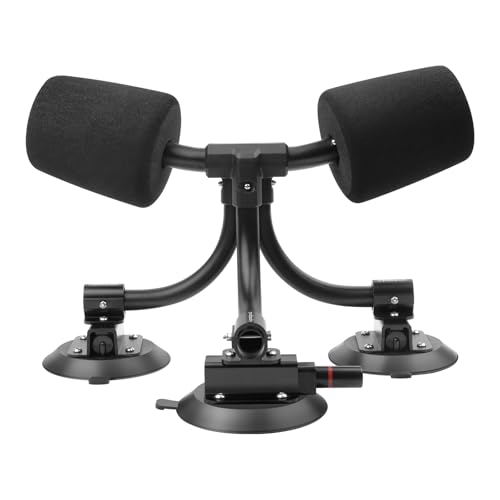
Best for: owners of wider kayaks or SUVs requiring extra stability on uneven roof lines. The tripod base creates a highly stable platform, allowing safer loading with up to a 280 lb capacity. Dual side-rolling foam barrels help protect the hull on both sides during loading.
Why selected: the no-drill, V-shaped rolling resistance helps the kayak slide more slowly into place, enhancing safety during the loading process.
Caution: its larger base may require more roof space and careful alignment for optimal grip on some vehicle profiles.
Codinter Kayak Roller, Rubber Roller Strong Suction Cups

Best for: those prioritizing hull protection during loading and a reliable suction setup on common sedans/SUVs. The 360-degree rubber roller with bearing smooths the kayak’s movement while the slight-wobble design adjusts to rear window angles for better suction.
Why selected: it emphasizes hull protection with a rubber roller and auto-adjusting suction alignment to maintain grip across varying window curvatures.
Caution: compatibility is best with non-vertical windows; check your vehicle’s rear glass curve before buying.
HLOGREE Kayak Load Roller, Tri-Suction System

Best for: users seeking higher load-bearing capacity with a compact footprint. Its three-suction triangular design offers strong stability and a claimed capacity up to 260 lbs, aided by a red-line safety indicator.
Why selected: the three-suction triangle layout provides superior stability for larger kayaks or vehicles with challenging roof contours. The safety indicator helps confirm secure suction before loading.
Caution: the configuration may require careful positioning to avoid interference with roof accessories or antennas on some vehicles.
Buying Guide: Key Considerations For Choosing A Suction Cup Kayak Roller
What vehicle type fits best with a suction cup kayak roller? Consider your car’s rear window geometry. Most units work well on sedans and SUVs with angled windows but may struggle on vertical or flat glass. If your vehicle has a roof antenna, check for clearance to prevent contact during loading.
How much weight should a roller support? Typical capacities range from 150–280 lbs. Choose a model that exceeds your kayak’s weight plus any additional equipment you expect to carry, ensuring margin for safe lifting.
What about hull protection? Look for a rotating or rubber roller that minimizes hull contact and scratches. A foam barrel or rubberized surface is preferable for protecting the hull during the loading sequence.
How important is a safety indicator? A built-in red-line suction indicator or vacuum monitor helps you avoid under-secure attachments. This feature is especially valuable for beginners or infrequent users who want a clear cue that the suction is safe to load.
Is installation permanent or temporary? No-drill or tool-free designs are easier for casual users and renters. For frequent use, a sturdy tripod base or a three-suction system can offer improved stability and repeatable alignment.
Which design should I choose for different kayaks? If you have a wide or longer kayak, a triangular base or three-suction configuration provides better balance. If you frequently switch between vehicles, pick models with simple, tool-free setup and clear indicators to minimize setup time.
FAQ
- Which Suction Cup Kayak Roller is best for a compact car?
– A model with a two-suction system and a rotating foam barrier usually works well on small sedans where space and window angle are moderate. - Do suction indicators really matter?
– Yes. They signal when the suction is insufficient or safe, reducing the risk of kayak slipping during loading. - Can I use these with any kayak size?
– Most models accommodate common recreational kayaks; check the stated weight capacity and the hull size to ensure compatibility. - Are tool-free installations reliable?
– For frequent use, well-designed tool-free options provide faster setup, though verify stability under load with the specific kayak weight. - What maintenance is needed?
– Regularly inspect suction cups for wear, keep glass surfaces clean, and lubricate moving parts as recommended by the manufacturer to preserve suction integrity. - Is a three-suction design always better?
– It generally offers higher stability and load capacity, but may require more planning to position correctly on the vehicle roof.