Best Steering Cable for Boat: Top Choices for Single-Station Setups
Choosing the right steering cable for a boat depends on length, compatibility, and the environment in which you operate. This guide highlights five top options for single-station boats, focusing on common compatibility with SeaStar, Teleflex, Uflex, and Morse systems. Each pick suits different boat sizes, horsepower, and ease-of-install needs. Whether you’re updating an aging helm or replacing a damaged cable, these selections offer clear advantages for boaters seeking reliable control and straightforward installation.
| Product | Length | Best For |
|---|---|---|
| Yaofreeland Boat Steering Cable | 12 ft | Smaller single-station boats, easy installs |
| VEVOR Boat Steering System Kit (10′) | 10 ft | Compact helm setups, standard 3/4″ shaft |
| VEVOR 16′ Boat Steering Control Cable | 16 ft | Medium to large single-station boats |
| Yeaborn Boat Steering Cable (15′) | 15 ft | Longevity with HDPE liner, versatile |
| QYMOPAY Boat Steering Control Cable (18′) | 18 ft | Longer runs requiring higher flexibility |
Yaofreeland 12 Feet Steering Cable
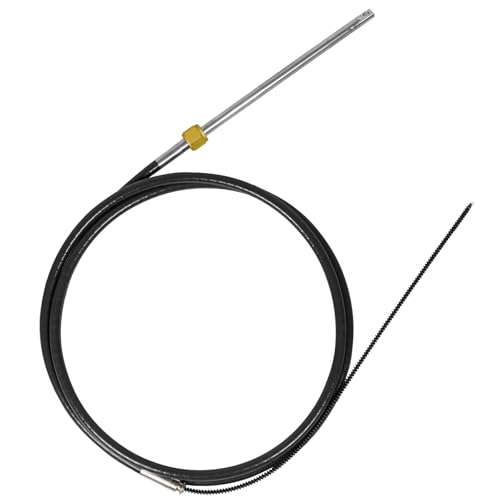
The Yaofreeland 12 Feet Steering Cable is designed as a universal rotary replacement for single-station boats. It is compatible with Uflex M66X12, SeaStar SSC6212, Teleflex SSC6200/SSC6300, and Morse-type cables. This length provides ample room for operator movement and precise steering control. Best for smaller to mid-size boats with standard Quick Connect Rotary systems. A potential limitation is verifying exact compatibility with your helm model to avoid routing issues during installation.
- Wide compatibility with common single-station setups
- 12 ft length offers generous operating space
- Trapped Nut design helps secure routing during install
VEVOR Boat Steering System Kit, 10′

The VEVOR 10′ steering kit includes a 10 ft steering cable, a 3/4″ tapered shaft, 13.5″ steering wheel, and hardware. It is aimed at single-station outboard systems and provides a compact, complete kit for quick setup. Best for boats needing a compact, all-in-one solution. It may be less suitable for longer cable runs or boats requiring a longer replacement cable than 10 feet.
- Includes steering wheel, shaft, and hardware
- 10 ft cable suitable for short runs
- Rust-resistant alloy rotary helm
VEVOR 16′ Boat Steering Control Cable

The 16 ft VEVOR steering cable is crafted for single-station systems with a 3/4″ tapered shaft and 16 ft cable length. It uses a robust alloy marine-grade construction to resist corrosion and wear. Best for medium to larger boats needing extended reach without compromising steering precision. A potential caveat is to confirm exact hull clearance and helm compatibility before purchase.
- Extended 16 ft length for flexible routing
- High-tensile alloy construction for durability
- Designed to fit various rudder and cylinder types
QYMOPAY Boat Steering Control Cable, 18ft
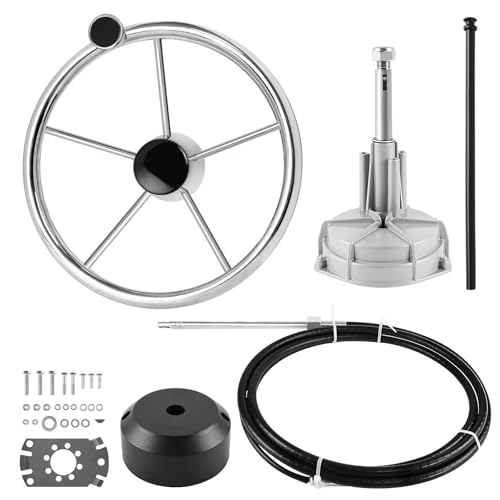
The QYMOPAY 18 ft steering kit combines a long cable with a complete assembly, including a stainless steel steering wheel and 3/4″ tapered shaft. Its cast steel and 304 stainless steel construction offer corrosion resistance in marine environments. Best for longer cable runs on yachts or larger boats. Limitation: longer cables can require careful routing to avoid snag points or excessive tension.
- 18 ft cable length for long steering routes
- Corrosion-resistant stainless steel components
- Includes full assembly with steering wheel and hardware
Yeaborn 17′ Outboard Steering Cable

The Yeaborn 17′ steering cable is built for single-station boats with a long HDPE liner for smooth operation. It features a 17 ft cable length and a trapped nut at the cable end for clean routing. Best for boats requiring significant cable length without sacrificing ease of installation. Better avoided if the helm requires a shorter, plug-and-play solution or has tight cockpit spacing.
- 17 ft length for extended runs
- HDPE liner provides smooth operation
- Trapped Nut end aids routing stability
Buying Guide
What cable length do you actually need?
Measure the distance from the helm to the console or rudder attachment. Longer distances require cables of 15–18 ft, while small boats may suffice with 10–12 ft. Consider future accessibility for maintenance when choosing length.
Which materials and compatibility matter?
Look for corrosion-resistant alloys and compatibility with your helm model (SeaStar, Teleflex, Uflex, Morse). Universal or semi-universal cables offer easier cross-compatibility, but confirm the exact end fittings and shaft size before purchase.
Is a complete kit or a replacement cable better?
Replace with a complete kit when the helm assembly is aging or mismatched with the new cable. Choose a replacement cable when the helm hardware is still sound and only the cable failed. Kits often simplify install with matched components.
What installation considerations should you expect?
Expect straightforward routing, trapped nuts, and secure fittings. Check for clearance around hoses, wires, and cockpit hardware. Longer cables may require custom routing to avoid snag points and ensure smooth steering responsiveness.
How do you evaluate durability and maintenance?
Prioritize marine-grade alloys, stainless components, and corrosion resistance. An HDPE liner can provide long-term smooth operation. Regular inspection for wear, rust, and loose fittings helps maintain steering safety.
FAQ
- Q: Can I mix brands with a universal steering cable?
- A: Some cables are designed for universal compatibility, but verify end fittings and shaft size to avoid fit issues.
- Q: How do I know what length to buy?
- A: Measure the helm-to-rudder distance and consider future cockpit access for maintenance.
- Q: Are longer cables harder to install?
- A: Longer cables may require more care during routing, but most kits provide guidance for clean installation.
- Q: What maintenance is recommended?
- A: Regularly inspect fittings, lubricate as recommended by manufacturer, and replace worn cables promptly.
- Q: Is a complete kit always better than a cable only?
- A: If the helm is aging or non-compatible, a kit can simplify installation; otherwise, a single cable can suffice for a straightforward replacement.