Best Plastic Alternatives to Marine Plywood for Durable Marine Panels
When selecting a rugged, water-friendly panel for marine projects, plastic alternatives like HDPE and UHMW sheets offer moisture resistance, low maintenance, and stability. This guide highlights five practical options and why each is best for specific applications, from boat fittings to interior liners. Ideal buyers include boat builders, DIY hobbyists, and professionals seeking rot-resistant, warp-free substitutes for traditional marine plywood. A quick comparison table below helps narrow choices at a glance.
| Product | Brand | Size / Thickness | Best For |
|---|---|---|---|
| KING STARBOARD White 12″ x 27″ x 1/2″ | KING STARBOARD | 12″ x 27″ x 1/2″ | Small panels, lightweight interior hardware, non-porous surfaces |
| MECCANIXITY UHMW Sheet 12″ x 6″ x 1/8″ | MECCANIXITY | 12″ x 6″ x 1/8″ | Compact components, liners, low-friction surfaces |
| MECCANIXITY UHMW Sheet 24″ x 12″ x 1/4″ | MECCANIXITY | 24″ x 12″ x 1/4″ | Medium panels, wear-resistant DIY projects |
| BuyPlastic Black HDPE Boat Board 12″ x 12″ x 1/4″ | BuyPlastic | 12″ x 12″ x 1/4″ | Pre-cut boat board panels, maintenance-free surfaces |
| FIR Marine Plywood 3/4″ x 24″ x 47″ | WOODNSHOP | 3/4″ x 24″ x 47″ | Marine-grade plywood alternative with solid wood feel |
KING STARBOARD White 12″ X 27″ X 1/2″

Product type: Marine-grade high-density polyethylene panel. Features include superior flatness and consistency from the K-StranTM process, and resistance to warping, rotting, and delamination. Best for applications requiring a non-porous, durable surface that can be worked with standard woodworking tools.
Who it’s best for: hobbyists and professionals needing a flat, stable sheet for interior panels, hatches, or non-structural liners in boats or marine vehicles. Why selected: its marine-grade material and flatness make it easier to fabricate than thicker plywood substitutes.
Caution: Be mindful of thermal expansion in direct heat exposure; plan for edge finishing when cutting or routing.
MECCANIXITY UHMW Sheet 12″ x 6″ x 1/8″

Product type: Ultra-high molecular weight polyethylene sheet for marine use. Highlights include toughness, corrosion resistance, low-temperature performance, and wear resistance. Best for liners, bushings, bearings, and light to medium load components in or around water.
Who it’s best for: users needing a compact, low-friction surface for moving parts or protective liners. Why selected: UHMW offers excellent resilience and smooth operation in wet environments.
Caution: At higher temperatures, the sheet softens rather than melts; consider thermal expansion when designing fits and joints.
MECCANIXITY UHMW Sheet 24″ x 12″ x 1/4″
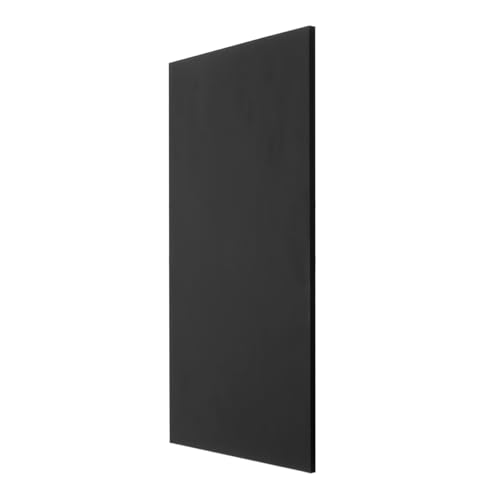
Product type: Larger UHMW sheet with a 1/4″ thickness. Offers the same benefits as the smaller variant, with enhanced load capacity and wear resistance for medium-duty marine applications.
Who it’s best for: builders needing a mid-size panel with longer service life under mechanical stress. Why selected: the bigger surface reduces seams and mounting points while maintaining low friction surfaces.
Caution: Ensure adequate ventilation when cutting; the material can generate fine dust during machining.
BuyPlastic Black HDPE Boat Board 12″ x 12″ x 1/4″

Product type: Black HDPE boat board sheet cut to 12″ by 12″ with 1/4″ thickness. Features a solid polymer composition that resists delamination and extreme weather, plus easy maintenance.
Who it’s best for: projects requiring pre-cut panels for quick fabrication, hatch liners, or interior boat components. Why selected: maintenance-free and resistant to moisture and impacts.
Caution: Actual dimensions are 11.75″ x 11.75″ due to kerf width; consider slight sizing in tight tolerances.
FIR Marine Plywood 3/4 X 24 X 47

Product type: Marine-grade plywood alternative built from fir wood, designed for strength and stability in demanding marine environments. Features void-free construction for uniform performance.
Who it’s best for: users seeking a traditional plywood-like panel with marine-grade expectations but prefer a wood-based substitute. Why selected: sturdy, wood-based option with a focus on durability in moist environments.
Caution: Not treated against rot like pressure-treated options; requires sealing or finishing to maximize longevity in harsh conditions.
Buying Guide
Key considerations when choosing a marine-friendly plastic alternative:
- Moisture resistance: UHMW and HDPE sheets excel in water-prone areas; choose if you expect frequent contact with moisture.
- Machinability: Flatness and working properties vary; high-flatness options simplify routing and finishing.
- Load and wear: Thicker UHMW sheets offer better load-bearing and wear resistance for moving parts and liners.
- Dimensional stability: Some plastics expand or contract with temperature; plan joints and fasteners accordingly.
- Maintenance needs: Plastic panels typically require less maintenance than wood, but edges and joints may need sealing depending on exposure.
- Cutting and forming: Consider edge finishing, thermal expansion, and potential delamination risks with different materials.
Frequently Asked Questions
- What is the main advantage of UHMW over standard HDPE for marine use? UHMW typically offers higher wear resistance and lower friction, which is beneficial for moving parts and bearings in wet conditions.
- Can these plastic sheets replace marine plywood in structural applications? Most plastics are better suited for non-structural panels, liners, or supports; for structural beams, consult a marine-grade wood or composite specialist.
- Are pre-cut HDPE boards worth it for small projects? Yes, they save time and ensure consistent sizing for quick builds or repairs.
- Do I need sealants or coatings on plastic sheets used in marine environments? For extended outdoor exposure, a protective coating or sealing can extend life and improve UV resistance.
- How should I cut or drill UHMW or HDPE sheets? Use sharp tools, slow feeds, and support to prevent chipping; consider using masking tapes and backer boards to improve cut quality.
- Are there temperature limitations for these plastics? Yes; high temperatures can soften some HDPE/UHMW grades; account for temperature exposure in your design.