Best Solar Panels for Boats: Durable, Marine-Ready Options for Off-Grid Power
Answering the common buyer question, these solar panels are ideal for boaters seeking reliable 12V or off-grid power on water. The top picks balance flexibility, durability, and efficiency for marine environments. Best for: compact cabins and small to mid-size boats (SOLPERK, Newpowa), larger flexible applications on curved hulls (ECO-WORTHY 2×130W, Renogy 100W Flexible), and high-output marine setups (Epoch 800W bifacial kit). Below is a quick table of the highlighted products to compare key points at a glance.
| Product | Type | Best For | Approx. Output | Notes |
|---|---|---|---|---|
| ECO-WORTHY 2×130W Flexible Panels | Flexible Mono | Curved boat surfaces | ~260W per kit | Ultra-flexible, lightweight, 270° bend; higher output than standard panels |
| Renogy 100W Flexible Panel | Flexible Mono | Boats with curved hulls | 100W | 240° bend, hot-spot resistant, low weight |
| Epoch 800W Bifacial Kit (400W×2) | Bifacial N-Type | Higher-demand marine campsites | 800W total | Double-sided light capture, rugged and waterproof |
| SOLPERK 20W Kit with MPPT Controller | Monocrystalline + Controller | Small boats and trickle charging | 20W | Includes intelligent controller, waterproof and durable |
| Newpowa 20W 12V Panel | Mono | Starter boat systems | 20W | Pre-attached wires and easy install |
ECO-WORTHY 2×130W Flexible Panels

Best for: boaters needing high output on curved hulls or uneven surfaces. These 130W panels deliver up to 520Wh per panel under four hours of sun, totaling about 1040Wh with two panels. The design is ultra-thin (0.1 inch) and very light (about 4.4 lbs per panel), making installation easier on decks, cabins, or curved surfaces. The panels bend up to 270°, enabling attachment to irregular shapes. Caution: ensure mounting surface compatibility with flexible panels to avoid damage or deformation over time.
SOLPERK 20W Solar Panel Kit with MPPT Controller
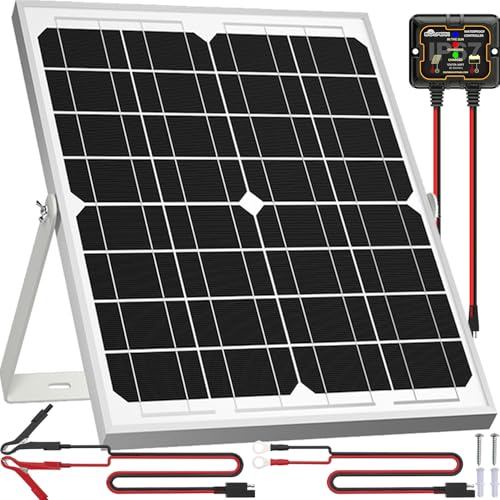
Best for: boaters needing steady 12V charging for smaller battery banks or maintenance charging. This 20W panel uses high-efficiency monocrystalline cells with a smart 8A controller that improves charging efficiency by up to 20–30% and provides overcharge protection. It is designed to withstand weather with a corrosion-resistant frame and waterproof build. Limitation: lower total output means it’s best for trickle charging rather than powering heavy loads on larger boats.
Renogy 100W Flexible Panel

Best for: boats requiring lightweight, bendable solar power on curved surfaces. The Renogy 100W flexible panel employs half-cut PERC technology for improved efficiency and reduced hot spots, with a low temperature coefficient that preserves output in hot climates. It weighs far less than rigid panels and is easy to mount. Limitation: flexible panels may be more susceptible to long-term wear on high-mhear surfaces; ensure proper lamination and mounting to prevent flex damage.
Epoch 800W Bifacial Solar Kit
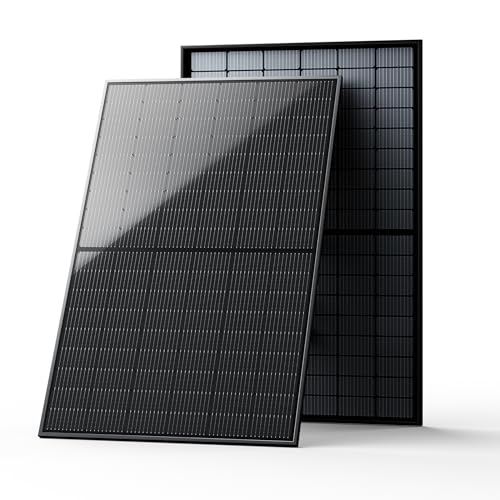
Best for: larger marine installations or off-grid setups on boats requiring high power. This kit provides a total of 800W with bifacial cells, capturing light from both sides for enhanced efficiency. The panels use a rugged waterproof design with IP68 junction box and IP67 connectors. Limitation: higher upfront complexity and installation considerations due to bifacial mounting and dual-sided exposure; ensure optimal sun angles and mounting to maximize two-sided capture.
Newpowa 20W Solar Panel Kit

Best for: entry-level or small boats needing a simple 12V charging option. The 20W module includes pre-attached wiring and mounting holes for quick installation. It’s a compact choice for trickle charging of small battery banks or auxiliary systems. Limitation: lower output means it should be paired with a larger system or used for maintaining smaller batteries rather than powering extensive electrical loads on a boat.
Buying Guide: Key Considerations for Marine Solar Panels
- Power needs: Match panel wattage to battery bank size and intended loads. Higher wattage supports more accessories and fridges, while smaller kits suit lighting and maintenance charging.
- Surface compatibility: Flexible panels excel on curved hulls and irregular surfaces; rigid panels are simpler to mount on flat decks or roof areas.
- Durability: Marine-grade panels should offer waterproofing, corrosion resistance, and robust frames. Bifacial designs increase output in bright, reflective environments.
- Temperatures and weather: Panels with low temperature coefficients perform better in heat; consider high wind or salt spray exposure when selecting mounting hardware.
- Systems integration: Look for panels with compatible controllers (MPPT preferred) and pre-wired setups for easier installation on boats, RVs, or cabins.
- Install and maintenance: Lighter, thinner panels are easier to handle but ensure proper sealing and mounting to prevent movement or moisture ingress.
Frequently Asked Questions
- What is the best type of solar panel for boats?
Flexible panels are ideal for curved hulls and non-traditional surfaces, while rigid panels offer durable, long-term mounting on flat decks. - Do I need a charge controller with marine solar panels?
Yes. A charge controller protects batteries from overcharging and manages charging efficiency, with MPPT controllers offering better performance. - Can solar panels power a boat fridge or electronics?
Depends on system size. Small 20–40W panels can maintain batteries, while higher-wattage kits (100W+) can support modest loads with sufficient sun. - How do I choose between bifacial and standard panels for boating?
Bifacial panels can capture light from both sides, increasing output in sunny, reflective environments; they require proper mounting and exposure. - What maintenance do marine solar panels require?
Regular cleaning of salt residue, inspections of seals and connections, and checking mounting hardware for corrosion are recommended. - Is it better to buy multiple small panels or one larger kit?
Multiple smaller panels can offer flexible installation on uneven surfaces, while a single larger kit may simplify wiring and reduce losses if well positioned.