Best Safe Toddler Life Jackets for Water Fun
Finding a safe toddler life jacket means prioritizing U.S. Coast Guard approval, proper weight range, and a design that keeps a child’s head above water. This guide highlights five trusted options suited for pool, beach, lakes, and boating. Each product is evaluated for age and weight range, comfort, and practical features that reduce wobble and promote confidence in young swimmers. The best pick depends on your child’s weight, activity, and the typical water environment you frequent.
Buyer types at a glance: a safety-first family may prefer a U.S. Coast Guard–approved Type II or III vest with a headrest; a parent seeking a compact option for calm water may opt for open-sided designs; families with active swimming lessons might favor vests with ergonomic foam and grab handles for quick adjustments. The table below summarizes the five highlighted products for quick reference.
| Product | Weight Range | Type | Best For |
|---|---|---|---|
| Stearns Child Life Jacket with Heads-Up Flotation | 30–50 lbs | Type II | Face-up flotation in calm water |
| Stohlquist Child Life Jacket (Infant 20–30 lbs) | 20–30 lbs | Type II | Young infants needing head support |
| Dark Lightning Baby/Infant Life Vest | 0–30 lbs | Infant Type II | Very small toddlers requiring secure fit |
| Stohlquist Child PFD Life Jacket (30–50 lbs) | 30–50 lbs | Type III | Active kids who swim and boat |
| SwimWays Marvel Swim Trainer Life Jacket | 33–55 lbs | Combination (vest + arm floaties) | Learn-to-swim with integrated float aids |
Stearns Child Life Jacket With Heads-Up Flotation

Best for families seeking reliable face-up flotation in a Type II vest. This Stearns design is USCG approved and states a 30–50 pound weight range, with a neck float intended to keep a child’s head above water. The heads-up feature helps reduce head tipping during quick movements. Choose this if you want a straightforward, coast-guard-approved option that prioritizes upright positioning in calm water environments.
Limitation: while effective for face-up buoyancy, it may feel bulkier for very snug fits on thinner toddlers; ensure proper sizing and tightening for safety.
Stohlquist Infant Child Life Jacket

This model emphasizes 7.6 pounds of buoyancy with a soft headrest and ergonomic design. It is USCG Approved Type II for 20–30 pounds and is known for a face-up position with integrated neck support. It is ideal for very young toddlers and infants requiring added head stability in calmer water. Better for parents prioritizing comfort and secure neck support in early swimming stages.
Limitation: designed for lower weight ranges; not suitable as a general option for older or heavier toddlers beyond 30 pounds.
Dark Lightning Toddler Life Vest

Best for infants and toddlers under 30 pounds, this USCG-approved option offers a headrest, adjustable leg strap, and top grab handle. The design aims to support secure control around water and ease of fitting. Choose this if your child is in the 0–30 pound range and you want a compact, snug vest with extra grab points for supervising adults.
Caution: ensure the leg strap is properly adjusted to prevent the vest from riding up during active movement.
Stohlquist Child PFD Life Jacket
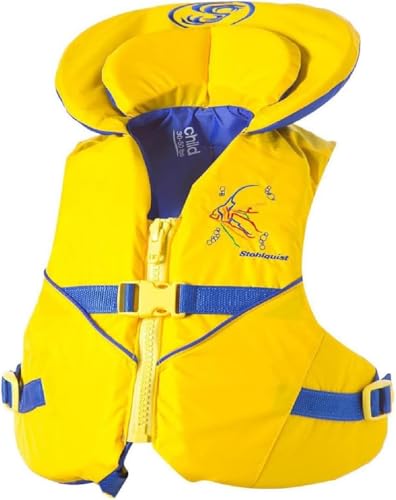
Best for active kids in the 30–50 pound range, this Type III life vest emphasizes buoyant support with face-up potential and ergonomic foam for comfort. It’s designed to turn wearers face-up in calm water and uses PVC-free Gaia and PE foam for softer, longer-lasting buoyancy. Choose this for kids who swim and participate in various water sports, where ease of movement matters.
Limitation: “Type III” does not guarantee face-up positioning in all conditions; it’s best used in calm to moderate water and under adult supervision.
SwimWays Marvel Swim Trainer Life Jacket

This 2-in-1 design blends a traditional life vest with integrated arm floaties, making it a practical choice for kids in the 33–55 pound range. It is US Coast Guard approved and features a soft fabric exterior for comfort and easier mobility. Best for kids who want a playful look while easing into swimming with extra buoyancy.
Limitation: the combination design adds bulk around the arms, which may affect flexibility for some kids during active swimming lessons.
Buying Guide: Toddler Life Jacket Essentials
What to verify before buying
Always confirm USCG approval and the correct weight range for your child. Look for a snug fit with adjustable straps, a secure neck support, and a snug, non-rising design. The presence of a grab handle and a headrest is advantageous for quick rescues and comfort during extended water exposure.
How to choose by activity
Calm-water guardians may prefer Type II vests with head support, such as the Stearns and Stohlquist infant options. For children who swim or partake in boating and watersports, Type III vests like the Stohlquist Child PFD provide more mobility and confidence. For learning-to-swim aids, consider a 2-in-1 trainer like the SwimWays model that combines a vest with arm floats.
Fit and safety tips
- Have the child wear the vest in shallow water for fitting trials and adjust all straps to snug but comfortable levels.
- Check that the vest does not ride up over the chin or head when the child tilts.
- Inspect buckles and zippers regularly for wear or damage and replace if signs of wear appear.
Maintenance and care
Rinse life jackets with fresh water after use in saltwater or chlorinated pools. Air dry away from direct sun to preserve flotation materials and colors. Avoid washing with harsh detergents that may degrade foam integrity.
FAQ
- What weight range is safest for a toddler life jacket? Choose a vest that explicitly lists your child’s weight range within its design, typically 0–30 lbs, 20–30 lbs, 30–50 lbs, or 33–55 lbs depending on the model.
- Is a headrest necessary for toddlers? A headrest improves comfort and helps keep the mouth and nose above water, especially for younger toddlers or those new to water activities.
- Should I prefer Type II or Type III for my toddler? Type II vests offer better face-up orientation for calm waters, while Type III is more flexible for active swimming and multiple water activities in safe environments.
- Can a life jacket replace constant supervision? No. A life jacket reduces risk but never substitutes direct supervision and safe water practices.
- How do I know if the vest fits properly? Put it on the child, fasten all straps, and gently lift at the shoulder. If the vest rises above the child’s chin or ears, tighten or try a smaller size.
- Are 2-in-1 trainer vests safe for beginners? They provide extra buoyancy and familiarity but should be used under supervision and not as a sole method for learning to swim.