Best Remote Control Trolling Motors for Kayaks: Top Picks for Easy, Hands-Free Fishing
Answering the need for hands-free, precise steering on a kayak, these remote-control trolling motors let anglers keep their hands free for rods and gear. This guide highlights five reliable options, detailing who each is best for, why they stand out, and any limitations to consider. Ideal buyers include casual pond anglers seeking simple remote control, serious kayak fishers needing long-range operation, and saltwater anglers requiring corrosion resistance. The table below compares core details at a glance.
| Product | Best For | Key Benefit | Limitations |
|---|---|---|---|
| AQUOS Haswing CaymanT 12V 55LB 26in | Budget-minded anglers who want a palm-sized remote | 2.4 GHz remote, 164 ft range | Shorter shaft may limit depth in some kayaks |
| Newport Kayak Series 55lb Thrust | Saltwater and freshwater paddlers needing tall reach | 24″ fiberglass shaft, strong corrosion resistance | Limited to 24″ shaft in this model |
| AQUOS Haswing CaymanB 55LBS 48in Bow Mount | Remote-friendly anglers who want quieter operation | Quiet, variable speed with long remote range | Bow mount only; may require installation tweaks |
| Minn Kota i-Pilot Bluetooth Remote | Anglers who want multi-remote control with GPS-style features | Additional remote, GPS-style feedback | Higher complexity and setup |
| Garmin Force Kayak Trolling Motor | Tech-savvy kayakers seeking wireless integration | Wireless throttle/steering with hands-free options | Requires compatible Garmin ecosystem |
AQUOS Haswing CaymanT 12V 55LB 26in Shaft Transom Trolling Motor

The CaymanT 12V 55LBS with a 26-inch shaft targets anglers who prefer remote-guided control via a palm-sized unit. It ships with a hand control, an encapsulated electronics package, and a sacrificial anode for corrosion protection. Best for buyers who want straightforward speed control, a wide grip remote, and a compact, easy-to-mount option for shallow-water kayaks. The 0–85 degree tilting feature helps adjust depth on the fly. A caveat: the shorter shaft may limit push depth on deeper waterways or high freeboard kayaks.
Why it’s selected: Robust remote operation up to 164 feet and a simple interface make it a good match for casual to intermediate kayak anglers who favor ease of use over advanced navigation features. It’s a practical, all-around choice for mixed-water environments.
Best for: Kayak anglers who want a reliable, budget-friendly remote-trolling option with straightforward controls and saltwater-ready durability.
Newport Kayak Series 55lb Thrust Transom Electric Trolling Motor
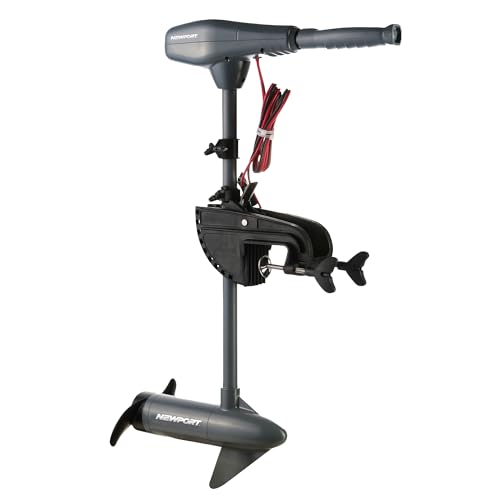
This Newport model features a 24-inch fiberglass shaft and eight-speed control (5 forward, 3 reverse) with a six-inch telescoping handle. It’s designed for saltwater use with all-aluminum motor head and corrosion-resistant hardware. The product suits saltwater kayakers who want dependable thrust, simple speed control, and a compact mounting profile. Best for: stable tracking in variable wind and current with reliable, straightforward control.
Why it’s selected: The 24-inch shaft length offers flexible depth placement for a wide range of kayak hulls, making it stronger for those who need a bit more reach without stepping into longer shaft models.
Best for: Anglers who fish both saltwater and freshwater and need a robust, easy-to-maintain motor with practical speed control.
AQUOS Haswing CaymanB Electric Bow Mount 12V

The CaymanB Bow Mount offers 55 pounds of thrust with a 48-inch shaft and wireless remote operation. It emphasizes quieter performance and precise speed adjustments for smoother control, which is beneficial when maneuvering in tight spots or wind-driven conditions. The motor is suitable for boats up to around 2750 pounds, making it versatile for trolling larger kayaks or small craft. Best for: saltwater and freshwater anglers who value quiet operation and long-range remote steering.
Why it’s selected: The inclusion of a wireless remote, extended shaft length, and a cruise-control-like experience makes it a strong choice for delivering steadier tracking across varying conditions.
Caution: While it offers advanced control, setup and wiring can be more involved than entry-level models, so ensure compatibility with your kayak and mounting location.
Garmin Force Kayak Trolling Motor

The Garmin Force for kayak use emphasizes wireless integration and easy installation. It supports a hands-free approach through compatible wireless controls and pedal options in select bundles. This motor is best for anglers who want a streamlined, modern system with reliable wireless throttling and steering, potentially integrating with Garmin’s broader ecosystem for maps and GPS-style features. Best for: tech-savvy anglers seeking seamless wireless control and strong ecosystem integration.
Why it’s selected: Its wireless integration and flexible control scheme can simplify on-water operation and reduce clutter on deck, appealing to users who prefer a high-tech setup.
Buying Guide
What matters most when choosing a remote-control trolling motor for a kayak?
- : Short shafts fit higher-cut hulls; longer shafts help in deeper waters. Bow-mount versus transom-mount affects steering feel and mounting complexity.
- : Look for at least 100–164 feet of range and whether you prefer a handheld remote, foot pedals, or integrated GPS-style controls.
- : 55 lbs thrust is common for kayaks; ensure it matches your kayak weight, gear, and water conditions.
- : Saltwater-rated hardware resists corrosion; consider marine-grade connectors and sacrificial anodes.
- : Variable speed and digital maximizers can extend battery life for long trips.
- : Some models require more mounting work or a specific transom height; verify compatibility with your kayak model.
- : GPS-like spot-lock, auto-pilot, and system integration can offer significant convenience but add cost and complexity.
Frequently Asked Questions
What is the typical range for kayak remote trolling motors? Most remotes work within 100–164 feet, depending on the model and interference.
Is a longer shaft always better for kayaks? Not always. Longer shafts help in deeper water but can complicate mounting on shorter kayaks.
Are saltwater motors necessary for freshwater use? Saltwater-rated hardware is more durable in corrosive conditions; for freshwater-only use, a non-saltwater rated transition can save cost but monitor wear.
Can I install a bow-mount motor on a sit-on-top kayak? It’s possible with proper mounting hardware and brackets, but it’s not universal. Check your kayak’s weight limit and mounting area.
Do these motors require special batteries? Most 12V systems use standard deep-cycle batteries or high-capacity marine batteries; verify compatibility with your motor’s current draw and estimated run time.