Best Portable Pumps for Boats: Reliable Options for Quick Bilge and Fuel Transfer
Finding a portable pump for boats means prioritizing portability, reliability, and ease of use in tight spaces. This guide compares five top options to help boaters, anglers, and marine enthusiasts pick the right tool for bilge, fuel transfer, and onboard water management. The best picks suit different needs: emergency fuel transfer, fast bilge pumping, and battery-powered operation away from shore power.
Summary of selected products:
| Product | Best For | Key Benefit |
|---|---|---|
| BOLCOWE Electric Fuel Transfer Pump | Emergency and off-grid fueling | Battery powered, ready out of box |
| Better Boat Manual Bilge Pump Large | Large-volume bilges | 25 GPM with long hose |
| Better Boat Manual Bilge Pump (20 GPM) | Everyday bilge use | Balanced flow and reach |
| SEAFLO Piston Hand Bilge Pump | Small to medium boats | Lightweight, durable build |
| GEXIHODIE Portable Electric Siphon Pump | On-the-go fuel transfer | Battery-powered with 1/2″ discharge |
BOLCOWE Electric Fuel Transfer Pump 3.2 GPM

The BOLCOWE Fuel Transfer Pump is designed for quick, portable fuel moves. It requires no assembly and can run on 2 D or 6 AA batteries, making it usable during power outages or in remote locations. Best for boaters who need emergency fueling or off-grid transfers without a power source. The included hose is designed to be non-toxic and odor-free for indoor or garage use. A key limitation is that it relies on batteries, so performance depends on battery availability and life.
Who it’s best for: Boat owners who need a ready-to-use, battery-powered pump for emergency fueling or remote fuel transfers. Ideal for campers, RVs, and off-grid marinas where electricity isn’t available.
Better Boat Manual Bilge Pump Large

This hand pump moves water fast with a 25 GPM capacity and 175 cubic inches per stroke. The 5-foot hose provides reach to access deeper areas or over the gunwale. It includes a built-in filter to block debris and suction spacers to maintain prime in dirty water. It’s best for quick removal of water from boats, basements, or pool covers. Limitation: manual pumping requires physical effort and may be slower for very large bilges compared with powered options.
Who it’s best for: Boat owners who need a high-flow, portable bilge option for frequent water removal or for use in tight spaces where electricity isn’t available.
Better Boat Manual Bilge Pump 20 GPM

This pump delivers 20 GPM with a 39-inch discharge hose, allowing water to be directed away from the boat efficiently. It features a built-in filter to prevent clogging and suction spacers to keep the intake off the bottom, preserving prime. Best for regular bilge maintenance where electrical access is limited. A potential drawback is slightly lower flow than the large-budget 25 GPM model during peak bilge loads.
Who it’s best for: Sailors and small-boat owners seeking reliable, consistent manual pumping with ample reach and easy prime retention.
SEAFLO 31.9″ Hand Bilge Pump
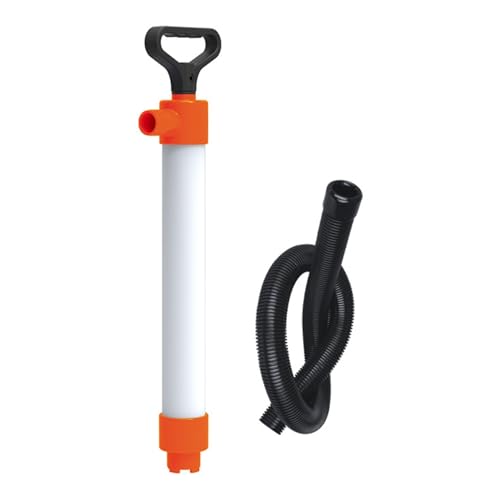
The SEAFLO hand bilge pump uses a lightweight, compact design suitable for small to medium boats. It includes a long 31.9-inch hose and an EPDM valve setup, offering reliable performance with easy deployment and storage. It’s supported by a four-year warranty, which adds long-term confidence for boat owners. Limitation: as a manual pump, it requires effort, and the discharge head is relatively modest for deep bilges.
Who it’s best for: Operators of small to medium boats who want a compact, proven manual bilge solution with dependable reliability and a long hose for reach.
GEXIHODIE Portable Electric Siphon Pump

This battery-operated siphon pump is designed for on-the-go fuel transfer. It includes a 1/2-inch discharge tube and a long 35.4-inch reach, facilitating easier access to tanks or containers. The pump uses an impeller to enhance suction power for steady transfer and is suited for brief, portable fueling tasks away from shore power. Caution: battery life and charging availability will influence reliability on longer projects.
Who it’s best for: DIYers and outdoor enthusiasts who need a compact, battery-powered option for quick fuel transfers with moderate flow in remote areas.
Buying Guide
What matters most when picking a portable pump for boats:
- Fuel transfer vs. bilge pumping: Choose a dedicated fuel transfer pump if you primarily move gasoline or diesel. For removing water, prioritize bilge pumps with high GPM and a long hose.
- Power source: Battery-powered units offer off-grid flexibility but ensure you have fresh batteries or a charger. Manual pumps work without electricity but require more effort for large volumes.
- Flow rate and hose reach: A higher GPM helps clear bilges faster; hose length determines reach over gunwales or into compartments.
- Filtration and priming: Built-in filters prevent debris from entering pumps. Suction spacers help maintain prime when water is dirty or shallow.
- Portability and storage: Look for lightweight construction, compact design, and durable materials for marine environments.
- Warranty and durability: A longer warranty can indicate better long-term reliability for frequent marine use.
Usage Scenarios
- Emergency fuel transfer during outages or storms.
- Removing bilge water after rain or leaks.
- Transferring water from decks, basins, or small compartments on small boats.
- Draining ponds, basements, or pools when near a boat or dockside area.
FAQ
- What makes a pump best for boats? Look for marine-grade materials, corrosion resistance, and appropriate hose length for bilges and fuel tanks.
- Is a manual bilge pump enough for a large boat? For large bilges, combine manual pumps with a powered option or use a high-GPM model for faster draining.
- Can battery-powered pumps be used indoors? Yes, if batteries are handled safely and the discharge hose directs liquids away from occupants.
- What should I consider before buying? Consider intended use (fuel transfer vs. water removal), power availability, and required reach. A kit with filters is advantageous.
- Are there safety concerns with fuel transfer pumps? Always follow fuel handling safety, avoid sparks, and ensure proper venting and spill containment.
- Do these pumps come with hoses? Most listed pumps include discharge hoses of varying lengths; verify the exact hose length in the product details.