Best Trolling Motor Battery Options for Canoes and Small Boats
If you need reliable power for a canoe trolling motor, choose a compact, durable battery with clean mounting and steady discharge. This guide highlights 5 top choices that balance weight, longevity, and marine-ready features for canoeists and small-boat anglers. Each option targets a specific use-case, from lightweight portability to high-capacity all-day runs. The buyer will find who each product is best for, plus practical limitations to consider before buying.
Summary Of Selected Products
- Newport 12V50Ah Deep Cycle AGM Marine Battery — Best for lightweight, sealed reliability on small craft
- Newport Trolling Motor Smart Battery Box Power Center — Best for clean, all-in-one setup
- Renogy 12V 20Ah Lithium LiFePO4 Battery — Best for weight-conscious, long-run needs
- Mighty Max Battery 12V 55Ah — Best for larger canoes needing solid capacity
- Litime 12V 100Ah LiFePO4 Battery — Best for extended trips with Bluetooth monitoring
Newport 12V50Ah Deep Cycle AGM Battery

Best for lightweight need-to-move power. This 32-pound AGM lead-acid battery is designed for trolling-motor compatibility and easy transport on a canoe. The sealed construction reduces maintenance and minimizes the risk of leaks on a misty morning on the water. Best for anglers who prioritize portability and straightforward 12V trolling motor compatibility without extra wiring complexity.
Who it’s best for: casual day-trippers and back‑water anglers seeking a reliable, sealable option that won’t bog down a small craft. Limitation: AGM batteries can be heavier per amp-hour than some lithium options and may require a dedicated charger suitable for lead-acid chemistry.
Newport Trolling Motor Smart Battery Box Power Center
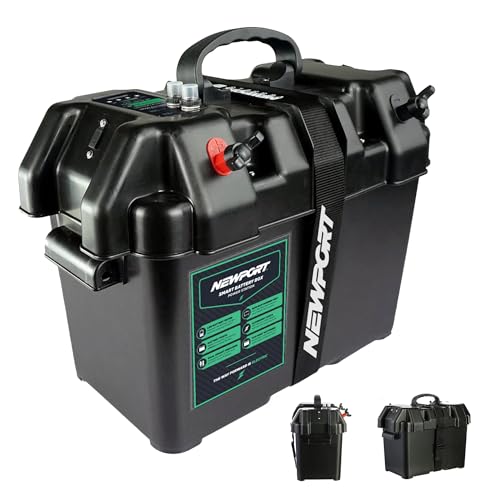
Best for a clean, plug‑and‑play setup on small watercraft. This power center consolidates connections, reducing exposed terminals and messy wiring. It includes external terminals for easy trolling motor and electronics connections and provides built-in USB and 12V ports to power devices. Choose this if you want a portable, organized power hub without extra clutter.
Who it’s best for: canoeists who value organization and minimal on-water wiring, plus those who need USB power for devices. Limitation: It is a power hub rather than a standalone high-capacity battery, so pairing with a suitable battery is essential for longer runs.
Renogy 12V 20Ah LiFePO4 Battery
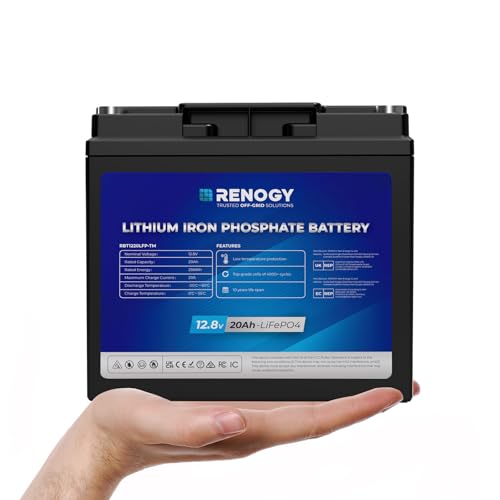
Best for weight-conscious scenarios and longer runtimes in a compact form. This lithium LiFePO4 battery is roughly 50% lighter than a traditional lead-acid 20Ah, offering extended runtime for compatible devices like fish finders and small electronics. It includes a built-in BMS with low-temperature cut-off for safety in cold mornings on the water.
Who it’s best for: canoeists seeking a light, efficient deep-cycle option with modern protections. Limitation: Requires compatible BMS-aware chargers and may have higher upfront cost compared to lead-acid options.
Mighty Max Battery 12V 55Ah

Best for higher capacity on larger canoes where longer runs are needed. This 12V 55Ah sealed lead-acid battery is designed for deep discharge and sustained performance. It’s a compact option with a relatively high energy store for its size, suitable for longer days on the water with a trolling motor running at moderate speeds.
Who it’s best for: canoe enthusiasts who need reliable all-day power without frequent recharges. Limitation: SLA/AGM batteries can be heavier than lithium alternatives and may require more frequent maintenance checks for optimal life.
Minn Kota Endura C2 Transom-Mount Trolling Motor
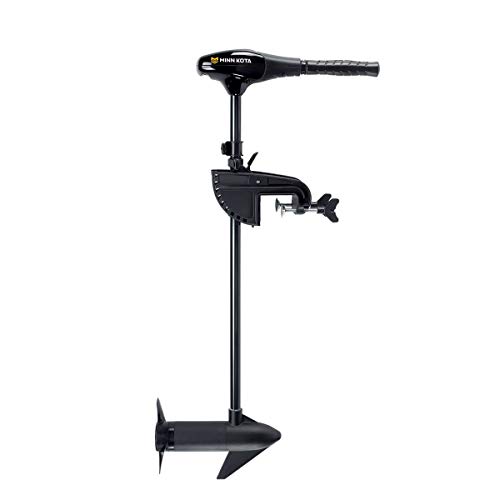
Best for integrated control and proven marine design. The Endura C2 features a 30 lb thrust, 30-inch shaft, and a telescoping tiller for easy handling on smaller craft. It includes a push-to-test battery meter and a durable, UV-resistant housing. This option is ideal for canoeists who want a reliable, ready-to-use trolling setup with straightforward mounting.
Who it’s best for: beginners or casual anglers who want a fully integrated trolling motor solution. Limitation: It’s a motor unit, so you’ll need a suitable battery separately for power endurance and weight considerations.
Newport NV-Series 36lb Thrust Trolling Motor

Best for lighter-craft propulsion with efficient power. This 36-pound thrust motor is designed for small kayaks, canoes, and inflatables, with a saltwater-capable build for versatile use. The 30-inch shaft and LED battery indicator help monitor runtime while providing steady propulsion, even in modest chop.
Who it’s best for: canoeists seeking a balance of portability and performance in a saltwater-capable package. Limitation: Thrust is moderate; heavier boats may need more power for quick speeds or thick vegetation.
Newport NV-Series 55lb Saltwater Trolling Motor
Best for robust power on saltwater journeys or larger canoes where higher thrust is beneficial. This 12V motor delivers up to 55 lbs of thrust with a 30-inch shaft and a 5-LED battery meter. It supports extended trolling with a reliable build for frequent water trips in varied conditions.
Who it’s best for: anglers needing significant thrust for faster movement or thicker cover. Limitation: Higher thrust models require more power; pairing with a capable battery is important for maintaining runtime.
Buying Guide
- What type of battery fits a canoe: Consider weight, space, and maintenance. LiFePO4 options offer lighter weight and long life, while AGM batteries provide lower upfront cost and robust sealing.
- How much capacity do you need: For short trips, 20–36Ah may suffice; for longer outings or higher-thrust motors, 40–100Ah can extend runtime—balance with boat weight.
- Voltage and compatibility: Most trolling motors run on 12V. Confirm that your battery matches the motor’s voltage and your charger’s compatibility.
- Portability vs. endurance: For portage-friendly canoes, lighter batteries improve handling. For all-day trolling, prioritize higher amp-hours or lithium options with better energy density.
- Safety and maintenance: Sealed AGM and LiFePO4 batteries reduce leakage risk. Consider built-in protections like low-temp cut-off and BMS when boating in cold or humid environments.
- Wiring and accessories: External battery boxes or power hubs can simplify installation. Ensure you have appropriate mounting hardware and weatherproof connectors.
FAQ
- What battery should I choose for a canoe with a small trolling motor?
– For light, portable setups, a sealed AGM battery in the 12V range (about 20–50Ah) is common and simple to manage. - Are LiFePO4 batteries worth it for a canoe?
– Yes, if you value lighter weight, longer cycle life, and safety protections; they cost more upfront but run longer between charges. - How do I know if a battery fits my motor?
– Check the motor’s voltage requirement (usually 12V) and ensure the battery’s amp-hour rating aligns with your desired runtime. - Can I mix battery types?
– It’s generally not recommended to mix different chemistries in a single setup due to charging and performance differences. - What maintenance is needed for AGM batteries?
– Keep terminals clean, monitor charge levels, and use a charger compatible with lead-acid or AGM chemistry to prolong life. - Do I need a separate charger for LiFePO4 and AGM?
– Yes. LiFePO4 requires a charger compatible with lithium chemistries; AGM uses a lead-acid charger or a multi-chemistry charger.