Best 1000 Cranking Amp Marine Battery Options for Boats
When choosing a 1000 cranking amp marine battery, the goal is reliable starting power plus solid deep-cycle performance. This guide highlights five top options that approach or exceed 1000 CCA, explains who each battery is best for, and points out practical considerations. Ideal buyers include weekend boaters, anglers, and RV owners who need dependable starts in variable weather and steady auxiliary power for offshore trips.
Summary of chosen products
| Product | Brand | Approx. CCA | Best For |
|---|---|---|---|
| WEIZE 12V 105Ah 1000CCA Dual Purpose LiFePO4 | WEIZE | 1000 | High-cranking power with deep-cycle capability |
| LiTime 12V 165Ah Dual Purpose Lithium Marine (1200CCA) | LiTime | 1200 | Heavy-duty starting and long run times |
| Interstate Batteries Marine Deep Cycle 31-AGM5 (925CCA) | Interstate Batteries | 925 | Dual-purpose functionality at reliable power |
| WEIZE BCI Group 31M Dual Purpose AGM Battery (825CCA) | WEIZE | 825 | Balanced starting and deep-cycle duties |
| Mighty Max Battery MM-G24M 550 CCA | Mighty Max Battery | 550 | Reliable backup and auxiliary power |
WEIZE 12V 105Ah 1000CCA Dual Purpose LiFePO4 Battery

The WEIZE LiFePO4 battery delivers 1000 CCA and 105Ah, designed for dual-purpose use, including starting power and deep-cycle needs. Best for boaters who need strong cranking in cold or windy conditions while still powering trolling motors and electronics for extended periods. The built-in lithium chemistry offers longer cycle life and reduced weight compared with lead-acid options. A key caveat is higher upfront cost, though total life-cycle costs may be lower over time due to weight savings and more cycles.
LiTime 12V 165Ah Dual Purpose Lithium Marine Battery (1200CCA)

The LiTime Lithium battery offers 1200 CCA, making it a strong option for high-start demand in demanding marine environments. It combines deep-cycle capability with space-saving design and a built-in management approach for safety and longevity. Best for boats that require robust starting power plus long-duration electronics use. Limitations include higher purchase price and the need for understanding LiFePO4 charging requirements and compatibility with existing systems.
Interstate Batteries Marine Deep Cycle 31-AGM5 (925CCA)
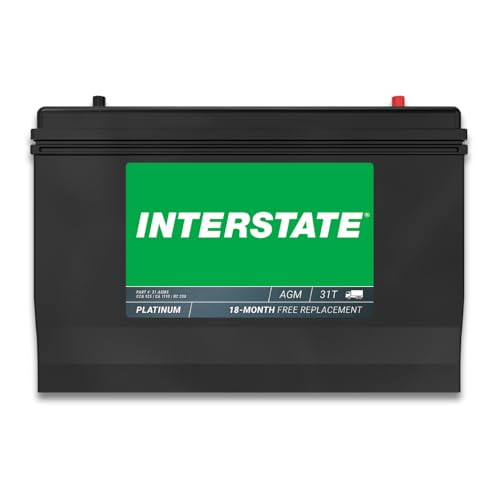
Interstate’s 31-AGM5 is a versatile marine dual-purpose battery with 925 CCA and strong deep-cycle performance. It’s well-suited for boaters who want reliable engine starts and ample power for trolling motors, lights, and accessories during long trips. It’s best for mixed-use boats where a balance of starting and deep-cycle capability is valued. A potential limitation is that it does not reach 1000 CCA, so it may be less ideal in extremely cold climates compared with higher-CCA lithium options.
WEIZE BCI Group 31M Dual Purpose AGM Battery (825CCA)

This WEIZE model provides dual-purpose power with 825 CCA and solid deep-cycle capabilities. Best for boaters who prioritize balanced performance in moderate climates or who have space constraints and want a lighter, more compact AGM option. It’s advisable to compare how its 825 CCA aligns with your cold-start needs, as very cold environments may benefit from higher CCA options.
Weize Dual Purpose AGM Battery BCI Group 24M (550 CCA)

The WEIZE Group 24M offers dual-purpose AGM performance with 550 CCA, suited for lighter boats or as a secondary starting battery paired with a larger unit. Best for budget-conscious buyers who still want dependable starting power in warmer conditions. It is not ideal for cold starts where higher CCA is beneficial, but it remains a solid value option for day-use boating and RV tasks.
Buying Guide: Key Considerations for 1000 CCA Marine Batteries
Starting power and deep-cycle capability are the two core requirements. When evaluating options, consider the following questions:
- What is my typical climate, and will higher CCA improve cold-start reliability?
- Do I need a pure starting battery, a deep-cycle battery, or a dual-purpose unit?
- Is weight a critical factor for my vessel or vehicle, and can I gain efficiency with LiFePO4 chemistry?
- What charging systems and voltages are compatible with the battery type I choose?
- What is the expected service life and maintenance needs for lead-acid AGM versus lithium options?
Battery chemistry and lifecycle considerations
Lithium (LiFePO4) batteries typically offer higher CCA, longer cycle life, and lighter weight than lead-acid AGM, but come at a higher upfront cost. AGM lead-acid options are rugged, familiar, and often more affordable upfront, with shorter lifespans and heavier weights. The choice depends on how you balance initial cost, weight, space, and long-term durability.
Sizing and compatibility
Ensure the battery fits your boat’s layout and mounting options. Check terminal type and arrangement, as some models use dual SAE and post configurations. Also confirm the charger and inverter settings match the battery’s chemistry and recommended charging profile to maximize life and performance.
Maintenance and installation considerations
Maintenance-free designs reduce upkeep, but proper ventilation and secure mounting prevent leaks or damage in rough seas. For lithium options, understand the BMS protections and ensure proper charging controls. For AGM, avoid deep discharges beyond recommended thresholds to extend life.
Choosing by use case
Best for strong starts in variable weather: high-CCA lithium or premium AGM with deep-cycle capability. Best for long trips with extensive electronics: dual-purpose options with robust deep-cycle performance. Best for budget-friendly setups: 825 CCA or lower AGM batteries that still meet your starting needs under typical boating conditions.
Quick comparison snapshot
- Best for maximum starting power: LiTime 1200CCA LiFePO4
- Best for weight-conscious boats: WEIZE LiFePO4 1000CCA
- Best all-around value: Interstate 925CCA 31-AGM5
- Best budget dual-purpose: WEIZE 825CCA Group 31M
- Best backup or auxiliary option: Mighty Max 550CCA
FAQ
- Q: Do I need lithium to reach 1000 CCA? A: Not necessarily; high-CCA AGM options exist, but lithium often provides higher effective CCA with lighter weight.
- Q: Can I mix different battery chemistries on the same boat? A: It’s generally not recommended due to charging and balancing concerns; consult the system designer.
- Q: How do I know which battery fits my mount? A: Check dimensions, terminal layout, and mounting pattern; compare with your boat’s battery compartment specs.
- Q: Is maintenance-free always better for marine batteries? A: Maintenance-free is convenient, but ensure regular checks of connections and mounting integrity for longevity.
- Q: What charging profile should I use for LiFePO4 vs AGM? A: Use manufacturer-recommended profiles; LiFePO4 typically accepts higher discharge rates and needs careful BMS monitoring.
- Q: Are 1000CCA batteries suitable for all seasons? A: They help in cold starts, but overall performance also depends on battery type, charging system, and engine requirements.