Best Marine DC to DC Charger Options for 12V Systems
Whether you’re outfitting a boat, RV, or a marine application, a DC to DC charger helps keep house batteries charged without draining the starter battery. This guide highlights five reliable options that work well in boats and other marine environments, with clear notes on who each is best for and why.
Buyer’s quick reference table:
| Product | Battery Types Supported | Key Benefit | Best For |
|---|---|---|---|
| Renogy DC to DC Charger 12V 20A | LiFePO4, AGM, Gel, Flooded | Compact, smart LiFePO4 activation | |
| Renogy DC to DC Charger 12V 40A | LiFePO4, AGM, Gel, Flooded | Moderate capacity with alternator detection | Mid-size boats, RVs with modest house loads |
| Renogy DC to DC Charger 12V 60A Lifepo4 | LifePO4, AGM, Gel, Flooded | High-current multi-stage charging | Larger house banks, demanding lithium setups |
| Victron Orion-Tr Smart DC to DC Charger 30A | 12/12V systems | Bluetooth monitoring, isolation | Dual-battery systems on boats or trucks |
| Victron Orion-XS Smart DC to DC Charger 50A | 12/12V, IP65 rated | High power, configurable, rugged | Dual-battery setups with outdoor or harsh conditions |
Note on use: These options are designed to optimize charging from the engine’s alternator to a dedicated house or auxiliary battery bank. They help maintain battery health, improve runtime, and reduce reliance on shore power, especially for marine systems where starting and house batteries must be managed together.
Renogy DC to DC Charger 12V 20A

Best for small boats or compact installations, this 20A model provides SafeGuard Start and Charge Smart with alternator detection. It automatically adapts during engine startup to protect the vehicle or marine battery. It features a compact, wall-mount design and a safe internal layout to minimize short circuits in tight spaces. It also offers LiFePO4 activation for optimized performance via an easy on/off control. Best for limited space and lighter house load scenarios.
Who it’s best for: boaters with small to moderate electrical loads and tight install space who want a simple, reliable LiFePO4 capable charger. Caution: lower current means slower charging for large house banks.
Renogy DC to DC Charger 12V 40A

This 40A charger balances higher charging capability with a compact form factor. It includes alternator detection so charging occurs only when the engine runs, protecting both starter and house batteries. The 2nd-gen Renogy design ensures safe spacing between input and output terminals, reducing short-circuit risk in RV, boat, or marine installations. Ideal for mid-sized systems and moderate house loads. Caution: may require more mounting space than the 20A unit.
Who it’s best for: boat owners with larger house banks or mid-range electrical demands who still need a space-efficient solution. Choose this if you need more current without stepping up to the 60A option.
Renogy DC to DC Charger 12V 60A Lifepo4
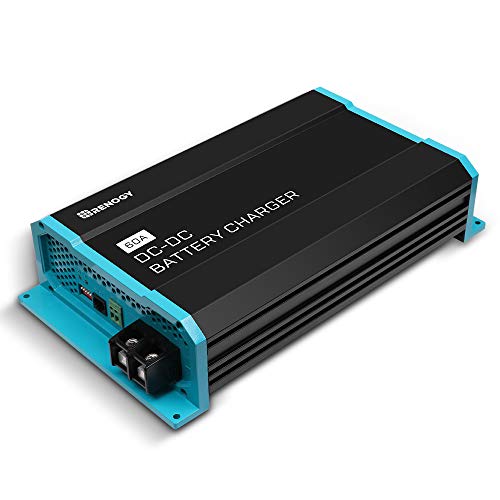
High-capacity option for larger house batteries, including LiFePO4. It uses a three-stage charging approach (Bulk, Absorb, Float) to ensure efficient charging to 100%. It also provides over-voltage, over-temperature, and reverse polarity protections, plus input/output isolation for reliability in demanding marine environments. Best for significant house loads or when lithium systems require robust charging. Caution: higher current means more heat and potentially larger installation space.
Who it’s best for: boaters with substantial battery banks or lithium systems that demand rapid, safe charging. Choose this if your load is consistently high and you want fast replenishment between uses.
Victron Orion-Tr Smart DC to DC Charger 30A

Professional-grade dual-battery charging with Bluetooth monitoring via VictronConnect. It supports 12/12V systems and isolates input/output to prevent voltage cross-talk, making it a good fit for boats with separate starting and service batteries. The 30A model balances performance and simplicity for many marine setups. Caution: Bluetooth apps require compatibility with your device for ongoing monitoring.
Who it’s best for: dual-battery systems where monitoring and isolation are priorities. Choose this if you want Bluetooth visibility and straightforward setup.
Victron Orion-XS Smart DC to DC Charger 50A

The Orion-XS 50A model is engineered for advanced dual-battery systems with high-duty cycles. It features Bluetooth monitoring, a rugged IP65 rating for outdoor use, and accurate current adjustment to match a wide range of alternators and battery chemistries. It delivers high efficiency and stable output even in warm environments. Caution: higher power requires careful wiring and heat management in tight compartments.
Who it’s best for: users with demanding house loads, outdoor installations, or harsh marine conditions who need robust, configurable charging with remote monitoring.
Buying Guide: Key Considerations For Marine DC To DC Chargers
What battery types will you charge? Most DC to DC chargers support LiFePO4, AGM, Gel, and flooded lead-acid. If you plan a lithium setup, verify LiFePO4 activation and compatibility.
What current do you need? Choose higher current (40A/60A/50A) for larger house banks or faster replenishment, but ensure your alternator and wiring can handle it without overheating.
Is alternator detection important? Models with built-in alternator detection optimize charging during engine operation and protect starter batteries from unnecessary discharge.
Do you need Bluetooth or app monitoring? Victron models commonly offer Bluetooth via VictronConnect. This helps you monitor voltage, current, and state of charge remotely.
What about protection features? Look for over-voltage, over-temperature, reverse polarity, and input/output isolation to improve safety and reliability in marine environments.
Is space a concern? If you’re in a tight engine room or an RV cabinet, consider compact designs with safe internal layouts to minimize short circuits and ensure easy mounting.
Wiring and installation: Ensure proper gauge wiring between the alternator, charger, and house battery bank. Confirm engine start/stop wiring, fuse sizing, and venting for heat management.
Frequently Asked Questions
- What is a DC to DC charger used for in boats?
It charges house batteries from the engine’s alternator, helping maintain battery health and extend run time without shore power.
- Do I need LiFePO4 activation?
It optimizes charging for LiFePO4 packs, improving efficiency and battery lifespan when using lithium chemistries.
- Can these chargers handle 24V or mixed systems?
Some models support 12/12V or mixed setups; verify the model’s voltage compatibility before wiring.
- Is Bluetooth monitoring essential?
Bluetooth isn’t essential, but it provides convenient remote visibility for system status and adjustments.
- What safety features matter most?
Look for isolation between input and output, over-temperature and over-voltage protection, and reverse polarity safeguards.
- How do I choose between 30A, 40A, or 60A?
Match current to your house battery capacity, typical load, and alternator capability. Higher current charges faster but requires proper wiring and cooling.