Best Marine Clear Coat for Fiberglass: Durable Finishes for Boats
Clear coats designed for fiberglass boats protect against salt, UV, and moisture while keeping a pristine, glassy finish. This guide highlights five top options, clarifying which buyers should choose each product based on workload, maintenance, and application style. The listed selections emphasize marine compatibility, UV resistance, and ease of use for DIY projects or professional repairs. Use this overview to compare durability, ease of application, and suitability for fiberglass surfaces on boats, decks, and trims.
| Product | ||
|---|---|---|
| KBS Coatings 8404 DiamondFinish Watercolor Clear Coat | Single-part clear coat | Splash-proof marine and outdoor uses; no hardener required |
| KBS Coatings 8304 DiamondFinish Watercolor Clear Coat | Direct-to-metal, single-part | Painted surfaces needing a hard, durable clear coat |
| Moeller Clear Coat High Gloss Lacquer | Marine engine clear coat | Engine components and interior/exterior marine areas |
| Quicksilver Clear Coat Enamel Spray Paint | Aerosol enamel spray | Finish touches on outboard engine cowlings and related parts |
| Rust-Oleum Marine Spar Varnish | Oil-based spar varnish | Exterior wood surfaces above the water line (rails, trim) |
KBS Coatings 8404 DiamondFinish Watercolor Clear Coat
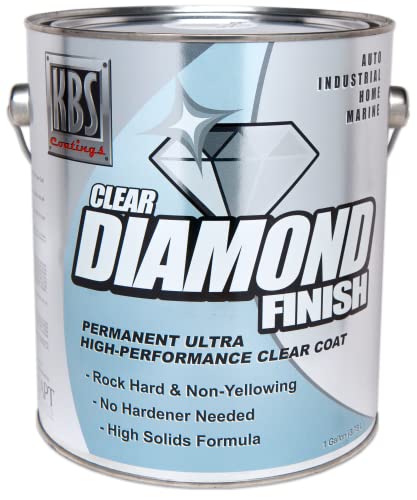
The 8404 DiamondFinish is a single-part clear coat designed for toughness and clarity. It resists scratching and maintains a transparent appearance over time, making it suitable for marine and outdoor projects where a durable finish is essential. This product does not require a hardener, simplifying application for hobbyists and professionals alike. It is described as weatherproof, offering protection against saltwater, humidity, and UV exposure, helpful for fibreglass surfaces exposed to sunlight and spray. Best for: boat decks, fiberglass fittings, and outdoor marine components that need a robust, water-clear coat. Limitation: being a single-part formula, it may require careful surface preparation for optimal hardening and gloss retention over extended time.
- Best for: DIY boat restoration and outdoor marine fixtures.
- Why selected: Combines toughness with ease of use and excellent clarity.
- Caution: Ensure surfaces are clean and dry before application to maximize adhesion and longevity.
KBS Coatings 8304 DiamondFinish Watercolor Clear Coat
This KBS 8304 variant emphasizes direct-to-surface performance with a single-part formula engineered to be tougher and harder than some two-part clear coats. It is designed for painted surfaces, offering a hardy clear layer that resists wear and moisture. Best for: painted fiberglass or metal components on boats where you want a strong, durable topcoat without mixing two components. Limitation: as with many clear coats, the finish depends on proper surface preparation and curing conditions for full hardness.
- Best for: Painted fiberglass surfaces requiring a resilient topcoat.
- Why selected: Direct-to-surface application minimizes steps while maximizing protection.
- Caution: Avoid moisture exposure during curing to prevent clouding or improper film formation.
Moeller Clear Coat High Gloss Lacquer 025519

Moeller’s Clear Coat is formulated for marine environments and is suitable for use on engines and related marine components. The high gloss lacquer aims to provide a bright, reflective finish that stands up to routine exposure in a marine setting. Best for: marine engines, stern drives, and lower unit areas where a strong gloss layer is desired. Limitation: as a specialty marine lacquer, it may require compatible thinner or environmental controls to achieve ideal finish and cure.
- Best for: Engine compartments and exterior marine surfaces needing a glossy shield.
- Why selected: Engine-focused formula designed for saltwater conditions and UV exposure.
- Caution: Verify compatibility with underlying coatings to avoid peeling or chemical incompatibility.
Quicksilver Clear Coat Enamel Spray Paint

This 12-ounce spray enamel is designed to back a finished color on Mercury, Mariner, or Force outboard components. It aligns with Mercury Marine specifications to maximize performance and provide a durable clear over finishes. Best for: finishing touches on outboard cowls and associated marine hardware needing a smooth, uniform gloss. Limitation: spray cans may have limited control for large surfaces and require careful masking for even coverage.
- Best for: Finishing touches on engine cowlings and nearby fiberglass areas.
- Why selected: Manufacturer-aligned formulation for marine engine aesthetics and protection.
- Caution: Use in a well-ventilated area and follow spray instructions for even curing.
Rust-Oleum Marine Spar Varnish, Quart

Rust-Oleum Marine Spar Varnish is an oil-based option suited for exterior wood surfaces above the waterline, such as trim and railings on boats. It expands and contracts with weather changes, providing long-term flexibility and protection in coastal environments. Best for: wooden fittings on fiberglass boats requiring a transparent, warm-toned coating that endures sun and spray. Limitation: not a clear coat for fiberglass resin but specifically for wood; ensure your substrate is appropriate or prepped for varnish compatibility.
- Best for: Exterior wood components on fiberglass boats.
- Why selected: Resilient oil-based formula that adapts to fluctuating moisture and temperature.
- Caution: This product is wood-focused; test its suitability on gel coat or fiberglass before full use.
Buying Guide
What should I consider when choosing a marine clear coat for fiberglass?
- Substrate compatibility: Check whether the coating is designed for fiberglass, gel coat, painted surfaces, or wood overlays. Pick a product that matches your project’s surface type.
- SINGLE-PART vs. two-part: Single-part coatings (like KBS DiamondFinish variants) are easier to apply, while two-part systems may offer higher hardness but require precise mixing and longer setup times.
- UV and water exposure: For boats exposed to sun and salt spray, prioritize UV resistance and moisture tolerance to prevent yellowing or hazing.
- Gloss level and clarity: Determine whether a high-gloss, crystal-clear finish is essential for aesthetics or if a satin look is preferred for glare reduction on water.
- Ease of application: Consider spray vs. brush/roller options, recoat times, and any required curing conditions to fit your schedule.
- Maintenance and recoat: Assess how often recoat is needed and whether the coating allows for straightforward reapplication without sanding down to bare substrate.
FAQ
- Q: Can I use any clear coat on fiberglass? A: Use products specifically labeled for fiberglass or marine use to ensure adhesion, UV resistance, and saltwater durability.
- Q: Do I need a hardener with marine clear coats? A: Some are single-part with no hardener, while others are two-part. Follow the manufacturer’s instructions for best results.
- Q: How soon can I recoat after applying a clear coat? A: Curing times vary by product and environment; follow the label’s guidance for recoating intervals.
- Q: Will clear coats yellow or cloud in saltwater environments? A: Choose UV-stable products designed for marine exposure to minimize yellowing and hazing.
- Q: Is surface preparation important for best results? A: Yes. Proper cleaning, drying, and light scuffing improve adhesion and gloss retention.
- Q: Can I use spray enamels on fiberglass decks? A: Sprays can work, but ensure compatibility with underlying finishes and use appropriate ventilation and masking.