Best Marine Belly Fuel Tanks and How to Choose the Right One
When selecting a marine belly fuel tank, look for durable construction, compatibility with your boat’s fueling system, and the right capacity for your needs. This guide highlights five reliable options and explains which boaters they’re best for, from small craft to larger vessels. The included buying guide helps you compare tank sizes, materials, and install considerations so you can choose with confidence.
| Product | |||
|---|---|---|---|
| Moeller Marine 032525, Below Deck Permanent Fuel Tank | 25 Gallon | 47.00″ L x 18.03″ W x 10.25″ H | Medium-range boating with under-deck space constraints |
| Moeller Marine 032518, Below Deck Permanent Fuel Tank | 17 Gallon | 36.50″ L x 18.25″ W x 10.00″ H | Compact installations where space is tight |
| Moeller Marine 032520, Below Deck Permanent Fuel Tank | 20 Gallon | 26.00″ L x 11.75″ W x 19.00″ H | Longer tanks for higher space efficiency |
| RDS MFG INC 71083 Rectangular Auxiliary/Transfer Fuel Tank | 45 Gallon | Not listed | Auxiliary fueling and larger transfer needs |
| Moeller Marine Products Fuel Tank | 52 Gallon | 60.00″ L x 24.00″ W x 10.00″ H | Larger capacity for extended trips |
Moeller 032525 Below Deck 25 Gallon Tank

Best for: Boat owners needing a mid-range capacity with efficient under-deck fit. This tank uses a machined aluminum 3/8 inch withdrawal fitting with a 360° swivel poplock for quick hookup, and it remains resistant to ethanol and biodiesel corrosion and pit formation. The sender is a Swing Arm A002074, and it supports a reliable fuel pickup. Caution: ensure compatibility with your vessel’s deck clearance and mounting brackets to avoid interference with bilge or hardware.
Moeller 032518 Below Deck 17 Gallon Tank

Best for: Compact boats or tighter engine compartments where space is at a premium. Features include a 3/8 inch aluminum withdrawal fitting with a 360° swivel poplock for easy hookup, and the same ethanol- and biodiesel-resistant construction as larger Moeller tanks. Best when paired with a basic sighting sender (Swing Arm A002074). Caution: limited capacity may require more frequent refueling on longer trips.
Moeller 032520 Below Deck 20 Gallon Tank

Best for: Boats needing a balance between capacity and deck height. This tank uses the same corrosion-resistant materials and 3/8 inch withdrawal fittings with 360° swivel poplock. It also features a Swing Arm A002074 sender and is compatible with ethanol- and biodiesel-blended fuels. Limitation: taller height may affect clearance on low-deck vessels; measure available space carefully.
RDS MFG Inc 71083 45 Gallon Auxiliary Tank

Best for: Boats requiring a dedicated auxiliary or transfer tank with fully welded seams for durability. RDS offers a full range of tanks to fit various needs and capacities, including gasoline transfer with top-siphoning via an electric pump. Caution: check your boat’s transfer plumbing and electrical system compatibility before installation.
Moeller 52 Gallon Diesel Tank
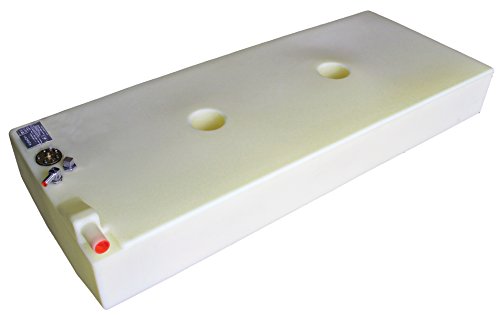
Best for: Extended boating trips or larger vessels requiring substantial fuel capacity. This tank measures 60.00″ L x 24.00″ W with a 10.00″ height, and includes a sending unit for fuel level monitoring. Consider the available deck or under-deck space and verify that the height fits your engine room clearance. Caution: heavier weight when full may affect vessel trim and mounting hardware stress.
Buying Guide: How to Choose The Right Marine Belly Fuel Tank
What capacity do you need? Consider typical trip lengths, cruising speed, and refill options. For frequent long trips, a larger tank such as the 45–52 gallon models can reduce refueling stops, while smaller boats or short trips may be better served by 17–25 gallon tanks.
Where will the tank fit? Measure under-deck and near-engine areas for length, width, and height. Some tanks, especially 52 gallon models, require more space and may affect bilge layout or mounting hardware. Ensure clearance for fittings, hoses, and the sender arm.
What mounting and connections are required? Look for tanks with corrosion-resistant materials (ethanol- and biodiesel-compatible), machined withdrawal fittings, and 360° swivel poplocks for flexible hose hookup. Confirm compatibility with your boat’s tie-down brackets and fuel pickup configuration.
Is it for main use or auxiliary transfer? If you need an auxiliary tank, consider models like the 45 gallon RDS MFG unit designed for transfer and reliable welding. For primary fuel supply, choose a permanent under-deck tank with a built-in sending unit for fuel monitoring.
What about gauges and compatibility? Some models include sending units or gauges; others require separate components. Ensure you have a compatible sender and mounting hardware that aligns with your existing dashboard or bilge layout.
Practical purchase tips
- Match tank capacity to your typical boating range and storage space.
- Verify ethanol- and biodiesel-resistance to prevent long-term fuel degradation.
- Plan for proper ventilation and safety clearances around hoses and fittings.
- Check for under-deck clearance and ensure the tank won’t interfere with bilge components.
FAQs
- Q: What is a belly fuel tank? A: A belly tank is installed under the deck or inside the hull, providing extra fuel capacity without occupying deck space.
- Q: Are these tanks compatible with ethanol or biodiesel fuels? A: Most listed models use corrosion-resistant materials and are described as resistant to ethanol and biodiesel blends.
- Q: Do these tanks come with sending units? A: Some models include a sending unit, while others require an additional component. Check product details.
- Q: How do I determine the right height for under-deck tanks? A: Measure available vertical space from deck to hull structure and compare with tank height to avoid clearance issues.
- Q: Can I install a belly tank myself? A: Installation may require mechanical and fuel-system knowledge; consult the manufacturer guidelines and local regulations.
- Q: Which tank is best for long-range cruising? A: Larger capacity tanks (e.g., 45–52 gallons) are better for extended trips, provided there is adequate space and structural support.