Best Kayak Stake Out Poles for Secure Anchoring and Easy Fishing
We evaluate top kayak stake out poles to help anglers choose the right tool for shallow-water anchoring, stable tracking, and easy retrieval. This guide highlights 5 models suited for different kayak sizes, water conditions, and handling preferences. Best for budget-minded beginners, best for saltwater use, best for portability, best for rugged terrain, and best for feature-rich navigation aids. The recommendations balance strength, corrosion resistance, and ease of use so you can stay put without drift.
| Product | Best For | Key Feature |
|---|---|---|
| itayak 8.63′ Shallow Water Anchor Pole with T-Handle | General kayak fishing, stable anchoring | Two-piece design; stainless steel tip |
| Pesca Innovations Kayak Stake Out Pole Holder | Hands-free repositioning on the water | Adjustable locking collar; saltwater durability |
| EDSRDPLT 2006 Anchor and Push Pole | Multi-function use with compass | Built-in compass; floating two-piece design |
| YakAttack ParkNPole 7’8″ | Compact, durable pole option | Wear-resistant nylon; UV-stable tips |
| sailpref 8.63′ Shallow Water Anchor Pole | Heavy-duty saltwater use | Secure screws; 316 stainless tip |
itayak 8.63′ Shallow Water Anchor Pole with T-Handle

Best for general fishing setups that require a strong, reliable anchor. The 8.63 ft length provides deep enough penetration in many sandy or clay bottoms. The two-piece fiberglass-reinforced PA66 body and 316 stainless steel tip offer corrosion resistance and rigidity. The nylon T-handle simplifies twisting and sinking into hard substrates.
- Best for: Kayak anglers needing solid hold in shallow to mid-depth waters.
- Why selected: Durable materials, straightforward installation, and secure tip design.
- Caution: Cutting or damaging areas may expose fiberglass splinters; wear gloves during handling.
Pesca Innovations Stake Out Pole Holder with Adjustable Locking Collar

This option is best for kayaks that need quick repositioning without removing the pole. The 1″ pole compatibility and locking collar let you lift, move, and drop the pole in seconds. Marine-grade 316 stainless steel hardware enhances saltwater durability, keeping hardware corrosion-free for long sessions on open water.
- Best for: Frequent repositioning during long fishing trips.
- Why selected: Time-saving adjustments and robust saltwater construction.
- Caution: Ensure secure mounting on track systems to prevent slippage during travel.
EDSRDPLT 2006 Anchor and Push Pole

Best for versatile uses, including navigation and push-pole assistance. This pole features a buoyant, two-piece design allowing easy storage and mounting on paddle holders. The built-in compass aids basic navigation while the 316 stainless steel tip handles varied bottoms without rusting.
- Best for: Anglers who need navigation aids and a floating design.
- Why selected: Multifunctional, buoyant, and corrosion-resistant components.
- Caution: The included compass is basic; plan navigation with chart knowledge as a backup.
YakAttack ParkNPole 7’8″
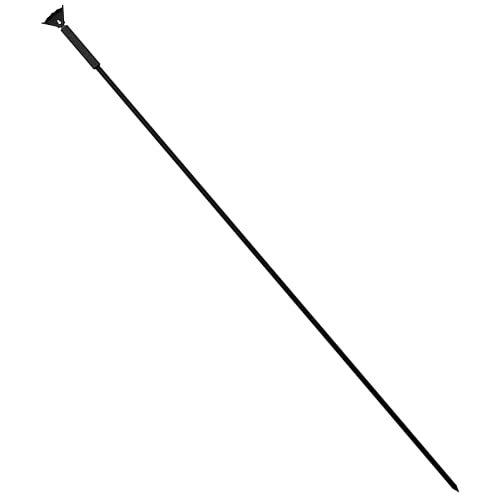
Choose this for a compact, wear-resistant stakeout option. The ParkNPole combines nylon durability with UV-stable tips, making it suitable for regular use in varied sun exposure. Its shorter length helps storage and transport for smaller boats or tight anchoring spots.
- Best for: Smaller kayaks or anglers who prefer a compact pole.
- Why selected: Lightweight, durable, and easy to stow.
- Caution: Shorter length may limit penetration depth in deeper water conditions.
sailpref 8.63′ Shallow Water Anchor Pole

Best for saltwater environments requiring long reach and extra stability. The 2.63 m total length and 2.6 m pole length deliver deeper penetration. Screwed connectors reduce detachment risk, and the 316 stainless tip supports rust resistance in wet, sandy bottoms.
- Best for: Saltwater kayaks needing robust anchoring in sandy or clay bottoms.
- Why selected: Strong, corrosion-resistant materials and secure connection design.
- Caution: Usable depth guidance is 4–6 feet; part should remain above water for handling.
Buying Guide
What matters most when choosing a kayak stake out pole?
Material and construction influence durability and corrosion resistance. Look for fiberglass-reinforced nylon or PA66 with carbon fiber connectors for strength without excessive weight. The tip material, typically 316 stainless steel, matters for longevity in saltwater.
How long should your stake out pole be?
Longer poles provide deeper penetration in mushy or sandy bottoms, but shorter poles are easier to store and maneuver in tight spaces. A range around 8.4–8.6 feet often covers most shallow-water needs, while 7.5–7.8 feet suits smaller craft or tighter spots.
Why is a two-piece design useful?
Two-piece poles are easier to transport and store and can reduce the risk of detachment compared with some fixed-length joints. Ensure a secure screw-lock connection to minimize wobble during use.
What safety considerations apply?
Always wear gloves when cutting or installing to avoid fiberglass splinters. Confirm the anchor tip has a robust grip on your bottom type, and avoid over-tightening mounting hardware which could damage the kayak or pole.
How to maintain a stake out pole?
Rinse with fresh water after saltwater use to reduce corrosion. Dry thoroughly before storage. Inspect the tip and connectors for wear, and replace any worn components to preserve performance and safety.
Frequently Asked Questions
- What is the typical best use for a stake out pole? Answer: Anchoring a kayak in shallow water or near beaches, mud flats, and sandbars to prevent drift.
- Are two-piece poles easier to store? Answer: Yes, they break down into smaller parts for kayak lockers or hatch storage.
- Is stainless steel necessary for the tip? Answer: Stainless steel tips resist corrosion and wear, especially in saltwater environments.
- Can these poles double as push poles? Answer: Some models include push-pole features or handles for dual use; check the product description for specifics.
- What should I consider before buying for saltwater use? Answer: Look for corrosion-resistant hardware, stainless tips, and robust mounting options.
- Do these poles fit all kayak mounts? Answer: Many are designed for common 1” or track-mount setups; verify compatibility with your kayak model.