Best 8D Marine Deep Cycle Battery Options for Heavy-Duty Boats and RVs
Find the right 8D marine deep cycle battery to power trolling motors, navigation gear, and essential on-board systems. This guide focuses on high-capacity AGM and LiFePO4 8D-style batteries that fit standard 8D boxes, offering long runtimes and robust cycle life. Best for heavy boats, large vessels, and off-grid marine setups where maximum capacity matters.
Buyer’s quick-reference table: 8D Marine Deep Cycle Batteries
| Product | Type | Approx. Capacity | Best For |
|---|---|---|---|
| Deka Intimidator Battery (AGM) 8A8D | AGM | 245 Ah @ 20h | Heavy-duty boats needing solid AGM reliability |
| CyperOcean 12V 314Ah LiFePO4 | LiFePO4 | 314 Ah | Lightweight, high-cycle, drop-in replacement |
| NPP NPG12-250Ah (T16, 2 Pcs) | AGM Gel | 250 Ah | Wide-temperature off-grid or marine use |
| Power Queen 12V 280Ah PLUS LiFePO4 | LiFePO4 | 280 Ah | Long lifespan with high cycle count |
| Litime 2Pack 24V 230Ah LiFePO4 | LiFePO4 | 230 Ah per pack (24V) | 2× cells for 24V systems, off-grid setups |
Deka Intimidator Battery (AGM) 8A8D

The Deka Intimidator 8A8D is an AGM deep cycle battery designed for demanding marine use. It lists 245 Ah at a 20-hour rate, a reserve capacity of 517 minutes, and Marine Cranking Amps of 1,800 at 32°F. Best for boaters who want a robust standby power system with easy maintenance and reliable cold-weather performance. Choose this if you prefer AGM ruggedness with straightforward installation and no special charging requirements beyond standard AGM guidelines.
Best for: boats that rely on steady deep-cycle power and need a proven AGM option.
Caution: AGM batteries need proper venting and periodic charging to prevent sulfation; ensure the charging setup accommodates a pure or very absorbent charging profile.
CyperOcean 12V 314Ah LiFePO4 Battery

This CyperOcean LiFePO4 battery delivers about 4.01 kWh of usable energy and is designed to fit standard Group 8D boxes, making it a drop-in upgrade for heavy-duty RVs and marine vessels. It features a 200A smart BMS and is described as lightweight at roughly 57.5 lbs, with high thermal stability and up to 15,000 deep cycles for long-term lifespan. Best for: owners seeking a high-energy, long-life lithium option that reduces weight and increases usable capacity. Better for: high-demand loads like air conditioning or consistent marine electronics without frequent rewiring.
Limitation: As with most LiFePO4 systems, ensure the BMS management aligns with the boat’s charging sources and that the 200A rating matches system loads to avoid tripping breakers during peak use.
Interstate Batteries Marine Deep Cycle 12V 100Ah (Group 31)
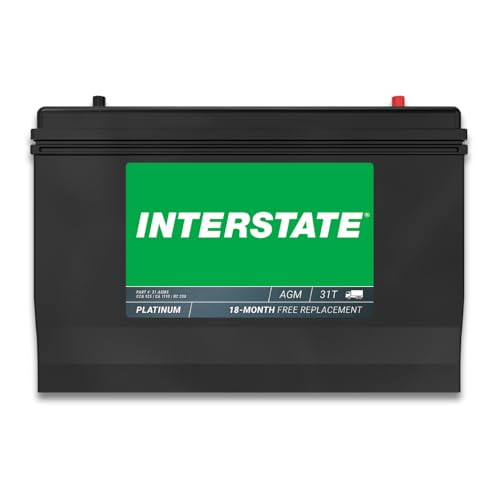
This 12V battery from Interstate emphasizes deep-cycle endurance with thick plates designed for repeated discharge and recharge cycles. While not an 8D size, it is positioned as a strong option for many marine setups needing reliable long runtimes across multiple accessories. Best for: boats that require a compact but durable marine AGM option when 8D space is not available. Caution: verify box fit and compatibility with 8D mounting if your system specifically requires a true 8D footprint.
Power Queen 12V 280Ah PLUS LiFePO4

Power Queen’s 12V 280 Ah LiFePO4 battery offers a 200A BMS and a usable energy capacity around 3,584 Wh. It is designed for long life, claiming up to 15,000 cycles at 60% DOD, with a low-temperature cut-off protection for cold environments. Best for: marine or RV systems needing high cycle life and robust performance in variable climates. Choose this if you want a lithium option with strong cold-weather protection and extended cycle life.
Caution: lithium systems can require compatible charging profiles and battery management practices to maximize cycle life and safety.
Litime 2Pack 24V 230Ah LiFePO4

The Litime 24V configuration uses two 12V LiFePO4 modules, each rated at 230Ah, delivering a 24V system with combined energy suitable for off-grid marine use. It features a 200A BMS and claims high cycle counts with a durable IP65 rating. Best for: customers planning a 24V deep-cycle system for boats with higher power demands or as a scalable off-grid battery bank. Better for: setups needing modular 24V expansion rather than a single large 12V unit.
Limitation: ensure wiring and charging equipment can accommodate a 24V LiFePO4 arrangement and meet the BMS’s recommended charging profile.
Buying Guide: Key Considerations for 8D Marine Deep Cycle Batteries
- Battery chemistry: AGM vs LiFePO4. AGM 8D batteries offer rugged, maintenance-free operation with simpler charging needs, while LiFePO4 provides higher energy density, longer cycle life, and lighter weight. Choose based on weight sensitivity, cycle life expectations, and charging setup.
- Footprint and mounting: Confirm 8D box fit if your boat or RV uses standard 8D mounting. Some LiFePO4 options are designed as drop-in replacements but verify dimensions and terminal placement.
- Battery Management System (BMS): A strong BMS is essential for LiFePO4 packs. Look for 200A+ BMS for high-load scenarios and protection against over-current, short-circuit, and thermal issues.
- Cycle life and depth of discharge: High cycle life is critical for long-term cost efficiency. LiFePO4 batteries typically tolerate more cycles at higher DOD than traditional AGM lead-acid.
- Cold weather performance: If you operate in cold climates, ensure the battery has low-temperature protection or charging capabilities that suit your environment.
- Weight and handling: LiFePO4 packs are lighter than lead-acid equivalents, improving fuel economy and handling on deck or in storage compartments.
- Charging compatibility: Match chargers and alternators to the battery chemistry. LiFePO4 may require a specific charging profile, while AGM benefits from standard lead-acid charging profiles with appropriate voltage limits.
- Maintenance and safety: AGM requires minimal maintenance but proper venting and periodic charging are advised. LiFePO4 is generally maintenance-free but ensure proper enclosure ventilation and safety considerations for high-energy packs.
Frequently Asked Questions
- What is the difference between 8D and regular marine batteries? 8D refers to a larger size/box footprint typically used for high-capacity needs; performance varies by chemistry and construction beyond the size alone.
- Are LiFePO4 8D batteries better than AGM for marine use? LiFePO4 generally offers higher cycle life, lighter weight, and better depth of discharge, but requires compatible charging and BMS management.
- Can I replace an AGM 8D with a LiFePO4 8D in my boat? It depends on space, BMS compatibility, and charging system alignment. Some 8D LiFePO4 options are designed as direct drop-in replacements.
- How do I choose between 8D and 12V options for marine power? If your system already uses multiple 12V modules in an 8D footprint, a single 8D LiFePO4 pack can simplify wiring and reduce weight. For lighter setups, multiple 12V units may be more flexible.
- What maintenance is required for AGM 8D batteries? Keep terminals clean, ensure proper venting, and maintain regular charging to prevent sulfation and maintain capacity.
- What should I consider for cold environments? Look for batteries with low-temperature protection or ensure your charging source can operate effectively at low temperatures to prevent reduced capacity.