Best Kayak Cradle Systems for Trailers and Roof Racks
When choosing a kayak cradle, the goal is secure transport with minimal wind resistance and easy loading. This guide highlights five versatile options suited for trailers and roof racks, helping you decide who each product is best for. Ideal buyers include trailer users needing full submersion-ready stability, SUV or truck owners seeking universal crossbar compatibility, and casual weekend explorers who want quick, tool-free setup.
| Product | Best For | Why It Stands Out |
|---|---|---|
| Malone SeaWing Saddle Style Universal Car Roof Rack Kayak Carrier | All-around daily use | Low-profile, secure V-style cradles with tool-free Jawz mounting |
| Best Marine and Outdoors Saddle Carriers | Budget-friendly, universal fit | Custom 4-point saddle system with rust-resistant materials |
| HIGHRAZON J-Bar Roof Rack Pair | Versatile for multiple watercraft | 45° angled J-bars with protective foam and durable steel |
| PIRIPARA J-Bar Carrier Holder | Heavy loads and multiple kayaks | Set of 4 with strong alloy steel and protection padding |
| Malone MPG586XV EcoLight 2 Kayak Trailer | Trailer transport | Two V-Rack carriers; fully submersible trailer with LED kit |
Malone SeaWing Saddle Style Universal Car Roof Rack Kayak Carrier

Best for: daily drivers needing simple, tool-free setup. The SeaWing uses V-style saddles that cradle the hull and reduce wind drag, improving highway stability and fuel efficiency. Its Jawz universal mounting system fits most cross rails—round, square, or factory oval—without tools. Built to withstand coastal salt and road grime, its nylon components resist corrosion. Caution: ensure cross rails are compatible with Jawz hardware before purchase.
Best Marine and Outdoors Saddle Carriers

Best for: budget-conscious buyers seeking universal fit and dependable protection. Features include a 4-point saddle system that conforms to kayak shapes and rust-resistant steel with flexible rubber padding. The low-profile design minimizes rooftop wind noise and reduces drag. Caution: check roof clearance, as low-profile racks still add height to your vehicle.
HIGHRAZON Kayak Roof Rack J-Bar Carrier
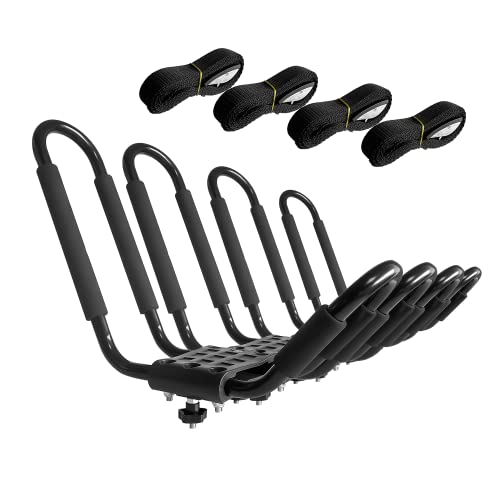
Best for: users needing durable, multi-use racks. The J-bar design tilts at about 45° for secure side-loading and supports up to substantial weights. Anti-rust coating and protective foam guard the watercraft and vehicle roof. Not ideal for round beams; verify crossbar compatibility before ordering. Caution: width and weight limits vary with beam type and kayak size.
PIRIPARA Kayak Roof Rack J-Bar Carrier (Set of 4)

Best for: families or groups needing multiple carriers for two kayaks. This set includes four J-bar sections, offering broad loading capacity with heavy-duty alloy steel framing and padding. All-surface rust-resistant coating extends life. Caution: bulkier than single-carrier setups; ensure adequate roof or trailer cross-section to accommodate all pieces.
Malone MPG586XV EcoLight Two-Kayak Trailer
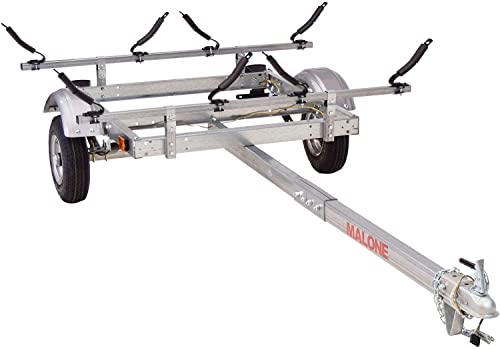
Best for: trailer-based transport requiring robust, submersible construction. The EcoLight Trailer supports two 14-foot kayaks or canoes up to 400 pounds and includes a plug-and-play submersible LED light kit. Built with 11-gauge pre-galvanized steel for longevity. Caution: trailer setup requires compatible hitch and base frame; verify towing setup before use.
Buying Guide
What to consider when choosing a kayak cradle
Load capacity matters. Match the cradle or carrier’s weight rating to your toughest kayak plus gear. Consider crossbar compatibility and whether you need a trailer or roof-rack solution.
Trailer vs. roof rack considerations
Trailer-mounted systems often provide stronger, longer-lasting support for multiple kayaks. Roof racks offer flexibility and quick swaps but may impact aerodynamics and fuel efficiency. Decide based on how often you transport kayaks and the vehicles you own.
Material, durability, and weather resistance
Look for corrosion-resistant metals and protective padding to prevent hull damage. Nylon and stainless components typically resist salt and road spray better than lower-grade plastics.
Installation, adjustability, and security
Tool-free installation saves time. Ensure there are secure tie-downs for bow and stern and that the system accommodates your kayak width and hull shape. Consider anti-theft features if leaving gear unattended.
Vehicle compatibility and additional accessories
Check crossbar shapes (round, square, oval) and whether the cradle fits your vehicle’s Rails. Some systems require additional straps, padding, or bar adapters to achieve a secure fit.
Practical loading and unloading tips
Use wide-mouth J-bars or V-style saddles to minimize lifting effort. Load the kayak centered on the cradle and secure with bow/stern ties to prevent sideways movement during transit.
Performance and maintenance
Inspect gear before trips for wear, especially padding and fasteners. Rinse salt residue after trips and lubricate moving joints to extend life.
FAQ
- Do kayak cradles require tools for installation? Many models offer tool-free Jawz or similar mounting systems, but some may require basic tools for a secure, long-term fit.
- Can these systems handle two kayaks? Several options, including the EcoLight trailer and PIRIPARA sets, are designed to carry two kayaks with adequate weight capacity.
- Are J-bar carriers compatible with all crossbar shapes? Most are designed to fit common crossbars, but always verify compatibility with round, square, and factory oval rails.
- Is a trailer-mounted setup safer for long trips? Trailers provide stable, low-drag mounting for multiple kayaks, which can improve stability on highways compared with roof-only systems.
- What maintenance is recommended? Rinse after exposure to saltwater, inspect padding and tie-downs for wear, and replace any corroded hardware promptly.
- How do I choose the right capacity? Add the weight of the heaviest kayak plus any gear; ensure the cradle or trailer capacity exceeds this total.