Best Marine Strip Paint Remover for Boats and Watercraft
Direct answer: For removing marine paints and finishes, choose products designed for boat surfaces that are non-caustic, easy to apply, and effective on multiple layers. This guide highlights options best suited for wood, fiberglass, metal, and gelcoat surfaces, with clear guidance on who benefits most from each product.
The following table summarizes top picks and who they’re best for:
| Product | Best For | Key Benefit |
|---|---|---|
| Dumond Smart Strip Marine Paint Remover | Wood, fiberglass, metal, aluminum boats | Removes up to 15 layers; non-caustic gel formula |
| TotalBoat TotalStrip | Indoor shop use; multiple coatings | No methylene chloride or NMP; fast acting |
| Max Strip Deck Coating Remover | Decks and marine surfaces | User-friendly, multi-layer removal, no caustic chemicals |
| Sunnyside 658G1A Ready-Strip | Marine finishes and varnishes | Low odor, no methylene chloride or NMP |
| Max Strip Professional Strength | DIY projects and professional use | Powerful, no Methylene Chloride or NMP |
Dumond Smart Strip Marine Paint Remover

Dumond Smart Strip Marine Paint Remover is formulated for wood, fiberglass, metal, and aluminum boats. It claims to strip up to 15 layers of polyurethane and acrylic coatings on both interior and exterior surfaces. The non-caustic, water-based gel formula adheres to vertical surfaces and does not rely on methylene chloride or NMP, offering a safer option for boat projects. Best for DIY owners and professionals working on layered marine finishes who prioritize gel-form adherence and ease of use.
Best for: boat owners tackling multiple layers of coatings on various substrates. Better for: interior and exterior surfaces where gel adhesion matters. Caution: always test small areas first to confirm compatibility with gelcoat and substrate.
TotalBoat TotalStrip Fast-Acting Gel Paint and Varnish Remover

TotalStrip provides an industrial-strength option that works across latex, oil-based paints, varnish, lacquer, urethanes, and tough boat bottom paints. It’s described as fast-acting, with a 15-minute start and potential to strip up to 10 layers in 24 hours. It’s designed for safe use on wood, fiberglass, gelcoat, stone, and metal, and omits methylene chloride and NMP. Best for: workshop settings needing rapid turnaround on complex, multi-layer coatings. Caution: performance varies with set times; monitor and test on small areas first.
Max Strip Deck Coating Remover

Max Strip Deck Coating Remover is designed to remove specialty deck coatings and paints from multiple surfaces. It claims multi-layer removal without caustic chemicals and is user-friendly for DIYers. It’s suitable for exterior deck areas on boats where coatings may differ between wood and composite surfaces. Best for: deck-focused stripping projects where you want a non-caustic option and straightforward timing. Caution: set times vary; test for compatibility and ease of scraper removal.
Max Strip Professional Strength
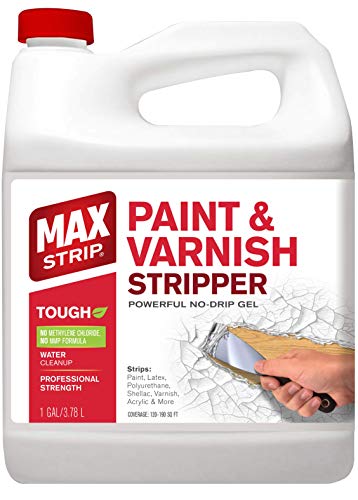
Max Strip Professional Strength is built for removing paint and varnish across multiple surfaces, including latex, polyurethane, shellac, varnish, acrylic, and oil-based coatings. It’s explicitly marketed as a do-it-yourself option that avoids methylene chloride and NMP, with a gel consistency that’s easy to apply and remove with a scraper. Best for: serious DIY projects and light professional work on boats and other crafts. Caution: follow application intervals; some coatings may require longer dwell times for best results.
Sunnyside Ready-Strip ADVANCED

Sunnyside 658G1A Ready-Strip is a safer choice due to its absence of methylene chloride and NMP. It removes paints, varnishes, stains, lacquers, and urethanes, with the formula beginning to work in about 60 minutes. Best for: projects requiring a lower odor option and indoor use. Caution: surface dwell time can vary, requiring patience for complete removal on tougher coatings.
Buying Guide
What should you consider when choosing a marine paint remover?
- Substrate compatibility: wood, fiberglass, metal, and gelcoat each react differently to solvents; look for products labeled safe for marine surfaces.
- Layer count and coating types: if you know you have polyurethane, acrylic, and varnish layers, pick a formula designed to handle multiple layers.
- Chemical safety: prefer non-caustic formulas and avoid methylene chloride and NMP when possible, especially for indoor use.
- Application and dwell time: some products act quickly while others require longer set times; plan around project timelines.
- Cleanup and disposal: water-based or easy cleanup formulations simplify post-removal steps.
Frequently Asked Questions
- What is the safest marine paint remover for indoor use?
Look for products labeled non-caustic and free of methylene chloride and NMP, such as TotalStrip and Ready-Strip variants.
- Can these removers strip epoxy or polyurethane on boats?
Yes, many are designed to remove polyurethane, acrylics, urethanes, varnishes, and epoxy layers on wood, fiberglass, and metal.
- How long does it typically take to see results?
Applications often begin working within 15 minutes to an hour, but full removal depends on coating type and layer count.
- Should I test on a small area first?
Always perform a test patch to confirm compatibility with the substrate and coating before full application.
- What surfaces are best avoided with gel-based removers?
Test on gelcoat or specialty marine finishes, as some products may affect gelcoat differently or require additional steps.
- Do I need to neutralize after removing coatings?
Most products do not require neutralization; follow the product’s instructions for cleanup and disposal.