Best Boat Fuel Filters for Clean, Reliable Performance on the Water
Looking for a dependable fuel filter for your boat? This guide highlights five top options that balance filtration efficiency, ease of use, and compatibility with common marine engines. Each product is suited to different needs—from simple inline filtering to more robust water-separation designs. If you’re maintaining an outboard or inboard system, these picks help protect your engine from contaminants and water that can cause performance issues. The quick-reference table below shows key attributes to compare at a glance.
| Product | Best For | Filter Rating | Notable Feature |
|---|---|---|---|
| Attwood 12562-6 Universal 40-Micron | General use, visual inspection | 40 micron | Clear body for easy maintenanceチェック |
| Quicksilver 802893Q01 Water Separating | Mercury/Mariner outboards | 25 micron | Water separation to protect fuel system |
| T-H Marine Universal Fuel Filter | All engines, easy monitoring | 10-40 micron options | Transparent housing for quick check |
| Quicksilver 879885Q Inline | Under cowl filtering | 20 micron | Translucent body for easy visibility |
| Attwood 11841-4 Universal 10-Micron | High-efficiency filtration | 10 micron | Double gasket for seal integrity |
Attwood 12562-6 Universal 40-Micron Outboard Engine Fuel Filter

The Attwood 12562-6 uses a clear, durable body that allows visual inspection of fuel flow and sediment. It’s built to withstand tough conditions with high-strength construction and is disposable for convenience. This model is best for boat owners who want straightforward maintenance and a visible filter element to monitor fuel quality. Limitations include replacing the filter unit rather than reusing it, which can be a consideration for budget-conscious buyers.
Quicksilver 802893Q01 Water Separating Filter
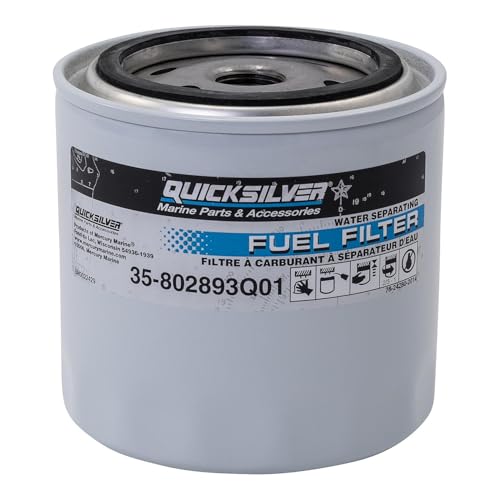
This filter is designed to remove fuel-borne contaminants with a 25-micron element and a water-separating design. It’s manufactured to Mercury Marine original equipment specifications, making it a solid choice for Mercury/Mariner outboards and similar installations. Best for: engines that require reliable water separation to protect fuel delivery components. Caution: performance can depend on proper installation and seal integrity over time.
CARMOCAR Fuel Filter Water Separator Replacement

Designed as a versatile marine diesel and water separator, the CARMOCAR unit lists multiple Mercury and Yamaha compatibility references and uses 3/8 NPT ports. It’s ideal for boaters who want a heavy-duty filter with broad engine compatibility. Best for: owners stocking a common replacement part for multiple installations. Limitation: cross-compatibility must be verified with your exact model, as it lists many part numbers.
Quicksilver 879885Q Inline Fuel Filter

This inline filter is designed for use under the outboard engine cowl with a 20-micron rating and a translucent body for easy viewing of fuel content and debris. Choose this if you want a simple, compact filter that’s easy to replace with standard hose clamps. Caution: ensure hose connections remain secure to prevent leaks.
T-H Marine Universal Boat Fuel Filter

This glass, transparent housing filter supports 1/4″, 5/16″ and 3/8″ hose fittings, making it compatible with a wide range of engines and fuel lines. It’s especially useful for monitoring filtration visually, which helps with maintenance planning. Best for: boaters who want immediate visibility of fuel quality. Limitation: glass housings can be more susceptible to impact damage in rough conditions.
Attwood 11841-4 Universal 10-Micron Filter
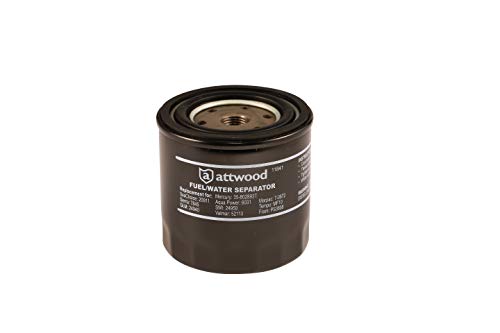
The Attwood 11841-4 uses a double seal for enhanced performance and supports universal 3/8″ ports with a 10-micron replacement capability. This higher-precision filter is best for boats requiring tighter filtration to protect sensitive fuel systems. Better for: engines with a history of fuel-related performance issues. Caution: ensure compatibility with your fuel line size before purchase.
Sierra International 18-7845, Fuel Filter Medium

With a 90 GPH flow rate, this Sierra filter aims to support engines with higher fuel demands, especially when using ethanol-blended fuels that absorb more water. It emphasizes proper filtration as essential for horsepower engines. Best for: boats with high fuel flow needs and exposure to ethanol-laden fuels. Limitation: performance depends on correct installation and matching to the fuel line size.
Buying Guide
Key considerations when choosing a boat fuel filter:
- Fuel type and engine compatibility: Ensure the filter matches your engine model, fuel line size, and whether you need water separation or simple filtration.
- Micron rating: Lower microns offer finer filtration but may reduce flow; higher microns increase flow but risk passing contaminants. Consider your fuel quality and engine tolerance.
- Maintenance and access: Look for clear housings or easily replaceable cartridges. Access under the engine cowling should be straightforward to service.
- Port size and fittings: Confirm the filter fittings match your fuel lines (3/8″, 1/4″, 5/16″, etc.) and that mounting is secure in rough-water conditions.
- Water separation capability: For boats in humid conditions or with older tanks, water-separating filters help remove water that can damage injectors and lines.
- Material and durability: Consider impact resistance and temperature tolerance in marine environments. Glass housings offer visibility but may be fragile in rough seas.
FAQ
- Q: Do I need a water separator for every boat? A: Not always, but water separators are beneficial in boats with risk of water contamination or old fuel tanks.
- Q: How often should I replace a fuel filter? A: Replacement intervals depend on usage, fuel quality, and filter type; follow manufacturer recommendations and inspect for clogging or leaks.
- Q: Can I reuse filter elements? A: Most marine filters are disposable; reuse is not recommended as efficiency and sealing can degrade.
- Q: Which micron rating is best for gasoline vs. diesel engines? A: Gasoline filters commonly range from 10 to 40 microns, diesel filters may use different ratings; match to your engine’s requirements.
- Q: Are transparent housings better? A: They provide visual inspection, but consider the risk of impact damage in rough conditions.