Best Launching Wheels for Small Boats: Easy Haul, Safe Handling, and Versatile Options
Ready to move small boats from shore to water with less effort? These launching wheels are designed for compact craft, including inflatable boats, jon boats, and small aluminum vessels. They help solo handlers and small crews transport boats over grass, sand, and hard surfaces without heavy lifting. The top picks below are best for portability, quick setup, and durable materials. The buyer types most likely to benefit include solo boaters, families with light gear, and freestanding launch setups on ramps or beaches.
Summary table of selected products:
| Product | Best For | Load Capacity | Key Benefit |
|---|---|---|---|
| VEVOR Boat Launching Wheels | Small inflatable boats and jon boats | 300 lbs | Foldable arms with quick-release pins for easy storage |
| XinKunmarine 10″ Rubber Transom Wheels | Flat surfaces and mixed terrain | 600 lbs | Thickened rubber tires for heavy boats |
| KODOM 300 Lbs Launching Wheels | Inflatable and small aluminum boats | 300 lbs | Premium stainless steel and quick-pin adjustability |
| Brocraft Boat Launching Wheels | Inflatable and aluminum boats | 500 lbs | Marine-grade aluminum frame; foldable, angled design |
| Bestauto Boat Launching Wheels | Inflatable boats and larger lightweight craft | 300 lbs | Durable stainless steel with dual-position setup |
VEVOR Boat Launching Wheels
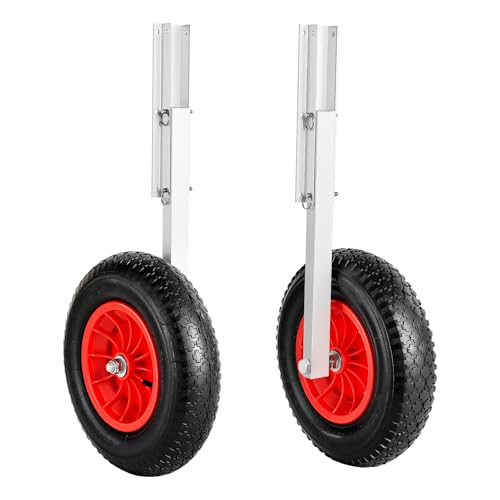
Best for: Small inflatable boats and 14.7 ft hulls requiring portable, foldable wheels. Why selected: High 300 lb load capacity paired with 15 inch inflatable tires offers smoother towing on grass, dirt, and gravel. The foldable arms with quick-release pins simplify storage between launches.
- Material and design focus on rust resistance and light handling.
- Ideal for shallow ramps and beach launches with compact vessels.
Limitation: The wheel size favors moderate terrain; extremely soft sand or deep mud may require alternative beach-launch gear.
ZHAIUPON 10″ Stainless Steel Boat Launching Wheels

Best for: Boats needing robust stainless construction and corrosion resistance. Why selected: Alloy components with polyurethane foam wheels provide stability on grass, hard sand, soft sand, and mud, while stainless steel resists rust. The quick pins enable rapid height changes for various launch configurations.
- Sturdy construction suits saltwater or brackish environments.
- Heavier set can be more challenging to lift manually on very small ramps.
XinKunmarine 10″ Removable Transom Launching Dolly

Best for: Heavier inflatable boats and dinghies that require high-load performance. Why selected: Durable stainless steel brackets and 10″ pressurized wheels support up to 600 lbs, suitable for rough terrain. Strong rubber wheels resist damage from sharp surfaces.
- Long-term rust resistance supports frequent launches.
- May be heavier to transport when not mounted on the boat.
KODOM Boat Launching Wheels

Best for: Solo boat handlers needing a reliable, compact tug to move inflatables and small aluminum boats. Why selected: Stainless steel and polyurethane foam wheels provide rust resistance and surface protection. The 300 lb capacity balances portability with practical load. Quick-release pins enable adjustable arm length for different hulls.
- Good balance between durability and easy handling.
- Some installations may require space for folding arms on tight trailers.
Brocraft Boat Launching Wheels
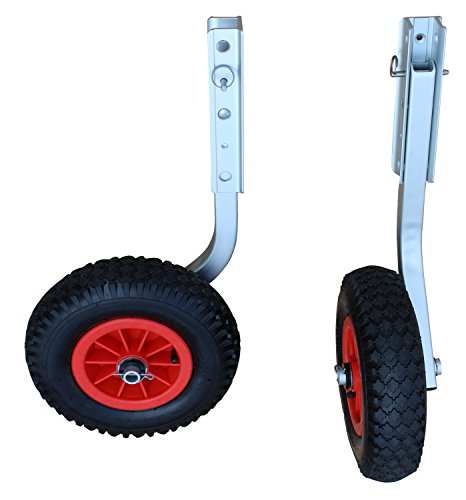
Best for: Inflatable and aluminum boats that need a sturdy, foldable dolly with a higher load tolerance. Why selected: Marine-grade aluminum square tube construction and a 12″ wheel diameter provide robust support and easy maneuverability. Wheels can lock up when not in use, aiding storage.
- Angled frame design reduces motor interference during launching.
- Weight may be higher than all-plastic alternatives; consider transport needs.
Bestauto Boat Launching Wheels
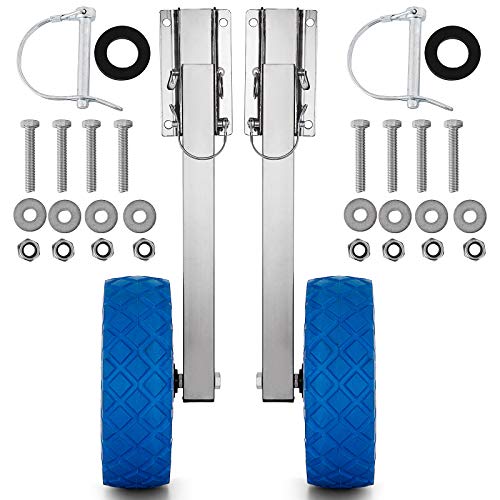
Best for: Inflatable boats and lightweight aluminum craft requiring rust-resistant, dual-position launch wheels. Why selected: Stainless steel brackets and polyurethane wheels deliver corrosion resistance and stability. The dual-position feature allows wheels to be folded up for water use without impacting hull travel.
- Suitable for varied launch scenarios from sandy to paved ramps.
- Weight and complexity are modest; ensure trailer clearance for mounting.
Buying Guide: Key Purchase Considerations
- Load capacity: Match the wheel set to the boat’s total weight, including motor and gear. Exceeding capacity reduces efficiency and increases wear.
- Wheel size and material: Larger diameters roll more easily over uneven surfaces; inflatable or foam-tiber wheels handle softer ground better, while solid polyurethane resists saltwater corrosion.
- Mounting and adjustability: Quick-release pins and adjustable arms simplify storage and tailor the setup to hull length. Consider compatibility with your transom and trailer configuration.
- Durability: Stainless steel components resist rust in marine environments; aluminum frames reduce weight without sacrificing strength.
- Portability: Folding or removable designs are ideal for small vehicles or limited storage space.
- Terrain adaptability: Be mindful of where you launch. Beach sand, grass, and rocky ramps require wheels with suitable tread and chassis strength.
Frequently Asked Questions
- What load capacity do I need for small boats?
Choose wheels that can support at least 1.5x the boat’s weight with gear to ensure smooth launching and handling. - Are stainless steel wheels better than aluminum?
Stainless steel offers greater rust resistance, while aluminum can be lighter. Consider your climate and exposure to saltwater. - Can I use launching wheels for inflatable boats?
Yes. Many models are designed specifically for inflatables, with higher load ratings and robust tire options. - How do I store launching wheels when not in use?
Prefer foldable or removable designs that tuck away on a trailer or in a garage to maximize space. - What terrain should I avoid with launching wheels?
Very soft sand, deep mud, or uneven rocky ground can overwhelm wheels not designed for that terrain. - Do these wheels affect hull bottom coatings?
Using wheels on a boat’s hull during contactless maneuvers can minimize wear by reducing direct dragging over delicate coatings.