Best Boat Wind Speed Instruments for Sailors and Boaters
Answering the essential question for sailors: which wind speed instruments provide accurate, reliable wind data at sea? This guide highlights five top options, each suited to different boat types and budgets. Whether you need a compact, solar-powered unit or a traditional vane kit, the selections here help you compare features, installation needs, and data presentation. Best for budget-conscious racers, best for rugged offshore use, best for high-visibility displays, best for wireless integration, and best for low-friction masthead sensing—all explained with practical buying considerations.
Overview of selected products:
- Sailboat Instrument Kit – Wind Speed with gWind Transducer — Surface mount, no built-in display, efficient 3-bladed propeller design.
- Garmin GNX Wind — Dedicated wind instrument with backlit LCD, wind data and digital rose, wide visibility.
- Calypso Instruments Solar Ultrasonic Anemometer — Solar-powered, ultrasonic, no moving parts, app compatibility.
- Davis Instruments Wind-Tels Vane Set for Sail — Traditional vane system, easy to install, color-coded vanes for port/starboard indications.
- Wind-Thing Levitated Mast Mounted Wind Indicator — Mast-mounted, levitation vane for high responsiveness, snag-free design.
Sailboat Instrument Kit — Wind Speed with gWind Transducer

The Sailboat Instrument Kit uses a surface-mount wind sensor with a three-bladed propeller design and a gWind transducer to deliver wind data without an integrated display. This unit is best for crews who want a versatile sensor to pair with their own display or MFD. It is suitable for small to mid-size sailboats where a robust, compact sensor is preferred. A limitation is the absence of an on-device display, so monitoring requires an external display or cockpit integration.
Garmin GNX Wind
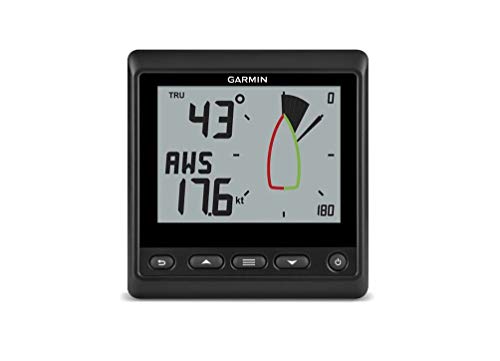
Garmin GNX Wind is a dedicated wind instrument featuring a glass-bonded backlit monochrome LCD display for high-contrast visibility. It supports true and apparent wind data, two data fields, and a digital wind rose. It also integrates with Steer Pilot and shows boat speed and more. Best for sailors who want a ready-to-read, standalone wind display with clear visibility in sun or shadow. A potential limitation is the reliance on compatible Garmin ecosystems for full functionality.
Calypso Instruments Solar Ultrasonic Anemometer

The Calypso Instruments Solar Ultrasonic Anemometer is solar-powered and uses ultrasonic sensors to measure wind speed and direction without moving parts. Its maintenance-free design and salt spray resistance suit offshore sailing and outdoor pursuits. It syncs with Garmin Connect, useful for consolidating data across devices. Choose this for high reliability in harsh conditions and minimal maintenance, but be mindful of the need for an app or compatible display to view live wind data.
Davis Wind-Tels Vane Set for Sail
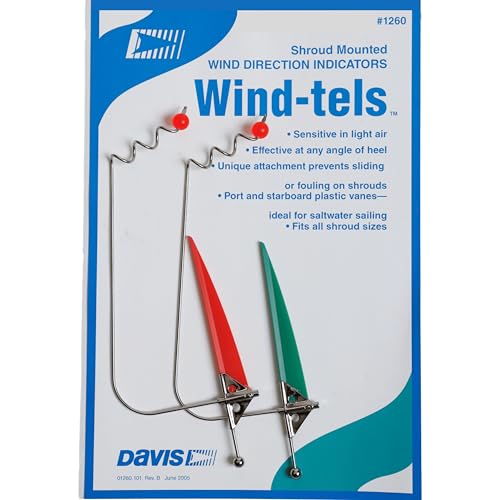
The Wind-Tels vane set provides a traditional, visual wind indication with port and starboard vanes in red and green. It fits various shroud sizes and is simple to install or remove for storage. Best for sailors who prefer a classic vane system and straightforward data interpretation. A limitation is that it offers no digital readout by itself; you’ll need another instrument or display to quantify wind speed and direction precisely.
Wind-Thing Levitated Mast Mounted Wind Indicator

The Wind-Thing uses levitated vane technology for reduced friction, offering highly responsive wind sensing, especially in light breezes. It is designed for boats like Laser/ILCA and similar vessels, with a snag-free design to prevent mainsheet entanglement during starts. Best for racers seeking quick wind updates at the masthead, but consider compatibility with your rig and the potential need for additional masthead hardware for installation.
Buying Guide
What should you consider when choosing a boat wind speed instrument?
- Display needs: Do you want a built-in display or to pair with an existing instrument network?
- Power source: Solar-powered sensors minimize maintenance, while wired or battery-powered units may require more care.
- Data presentation: True vs. apparent wind data and how it’s displayed (digital rose, numeric fields, or graphs).
- Installation: Surface mount vs. masthead or deck-mounted setups; ease of removal for storage or transport.
- Durability: Salt spray resistance, water exposure, and rugged housings for offshore use.
- Compatibility: Written specifications on compatibility with other devices or apps (Garmin Connect, etc.).
Practical comparisons
- Best for standalone wind data with high visibility: Garmin GNX Wind.
- Best for minimal maintenance and multi-sensor wind data: Calypso Ultrasonic Anemometer.
- Best for classic, visual wind cues without electronics: Davis Wind-Tels Vane Set.
- Best for quick masthead wind sensing on racing boats: Wind-Thing Levitated Mast Mounted Indicator.
- Best for flexible integration with external displays or MFDs: Sailboat Instrument Kit with gWind Transducer.
FAQ
- Which wind instrument is easiest to install? Davis Wind-Tels Vane Set is generally straightforward for many shroud configurations.
- Do ultrasonic wind sensors require calibration? Ultrasonic sensors are designed to minimize calibration needs, but check the manufacturer’s guidance for field use.
- Can I use wind speed instruments without a display? Yes, many sensors are designed to pair with existing displays or MFDs via wired or wireless connections.
- What is true wind versus apparent wind? True wind is the wind by the air mass, while apparent wind is what you feel on the boat moving through the air; many instruments show both.
- Are solar-powered wind sensors reliable at sea? Solar-powered units are effective in daylight and low-maintenance, but ensure sufficient exposure to keep the internal battery charged.
- Is compatibility with Garmin Connect important? If you already use Garmin products, Garmin GNX Wind offers strong interoperability and data integration.