Best UV Protection for Boats and Marine Surfaces
Answering the demand for durable UV protection, these products shield boat vinyl, plastic, rubber, gel coat, and fiberglass from sun damage, fading, and cracking. They’re best for boat owners seeking long-lasting, matte-finish protection that resists dirt and staining. Ideal buyers include casual skippers financing simple maintenance, weekend-warrior boat owners protecting interior and exterior surfaces, and RV or marine enthusiasts needing versatile sealants. Below is a concise, comparison-friendly overview of five top options with clear use-cases.
| Product | Best For | Key Benefit | Notes |
|---|---|---|---|
| 303 Marine Aerospace Protectant Spray (32 oz) | Vinyl, plastic, rubber, fiberglass | Superior UV protection, matte finish | Great all-around exterior protection |
| 303 Marine Aerospace Protectant (10 oz) | Small jobs, touch-ups | Non-greasy, matte finish | Portable size for quick applications |
| 303 Marine Aerospace Protectant Spray (1 Gallon) | Larger boats and frequent users | Extended protection cover | Ideal for repeated, widespread use |
| Marine 31 Vinyl Protectant (20 oz) | Vinyl interiors and upholstery | Silicone-free, UV defense | Interior/exterior versatility |
| Meguiar’s Marine & RV Hybrid Ceramic All Surface Sealant (32 oz) | Fiberglass, gel coat, also paints | Ceramic protection, boosting gloss and beading | Advanced UV and water beading |
303 Marine Aerospace Protectant Spray 32 oz
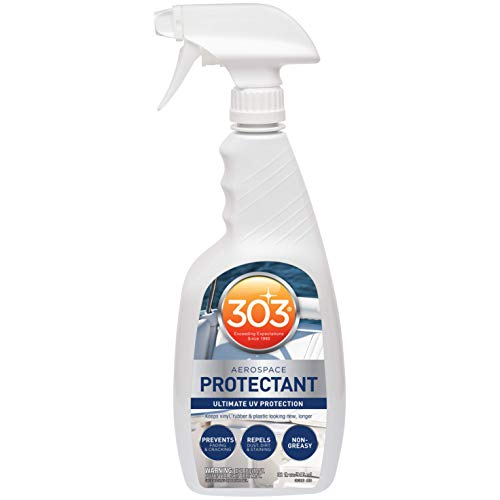
The product delivers ultimate protection against UV rays while repelling dust, dirt, and staining. It dries to a smooth, matte finish with no greasy residue, making it suitable for boat vinyl, plastic, synthetic or natural rubber, PVC, metal, gel coat, fiberglass, and stainless steel. Best for boat exteriors and deck surfaces that benefit from a non-glossy, like-new appearance. Apply every 3–5 weeks for ongoing UV defense. Caution: avoid over-application on very textured surfaces to prevent build-up.
303 Marine Aerospace Protectant 10 oz
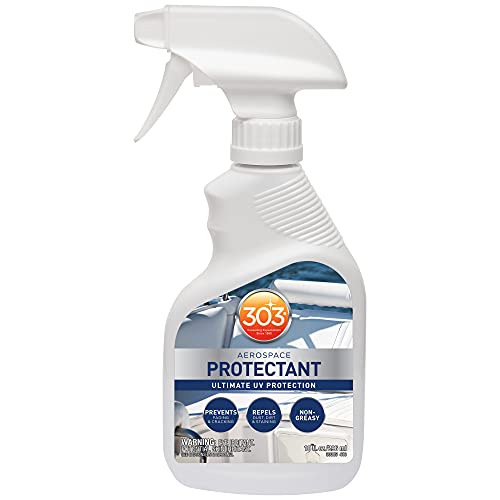
Designed for portable touch-ups, this edition provides UV protection and resists dirt and staining. It dries to a non-greasy matte finish and supports a broad range of surfaces, including vinyl, PVC, metal, and gel coat. Best for boats needing quick refreshes on smaller areas without heavy spraying. Do not use on clear plastics or unfinished leather. Choose this if you want a compact option for routine maintenance.
303 Marine Aerospace Protectant Spray 1 Gallon
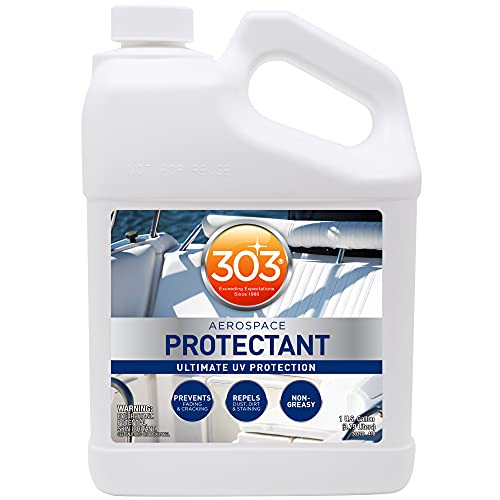
This gallon-size guard offers ultimate UV protection for larger boats and longer coverage intervals. It repels dust, dirt, salt, and staining while maintaining a matte finish. Ideal for frequent boaters with extensive exterior surfaces to treat, including vinyl and fiberglass. Best for owners who want long-lasting protection with fewer applications. Limitation: heavier spray may require careful application to avoid overspray on non-target areas.
Marine 31 Vinyl Protectant with Sunblock (20 oz)

Marine 31 focuses on vinyl surfaces, offering UV protection to prevent fading and cracking. The silicone-free formula avoids slick or sticky residues, making it suitable for interior upholstery and exterior vinyl alike. Best for boat interiors, Bimini tops, and upholstery where a clean, non-slippery finish is preferred. Caution: not recommended for all types of clear plastics; verify compatibility with your vinyl fabrics.
Meguiar’s Marine & RV Hybrid Ceramic All Surface Sealant (32 oz)

This spray-and-wipe sealant provides durable ceramic protection, boosting gloss, water beading, and UV defense. It’s designed for boats and RVs with fiberglass and gel coat but is also safe on paint, metal, vinyl, and glass. Choose this if you want a higher-gloss finish and stronger UV resistance with a simple application. Limitation: some surfaces may require additional wipe-off for a fully uniform look.
Buying Guide: Key Factors To Consider
- Surface compatibility: Confirm whether the protectant is formulated for vinyl, gel coat, fiberglass, PVC, or leather. Silicone-free formulas are preferable for interior surfaces to avoid slipperiness.
- Finish preference: Matte finishes reduce glare and can blend with factory looks, while ceramic sealants may boost gloss and beading but can alter appearance on certain fabrics.
- UV protection strength: Look for products that explicitly mention UV ray resistance and color fading prevention for marine environments.
- Application size and frequency: Larger surfaces benefit from gallon-size containers, while smaller areas can use 10 oz or 20 oz bottles for convenience.
- Residue and feel: Non-greasy, dry-to-matte formulations are often preferred on decks and interiors to minimize slipping and dirt attraction.
- Usage restrictions: Some products advise avoiding clear plastics, unfinished leather, or certain plastics; verify compatibility with your boat’s materials.
FAQ
- What surfaces can these UV protectants be used on? – They are suitable for vinyl, plastic, rubber, gel coat, fiberglass, metal, PVC, and some fabrics, depending on the product. Always check the label for compatibility.
- Will these leave a shiny or greasy finish? – Most options in this selection dry to a matte finish, with some ceramic formulas offering enhanced gloss. Non-greasy formulas are common for exterior use.
- How often should I reapply UV protection on a boat? – Reapplication every 3–5 weeks is common for marine environments, but follow the product’s guidance and your boat’s exposure level.
- Can I use these protectants indoors as well? – Yes, many are designed for interior vinyl and upholstery, but confirm silicone-free formulas if slipperiness is a concern.
- Are ceramic sealants harder to apply? – They can be slightly more involved but often provide longer-lasting protection and stronger beading with a spray-and-wipe method.
- Should I avoid applying on clear plastics? – Several products advise against use on certain clear plastics; always check the label for surface exclusions.