Best Boat Bilge Heaters for Cold Seasons and Winter Storage
Answer: If you’re protecting a boat’s engine compartment from freezing, the top options are compact, self-regulating bilge heaters that fit enclosed spaces and operate reliably on marine power. This guide focuses on 5 proven designs that balance safety, ease of use, and effective warmth for boats, RV bays, and related compartments. Best for boaters who store vessels in cold climates, or who winterize lightly to mid-sized boats. Some models also suit greenhouses, well houses, and campers when needed. Below is a quick comparison table to help you decide.
| Product | Brand | Power | Best For |
|---|---|---|---|
| Boat Engine Compartment Heater | 400w | Xtreme Heaters | 400 W | Small engine compartments, minimal space, basic frost protection |
| Boat Engine Compartment Heater Built-in Thermostat, 500W | Therelmax | 500 W | Mid-sized bilges, adjustable thermostat for precise control |
| Boat Engine Compartment Heater | 800w | Xtreme Heaters | 800 W | Larger compartments, stronger frost protection |
| Twin Hornet 45 700W Certified Boat Engine Compartment Heater | BOATBILGEHEATERS | 700 W | High-value assets, dual-component safety features |
| Boat Engine Compartment Heater, 650W | Haoguo | 650 W | Balanced heating for medium enclosures, universal fit |
Boat Engine Compartment Heater 400w — Xtreme Heaters

Features: Self-regulating PTC element, turns on at 40°F and off at 55°F for consistent engine compartment temperatures. Anodized case, sealed electronics, and a 58 CFM waterproof fan support durable, all-weather operation. The unit is mountable in any direction, including upside down, which provides flexible installation in tight bilges. Best for smaller engine compartments or spaces with limited airflow where basic frost protection is needed.
Best for: Boat owners with compact engine bays or seasonal storage who want a simple, reliable heat source without complex controls. Caution: The unit’s 400 W may be insufficient for larger compartments or pumping bays in very cold environments.
Boat Engine Compartment Heater With Built-in Thermostat — 500W
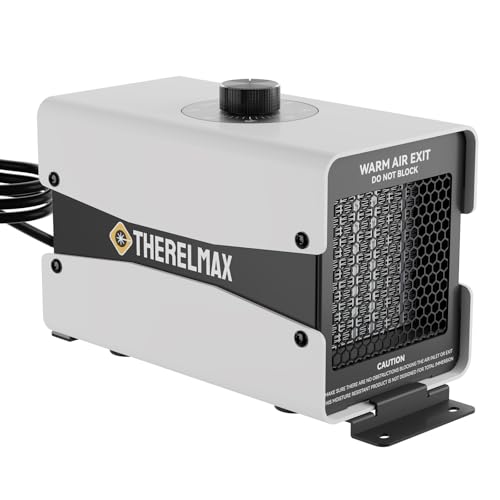
Features: Adjustable thermostat provides user control over temperature in bilges, greenhouses, or workshops. 3-second fast heating assists rapid warmth and helps avoid freezing of critical components. Suitable for boat bilges, RV bays, and other compact spaces; designed to reduce winterizing costs and extend boating seasons.
Best for: Users who want precise temperature control to tailor heat to varying spaces. Caution: Temperature range guidance is broad; follow recommended settings (typical 46°F) to avoid overheating enclosed spaces.
Boat Engine Compartment Heater 800W — Xtreme Heaters

Features: Higher power for larger compartments; built with an anodized case and waterproof fan. Self-regulating PTC element ensures safe operation with automatic on/off based on temperature. Best for bigger engine bays or boats stored in very cold climates where stronger heat output is beneficial. Limitation: Higher power requires adequate electrical supply and may draw more current.
Twin Hornet 45 700W Certified Boat Heater
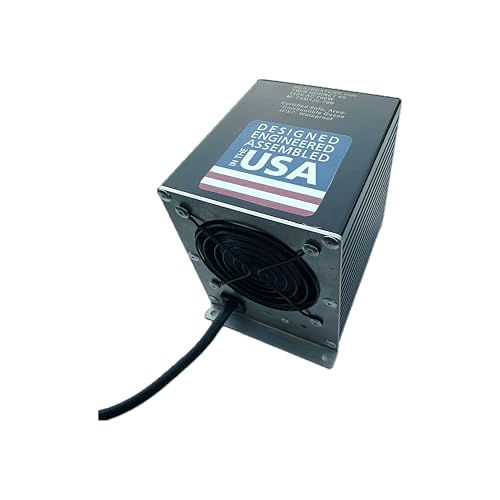
Features: Assembled in the USA with American-made components; dual-component heater provides extra protection for high-value assets. Includes two stainless-steel self-temperature regulating heating modules, two waterproof thermostats, and two long-life fans. Best for: Boaters needing redundancy and robust protection for critical equipment. Caution: Higher complexity may require careful wiring and installation.
Boat Engine Compartment Heater, 650W — Haoguo

Features: Enclosed-engine design with self-regulated PTC element; 650 W power for moderate-to-large compartments. 40 CFM waterproof fan supports quiet, even heating and helps maintain a dry bilge. Best for: Boats up to mid-sized spaces or those needing a balance of heat output and electrical efficiency. Limitation: Like other self-regulating units, performance depends on ambient conditions and space layout.
Buying Guide: Key Purchase Considerations
- Space and power compatibility: Choose wattage that matches your engine bay size. Smaller boats may only need 400–500 W, while larger compartments benefit from 650–800 W units.
- Thermostat and control: Built-in thermostats offer automatic temperature control. If you want precise heat ranges, prefer models with adjustable thermostats.
- Electrical system compatibility: Verify available electrical supply on board or dock power. Higher-wattage heaters draw more current and may require dedicated circuits.
- Durability and protection: Look for anodized casings, waterproof fans, and sealed electronics to withstand moisture and salt exposure.
- Installation flexibility: Units that mount in any orientation, including upside down, simplify placement in awkward bilges.
- Redundancy options: For critical boats, dual-component heaters or dual thermostats provide added reliability.
- Safety: Ensure the heater has auto-shutoff features within safe temperature ranges to prevent overheating in enclosed spaces.
- Maintenance: Favor models with straightforward wiring and accessible components for easier service in winter.
Frequently Asked Questions
- What size bilge heater should I choose for a 1,000 cubic foot boat space?
– A model in the 650–800 W range is typically more effective for mid-sized to large compartments, ensuring heat reaches the entire space. - Do these heaters require professional installation?
– Installation complexity varies; basic models may be DIY-friendly, but follow local electrical codes and consider professional help for wiring and mounting in complex spaces. - Can I use these heaters in spaces other than bilges?
– Yes, many are marketed for boats, greenhouses, RV bays, and other enclosed spaces; always ensure corrosion resistance and safety for the intended environment. - Will a thermostat-equipped heater reduce energy use?
– Yes. An adjustable thermostat can maintain a target temperature, preventing continuous operation and saving power. - Are dual-component or redundant heaters worth it?
– For high-value boats or critical installations, redundancy improves reliability in cold conditions and can reduce risk of freezing during power issues. - What maintenance is required after winter storage?
– Inspect wiring, seals, and fans; test operation before the season starts; ensure vents and fans remain clear of moisture and debris.