Best Beginner Kayaks for Quick Starts on the Water
Beginners will find these kayaks offer stability, ease of use, and transport-friendly designs. This guide highlights top options that suit calm lakes, rivers, and light coastal paddling, with clear reasons who each model is best for. Whether you want a modular fishing craft, an ultra-portable folding kayak, or a comfortable sit-on-top, these picks help you start confidently. The table below compares the five selected models to aid quick decisions.
| Product | Type | Best For | |
|---|---|---|---|
| Modular Fishing Kayak with Cart & Paddle (TT KAYAK) | Sit-on-Top / Modular | Anglers new to paddling | Two-piece design and included cart for easy transport |
| Oru Kayak Foldable Lake Sport | Foldable / Portable | Travelers and casual lake paddlers | Tool-free setup, highly portable |
| Perception Tribe 11.5 | Sit-on-Top | All-around fun on calm waters | Adjustable seating and ample storage |
| Advanced Elements Lagoon 1-Person | Inflatable / 1-Person | Beginner to intermediate paddlers seeking stability | Wide beam and multiple air chambers for stability |
| Sunlite Sports Inflatable 2 Person | Inflatable / Tandem | Families or two paddlers on lakes | Portable setup with included oars and pump |
Modular Fishing Kayak With Cart & Paddle
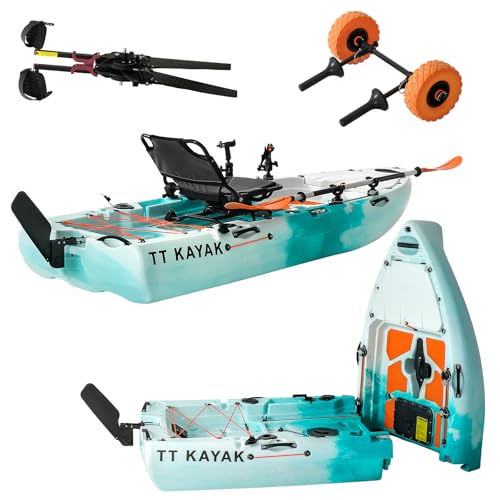
This sit-on-top kayak measures 110 inches in length and splits into two lightweight sections. The total weight is 86 pounds with a wide 38-inch hull, providing stability for beginners. The setup includes a complete kit: an 87-inch two-piece paddle and a heavy-duty kayak cart rated for 700 kg. The cart is designed for sand, gravel, and rocky shores, simplifying transport to water. Best for solo anglers who value transport ease and a modular design that adapts to gear needs. A caution: heavier loads near maximum capacity may affect handling in rough conditions.
The New Frontier: Intermediate/Advanced Whitewater Techniques

This book is a resource for readers seeking background on whitewater progressions and technique. It is best for readers who want to expand knowledge beyond basic paddling and explore skill development. Best for interested learners who plan to pursue more challenging waters in the future. Note: not a paddle craft itself; it complements practical gear selection and safety planning.
Oru Kayak Foldable Lake Sport

The Lake Sport is Oru’s compact, foldable kayak designed for lakes and calm rivers. It unfolds into a rigid hull in minutes without tools, and its 18-pound weight makes it highly portable for travelers or casual paddlers. A padded cockpit with a height-adjustable backrest improves comfort for extended sessions. Best for beginners who prioritize ease of transport and quick setup. Limitation: folded form may require a larger storage area when not in use, and setup can be less familiar for absolute first-time users.
Perception Tribe 11.5 Sit-On-Top Kayak

Perception’s Tribe 11.5 is a widely recommended sit-on-top for beginners and intermediates. It features an adjustable framed seatback and a cushy seat, plus integrated footrests and molded knee areas for a comfortable fit. Storage options include front and rear tank wells with bungee tie-downs and a center storage hatch, plus a built-in drink holder. Best for paddlers seeking a stable all-around platform with ample storage. Caution: larger paddlers should test fit for legroom and knee clearance before long trips.
Advanced Elements Lagoon 1-Person Kayak

The Lagoon 1-Person Kayak emphasizes stability with a wide beam and multiple air chambers for durability and buoyancy. It offers an adjustable padded seat and generous legroom for comfort on longer trips. Best for beginners who want a stable platform with room to grow into more ambitious paddling. Caution: inflation and deflation require a pump and proper sealing to maintain performance; user checks for leaks before use.
Sunlite Sports Inflatable 2 Person Kayak

This tandem inflatable kayak is designed for lakes and calm rivers, supporting up to 400 pounds. It includes aluminum oars and a carry bag for easy transport. Best for families or two beginners who want a budget-friendly entry with portability. Caution: inflatable kayaks can be more susceptible to punctures; inspect the material and valves before use and avoid sharp objects on the water surface.
Buying Guide
How to choose a beginner kayak
- Water type: Start with calm lakes or slow-moving rivers. Sit-on-top models offer stability and easy reboarding, while foldable or inflatable options emphasize portability.
- Stability and size: Look for a wide beam and ample cockpit space to reduce tipping risk. Larger kayaks can feel more stable but may be heavier to transport.
- Transport and storage: Consider how you will carry and store the boat. Modular and inflatable designs often simplify transport to small vehicles or apartments.
- Seating comfort: Adjustable seats and backrests improve comfort on longer sessions and can help maintain proper paddling posture.
- Storage and gear: Front, rear, and center storage options help organize paddling essentials, safety gear, and water bottles.
- Durability: Look for models with multiple air chambers or reinforced hulls if you expect rocky shores or rough launch zones.
- Maintenance: Folding and inflatable kayaks may require care to prevent punctures and to preserve fold mechanisms; plan for proper drying and storage.
FAQ
- What is the easiest kayak for a complete beginner? Kayaks with wide beams and stable hulls, including sit-on-top or inflatable models, are typically easiest for beginners to balance and reboard.
- Are foldable kayaks worth it for beginners? Foldables offer portability and quick setup, which can be advantageous for travelers or storage-limited buyers.
- Do I need a paddle with a kayak kit? Many kits include a paddle; if not, choose a lightweight 2-piece paddle for easy handling and transport.
- Can a beginner use a tandem kayak alone? Yes, but expect reduced stability and maneuverability compared to a solo kayak; ensure weight remains within the kayak’s limits.
- What should I check before buying a sit-on-top kayak? Confirm seating comfort, deck space, storage options, and hull stability to match your preferred water type and paddling style.
- Is inflatable better than rigid for beginners? Inflatable kayaks are portable and easy to store, while rigid boats typically offer stiffer tracking and quicker response on the water.