Best Boat Fire Extinguishers for Safe Watercraft Operations
Answering the needs of boat owners and skippers, this guide highlights top-rated boat fire extinguishers that balance marine durability, effective Class B and C fire suppression, and user-friendly operation. Each option is suited for a specific buyer—new boaters, seasoned sailors, or multi-vehicle households. Below is a quick summary table of the five selected products to help you compare at a glance.
| Product | Best For | Key Feature |
|---|---|---|
| Kidde Fire Extinguisher for Boats, Single-Use 5BC | Small boats and dinghies | All-metal construction with corrosion-resistant components |
| First Alert Fire Extinguisher | Marine Fire Extinguisher, FE1A10GR | New boat owners needing UL ratings | UL rated 1-A:10-B:C with durable metal valve |
| First Alert Marine1 Fire Extinguisher, UL Rated 1-A:10-B:C | Ships and coastal boats | Marine-grade construction with mounting bracket |
| Kidde Fire Extinguisher for Boats, Single-Use 10BC | Higher risk on larger boats | Fights Class B and C fires with strong corrosion resistance |
| Kidde Mariner 5 Fire Extinguisher for Boats, Single-Use 5BC | Mid-sized boats | Same Class B/C capability with robust construction |
Kidde Fire Extinguisher for Boats, Single-Use 5BC
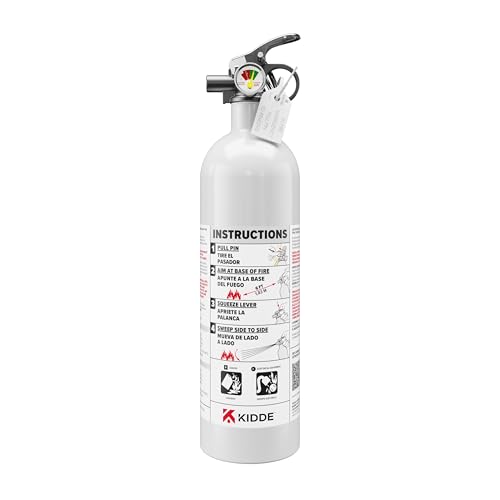
Best for small boats and dinghies that require reliable Class B and C coverage. This extinguisher uses an all-metal construction with corrosion-resistant aluminum and stainless-steel components, plus a rust-resistant steel lever. It is designed to combat typical marine fires from flammable liquids to electrical equipment. The presence of a tough valve assembly and a safety pin adds to its usability in rough conditions. Choose this if you want a compact, durable option with strong marine corrosion resistance for basic fire emergencies on a small craft.
Limitations: The single-use design means it cannot be recharged after discharge; consider purchasing an additional unit or a rechargeable model for frequent use on larger vessels.
First Alert Fire Extinguisher | Marine Fire Extinguisher, FE1A10GR
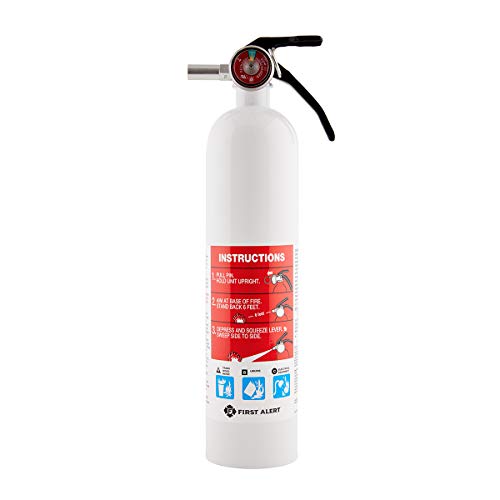
Best for first-time buyers who want a UL-rated marine extinguisher with proven military-grade metal components. This model is UL rated 1-A:10-B:C and uses monoammonium phosphate extinguishing agent. Its all-metal construction, including a commercial-grade valve and trigger, supports consistent performance on boats exposed to damp environments. It is a solid choice for those seeking a reliable, easier-to-check option for small to mid-sized vessels. It’s rechargeable by certified professionals after use, which can be a consideration for ongoing maintenance.
Caution: Recharge service is required after a discharge; plan for professional servicing to restore readiness.
First Alert Marine1 Fire Extinguisher, UL Rated 1-A:10-B:C

Best for coastal boats needing a ready-to-mount solution. This extinguisher carries UL ratings and features a durable all-metal construction with a commercial-grade valve and trigger. It’s designed to fight a broad range of fires including wood, paper, plastics, gasoline, oil, and electrical equipment. The included secure extinguisher mount, bracket, and strap helps ensure quick access in emergencies. It is U.S. Coast Guard–approved when used with the mounting bracket. Pick this if you want an integrated mounting setup for easy reach aboard a mid-sized vessel.
Limitation: Requires proper bracket installation to achieve Coast Guard–approved status.
Kidde Fire Extinguisher for Boats, Single-Use 10BC
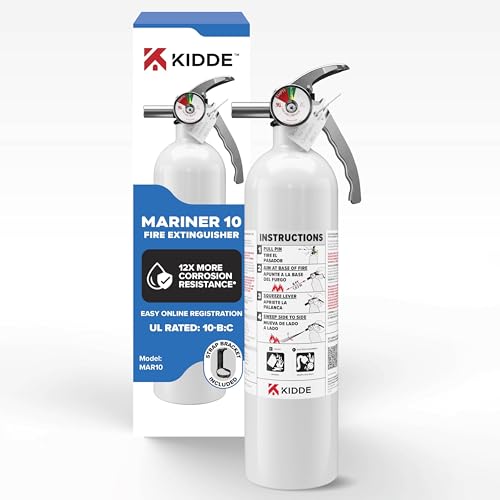
Best for boats with higher fire risk due to larger compartments or more equipment. This 10BC model provides robust ability to fight Class B and C fires and features corrosion-resistant aluminum and stainless-steel components. It offers a quick discharge time of 8-12 seconds and a 6-8 foot range, with 100 PSI operating pressure for rapid response. Choose this if you want a higher-capacity extinguisher on a mid-to-large watercraft, recognizing the trade-off of greater size and weight.
Caution: Heavier and larger than small-boat units; ensure storage space accommodates the unit.
Kidde Mariner 5 Fire Extinguisher for Boats, Single-Use 5BC

Best for mid-sized boats requiring reliable Class B/C protection with corrosion-resistant construction. The Mariner 5 uses aluminum and stainless-steel components and offers a discharge time of 8-12 seconds with a 4-6 foot spray range at 100 PSI. It suits owners who want a compact, steady extinguisher that’s easy to mount and access. It’s a solid choice when space is moderate but you still need effective marine-grade performance.
Limitation: Shorter spray range compared with larger 10BC units; plan placement accordingly to maximize reach.
Buying Guide
What fire class coverage do I need on a boat?
Most marine extinguishers handle Class A (ordinary combustibles), B (flammable liquids), and C (electrical). Boats typically require B and C coverage, with some units also addressing A fires. Verify the agent type and rating (for example, 1-A:10-B:C) to ensure the extinguisher meets your vessel’s risk profile.
Should I choose rechargeable or disposable extinguishers?
Rechargeable extinguishers are useful for boats with frequent use or longer-term ownership, as they can be serviced and recharged by professionals. Disposable (single-use) units are common on smaller craft and are easier to manage, but replacement is required after discharge.
What mounting and accessibility considerations matter?
Install extinguishers in clearly marked, easily reachable locations. Some models come with mounting brackets or straps; use them to secure the unit and prevent movement during rough seas. Coast Guard approval on mounting can be a deciding factor for certain vessels.
What maintenance steps improve readiness?
Regularly inspect pressure indicators, seals, and accessibility. Have discharge units serviced by certified professionals if they are rechargeable. Keep extinguishers free from corrosion, moisture, and damage, and replace any unit that shows signs of wear or tampering.
How do size and weight influence choice?
Smaller boats benefit from compact, light units for easier handling and storage. Larger boats may require higher-capacity extinguishers with longer discharge ranges to cover more deck space and engine compartments.
FAQ
- What is the most common class of fire on boats? Fire incidents on boats typically involve flammable liquids (Class B) and electrical equipment (Class C); many extinguishers are rated to address both.
- Can I recharge a disposable marine extinguisher? Most disposable units are not rechargeable. If you discharge one, replace it with a new unit or opt for a rechargeable model and arrange professional service after use.
- Is Coast Guard approval important? Coast Guard approval applies when the extinguisher is installed with the required mounting hardware and used on certain vessels. It can be a meaningful safety and compliance factor.
- Where should I store boat extinguishers? Store in an accessible, dry location away from direct heat, with clear labeling and mounting where applicable.
- How do I know if an extinguisher needs service? If it’s rechargeable, have it inspected and recharged after use or as recommended by the manufacturer. For disposable units, replace at the expiration or upon discharge.
- Should I have more than one extinguisher? Yes. Placing extinguishers in different high-risk areas (galley, engine room, and near the cockpit) increases the chances of a quick response in an emergency.