Best Depth Sounder in Hull for Clear Waterway Readouts and Quick Readouts
Answering the question, a depth sounder in-hull provides reliable depth readings even when hull access is limited, using a through-hull or in-hull transducer. This guide compares five top options for American boaters, highlighting who each product is best for and why it stands out. It also notes potential limitations to help buyers decide faster.
| Product | Best For | Notes |
|---|---|---|
| DepthTrax 2B Boat Mount In Dash Digital Depth Finder | Rugged in-dash displays with broad depth range | Includes dual transducer options |
| Faria Beede Chesapeake 13795 Thru-Hull | Bright, easy-to-read display in any condition | Thru-hull installation |
| Faria Chesapeake White SS 2″ Depth Sounder | Compact, simple depth reading | Thru-hull transducer included |
| Faria 12851 Euro Depth Sounder | Classic dial with bold graphics | In-hull mounted transducer |
| Humminbird 407860-1 HDR 650 | In-dash unit with versatile color options | Includes transom mount transducer |
DepthTrax 2B In-Dash Depth Finder by Hawkeye

The DepthTrax 2B is designed for boaters seeking a large, in-dash display with extensive depth coverage. The unit reads from 2.5 to 600 feet and supports up to 60 mph, making it suitable for faster boats and deep-water navigation. A dual mount transducer option adds flexibility for different hull types, including the ability to shot through solid fiberglass hulls and up to 1/8-inch aluminum hulls. This model includes a 3-stage Advanced Warning System with audible alarm, LED warning light, and LCD indicators for quick alerts—useful for fishing, depth tracking, and navigation accuracy.
Best for: Boats needing a robust, high-visibility depth readout with flexible transducer mounting and strong alarm capabilities. Better for: Faster boats where depth data should update rapidly. Avoid this if: You require a compact, low-profile display on a small vessel and prefer a simpler interface.
Faria Beede Chesapeake 13795 Thru-Hull Depth Sounder

This Faria model emphasizes an oversized back-lit display for readability in all lighting conditions, making it ideal for dawn or night boating. It features alarms for elevation changes, both audio and visual, to alert skippers to depth shifts or potential hazards. The design suits anglers and coastal cruisers who prioritize clear readings during long sessions or in challenging weather.
Best for: Mariners who value a large, easy-to-see display and audible/visual alarms. Better for: Conditions with variable lighting or night-time boating. Caution: The specification highlights alarms but does not detail additional integration features beyond the audible/visual cues.
Faria Chesapeake White SS 2″ Depth Sounder

This compact 2-inch depth sounder presents a straightforward option with a pure depth reading focus. The thru-hull transducer ensures reliable readings and the slim profile helps preserve space on smaller boats. Suitable for sailors and small-boat owners who want a simple, dependable depth readout without added complexity.
Best for: Small to mid-size boats needing a compact depth finder. Better for: Quick installations with a focus on core depth data. Caution: Limited feature set compared to larger, multi-function units.
Faria 12851 Euro Depth Sounder
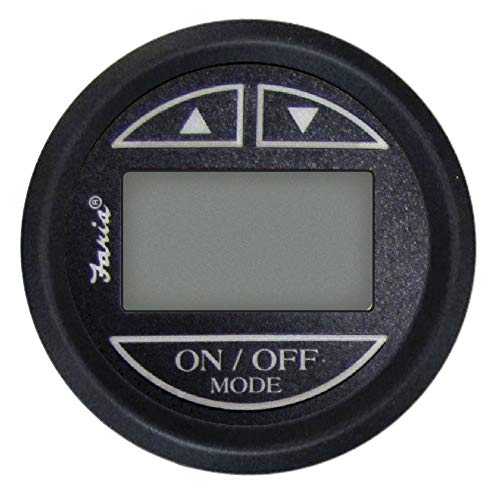
The Euro Depth Sounder features a perimeter-lighted black dial with a white pointer and bold graphics. The black aluminum bezel gives a classic, durable appearance, appealing to boaters who prefer a traditional instrument aesthetic. It uses an in-hull transducer, which can be advantageous for boats where through-hull installation is impractical.
Best for: Those who want a classic, legible dial and a durable build. Better for: Boats with in-hull installation and a preference for traditional instrumentation. Caution: The classic dial emphasis may be less intuitive for users who prefer digital depth readouts in real-time data formats.
Humminbird HDR 650 In-Dash Depth Sounder

The HDR 650 is an in-dash depth sounder designed for clear visibility and easy integration with other Humminbird gear. It ships with a transom mount transducer and offers color display options to improve depth readability in varied lighting. This option is suitable for boaters who want a mid-range, feature-rich depth sounder integrated into an existing Humminbird ecosystem.
Best for: Users already invested in Humminbird hardware seeking cohesive electronics. Better for: Boats needing a reliable transom transducer setup. Caution: The data indicates color options and included transducer but does not specify advanced alarm features found in some competitors.
Hawkeye DT2BX-TH In-Dash Depth Sounder

The DT2BX-TH includes a thru-hull transducer and provides instant depth updates, plus air and water temperature readings. It requires a 2-inch hole for installation, indicating a sturdy, integrated approach for reliable long-term use on larger boats or vessels that need temperature data alongside depth information.
Best for: Boat owners who want both depth and temperature data in one display. Better for: Those comfortable with thru-hull installs and larger fittings. Caution: The requirement of a 2-inch hole means a more involved installation and potential hull modification.
Hawkeye DT2BX-TM In-Dash Depth Sounder
This variant delivers uninterrupted depth readings from 2.5 to 600 feet on a large in-dash display, specifically designed for boats traveling up to 60 mph. It features a 3-stage Advanced Warning System with audible alarm, plus a LED display and LCD indicators. It also includes a Transom Mount Temp Transducer with 30 feet of cable, making it a robust choice for anglers and coastal cruisers who need comprehensive environmental data.
Best for: Users who require continuous, high-clarity depth updates with temperature compatibility. Better for: Faster boats and environments where quick alarm cues are critical. Caution: Heavier installation and a larger system footprint than some compact models.
Buying Guide
What type of installation fits your boat?
Choose between in-dash, thru-hull, or in-hull installations based on hull material, space, and ease of access. Thru-hull generally offers robust readings but requires hull penetration. In-hull setups are less invasive and suit boats with limited exterior space.
What depth range do you need?
If you regularly navigate deep waters, look for units that read from at least 2.5 feet to several hundred feet. Deeper ranges help with offshore or lake navigation, while shallower ranges suit coastal cruising.
Do you want alarms and temperature data?
Alarm systems help alert to depth changes, while temperature readings (air or water) add environmental awareness for fishing and weather considerations. Some models come with configurable alarms and muting features for easier operation.
Display readability and interface
Large, backlit displays improve readability in bright sunlight or low light. Digital readouts are quick to interpret, while dial or analog displays provide a classic look and may be preferred for certain vessels or aesthetic choices.
Compatibility and expansion
Consider whether the unit integrates with existing electronics, such as a fishfinder or multi-function display. Some brands offer ecosystems that simplify data sharing and layout consistency across devices.
Installation considerations
Check hull material compatibility with transducers, required hole diameters, and sealing needs to prevent leaks. Some transducers shoot through solid fiberglass or through hulls of up to 1/8-inch aluminum, offering installation flexibility for different boat builds.
Quick comparison at a glance
- Best for high-visibility, digital depth readouts: DepthTrax 2B In-Dash Depth Finder
- Best for bright, easily readable alarms: Faria 13795 Thru-Hull
- Best compact option: Faria 2″ Depth Sounder
- Best classic dial aesthetic: Faria 12851 Euro Depth Sounder
- Best integration with temperature data: Hawkeye DT2BX-TH
FAQ
- What is a thru-hull transducer? A transducer mounted through the hull that sends and receives sonar signals, often providing more stable readings in larger boats.
- Can I install a depth sounder myself? Yes, many units are designed for DIY installation, but some require professional help for through-hull mounting.
- Do depth sounders work in saltwater and freshwater? Most do; ensure the model is rated for marine use and the transducer type matches your hull.
- Do depth sounders require ongoing maintenance? Regular cleaning and inspection of the transducer and seals help maintain accuracy and prevent leaks.
- Is temperature data essential for depth readings? Temperature data adds environmental context for fishing and navigation but is optional for basic depth reading tasks.