Best 5-Gallon Gas Tank for Boats: Top Portable Marine Fuel Tanks
Answering the most common buyer question: which portable fuel tank best suits a small- to mid-size boat? This guide highlights five well-rounded options, highlighting who they’re best for, why they stand out, and practical cautions. Ideal for anglers, deck boat users, and back‑up fuel providers, these tanks balance capacity, portability, and durability. The summary table below helps compare core details at a glance.
| Product | Capacity | Best For | Key Benefit |
|---|---|---|---|
| VEVOR Marine Tank | 6.34 gal / 24 L | Outboard adventures, deck boats | Visible gauge and long hose |
| DEF Portable Boat Fuel Tank | 6 gal / 24 L | Reliability on rough water | Sealing/venting options |
| Scepter 6 Gallon | 6 gal / 22.7 L | Under-seat storage, general use | Built-in gauge and vented cap |
| Attwood 8806LP2 | 6 gal | EPA/CARB compliant needs | Cap with vacuum valve |
| LAUCO Portable Tank | 6.34 gal / 24 L | Docks, garages, and on-board use | Two cap designs and durable build |
VEVOR Marine Tank With Gauge

The VEVOR model offers a 6.34-gallon (24 L) capacity with a built-in gauge and a 9.8 ft / 3 m hose. The separate inlet and outlet help minimize spills, and the design emphasizes durability in saltwater environments. This tank is best for boaters who want to monitor fuel levels visually and use a longer hose for flexible fueling access. A caution: prolonged direct sunlight can accelerate aging and expansion, so store away from intense sun when not in use.
DEF Portable Boat Fuel Tank, 6 Gal

The DEF tank delivers about 6 gallons of capacity with HDPE construction that resists aging and impact. It includes two sealing modes for venting and sealing, plus an oil volume indicator and an air-inlet filter to help maintain clean fuel flow. This option suits boaters who value flexible venting and clear fuel monitoring, especially in rough conditions. Limitation: ensure compatibility with your specific fuel line fittings to avoid leaks.
Scepter 6 Gallon Portable Marine Gas Can

Designed for boats that need reliable on-board refueling, the Scepter 6-gallon tank includes a two-way vented cap, a built-in fuel gauge, and compatibility with standard marine fittings. It supports diesel and ethanol-blended fuels, making it versatile for various engine types. This option is best for users who want a compact, under-seat friendly container with gauges. Note: fuel line accessory is sold separately, so plan for an additional purchase if needed.
Attwood 8806LP2 EPA Certified Tank

The Attwood 8806LP2 emphasizes EPA and CARB compliance with an integrated vacuum valve on the cap for automatic venting. It’s a solid choice for buyers prioritizing regulatory compliance and a simple venting process. Best for boats where a straightforward, regulation-aligned design is important. Caution: check that the cap’s vacuum valve remains unobstructed to prevent fuel flow issues.
AloneGoer 3 Gallon Portable Tank
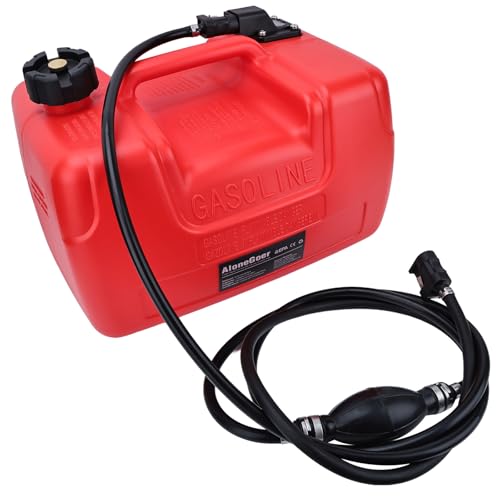
The AloneGoer option targets smaller needs with a 3-gallon capacity but uses a compatible connector for Yamaha models (6YL-24201-24-00). It employs multi-layer barrier technology to reduce fuel evaporation and provides UV stabilization for salt air environments. Choose this if you want a compact secondary tank or a fuel backup for small craft. Limitation: lower capacity means more frequent refills on longer outings.
Attwood 8806LPG2 EPA/CARB 6-Gallon Tank

This model focuses on automotive-grade multi-layer construction and robustness in extreme environments. It also features an automatic vacuum valve for steady fuel flow. Best for buyers who need a rugged tank that can withstand frequent transport and variable temperatures. Limitation: ensure the gauge and cap design meet your mounting and storage space constraints.
LAUCO 6.34-Gallon Portable Tank

The LAUCO tank offers a 6.34-gallon capacity with a dual-cap design (sealed or vented) and a long hose. It’s a practical choice for dockside storage and boat use, delivering durable HDPE construction and compatibility with common marine interfaces. Best for buyers who want flexibility in venting options and a sturdy, travel-ready tank. Caution: avoid prolonged direct sun exposure to extend the tank’s life.
Buying Guide
- Capacity and fuel needs: Choose 6+ gallons if you regularly run longer trips; 3–4 gallons suits emergency backups or small craft.
- Ventilation and sealing: Look for vented caps for quick fueling and sealed caps to minimize leaks during transport.
- Fittings and hose length: Ensure hose length and inlet/outlet fittings match your boat’s interfaces to prevent compatibility issues.
- Material and durability: HDPE is common for its impact resistance and aging. UV stabilization helps in sunny environments.
- Gauge visibility: Built-in gauges help you monitor fuel levels at a glance, reducing guessing during trips.
- Regulatory compliance: EPA/CARB-certified options meet environmental standards for on-board fuel storage.
- Installation footprint: Consider under-seat storage, deck space, and how easy the tank is to move or refill on the water.
FAQ
- Q: Which tank is best for long offshore trips?
- A: Tanks with higher capacity (around 6 gallons) and a long, compatible hose are better suited for longer trips.
- Q: Do all tanks require manual venting?
- A: Not all; some have automatic vacuum valves for steady fuel flow, which reduces manual venting needs.
- Q: Are these tanks compatible with diesel?
- A: Many listed tanks support diesel and ethanol-blended fuels, but always verify fuel compatibility before use.
- Q: How important is a fuel gauge?
- A: A gauge helps prevent run-outs by showing fuel level at a glance, especially on longer outings.
- Q: Can I store these tanks indoors?
- A: Yes, but avoid prolonged direct sunlight to extend life; store in a cool, shaded area when possible.
- Q: What maintenance is required?
- A: Regularly inspect hoses and caps for cracks or leaks, and keep vents clear of obstructions.