Best Fiberglass Glue for Boats: Top Marine Epoxies for Repairs
Answering the needs of boat owners and marine hobbyists, these fiberglass glues and epoxies deliver strong bonds, waterproof seals, and durable performance. Best for hull repairs, deck joints, and fiberglass fixtures, these products suit both DIY enthusiasts and professional boatyards. The selections focus on waterproof, UV-resistant, and fast-curing options to fit different repair timelines and environments.
The following table summarizes the five products featured, highlighting who they’re best for and why they stand out for fiberglass work on boats.
| Product | Best For | Why It Stands Out |
|---|---|---|
| J-B Weld MarineWeld Syringe | Small structural repairs and precise applications | 1:1 mix in syringe; waterproof and UV resistant |
| TotalBoat Thixo 185 ml | Large, vertical or overhead bonding | Thickened epoxy with no mix mess; stays where applied |
| Berkland 5200 Fast Cure (3 oz) | Permanent seals above/below waterline | Fast cure; tack-free in 2 hours; UV resistant |
| Tylove 5200 Alternative | Quick seals for smaller projects | Water-based, fast cure; marine-grade formula |
| Loctite PL Marine Fast Cure | Deck joints and through-hulls | Watertight, flexible bond; suited for marine environments |
J-B Weld MarineWeld Syringe
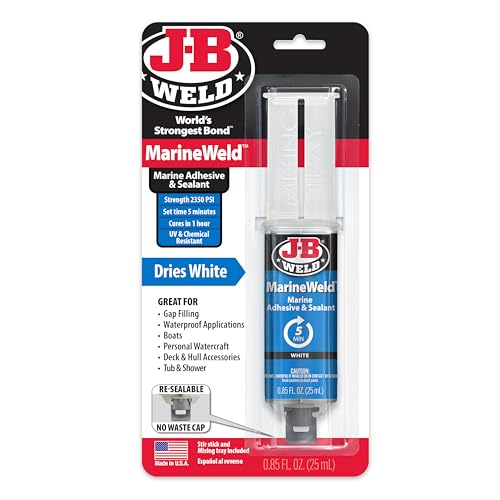
Features include a specially formulated two-part adhesive that provides a strong, flexible bond, is waterproof, and resists chemicals and UV exposure. The 1:1 mix ratio is designed for straightforward application via syringe, helping control scope and cure behavior. Best for small bond repairs on fiberglass surfaces, fittings, and deck hardware where precision is required. A limitation is the smaller package size, which may require more frequent replenishment on larger projects.
TotalBoat Thixo (185ml Cartridge)

This is a high-strength, thickened two-part epoxy adhesive designed for structural bonding, gluing, filling, and sealing. It features a no-mess 2:1 mix ratio with included tips that ensure consistent results. The 185 ml cartridge fits standard caulking guns and is formulated to stay in place on vertical surfaces or overhead work, making it well-suited for fiberglass bonding where gravity could be an issue. Better for larger repairs where long work time and strong adhesion are needed; it remains workable on fiberglass without sagging. A potential drawback is the need to manage the cartridge with a caulking gun, which may be less convenient in tight spaces.
[3 oz] Marine Adhesive Sealant 5200 Fast Cure

This Berkland product offers a permanent, watertight seal above and below the waterline with a 24-hour fast cure. It resists UV exposure, maintains adhesion under hull flex, and provides a durable bond for through-hulls, struts, and hull-to-deck joints. It’s ideal for quick repairs where speed matters, but its fast cure may require careful timing and surface prep. Noted as a fast-curing option that can reduce downtime on boating projects.
5200 Marine Sealant Fast-Cure (Tylove Alternative)
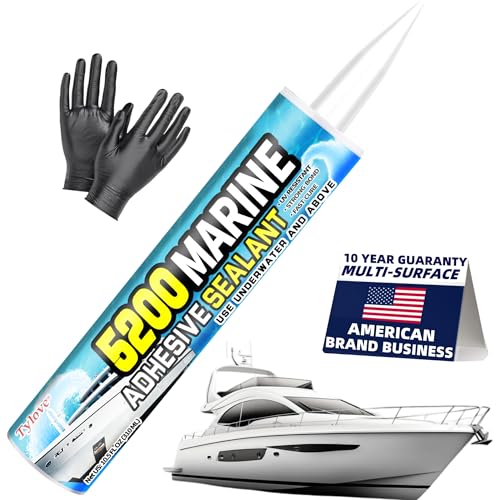
This fast-curing, water-based marine sealant offers a quick, durable seal for fiberglass boats, gelcoat, and wood. It’s marketed as a 5200 alternative with strong bonding strength and a low-odor formula. Best for projects where a fast, user-friendly sealant is required but without the heavier solvent profile of some traditional sealants. It may be less suitable for heavy load-bearing joints compared with high-strength epoxy systems.
Loctite PL Marine Fast Cure Adhesive Sealants
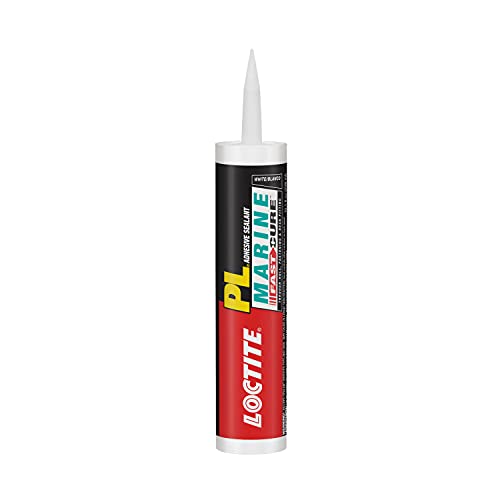
Loctite PL Marine Fast Cure is designed for through-hull fastening and deck fittings, delivering a watertight, flexible bond once cured. Suitable for work both above and below waterline, it supports joints, moldings, and planking. Choose this option for marine-grade flexibility and a faster cure profile compared with traditional polyurethane sealants. Limitation: may be less suited for extremely high-load structural bonding compared with epoxy systems.
Buying Guide: Key Purchase Considerations
- Application environment: Above waterline vs. submerged exposure. Some products cure quickly for fast turnarounds, while others offer higher strength for submerged or high-stress joints.
- Working time and cure speed: Consider whether you need tack-free times, handling strength timelines, or complete cure before exposure to saltwater and sun.
- Flexibility and UV resistance: Marine surfaces move; UV exposure can degrade bonds. Look for flexible, UV-stable formulas for hulls and decks.
- Viscosity and sag resistance: Thickened epoxies are better for vertical surfaces; runny formulas may drip or sag during application.
- Substrate compatibility: Fiberglass, wood, gelcoat, metals, and composites may bond differently. Verify compatibility with fiberglass surfaces common on boats.
- Surface preparation: Most products require clean, dry, and sometimes abraded surfaces. Follow manufacturer prep instructions for best results.
- Health and environmental considerations: Some products have odor, while others are low-odor or water-based. Consider ventilation and skin protection needs.
Frequently Asked Questions
- What is the best fiberglass glue for underwater repairs?
– Epoxy adhesives with waterproof and UV-resistant properties are generally preferred for submerged repairs, such as through-hulls or hull-to-deck joints. - How long does MarineWeld take to cure?
– Cure times vary by product and temperature; refer to the product guidelines on tack-free and handling strength times for best results. - Can I use silicone sealants on fiberglass boats?
– Silicone sealants are suitable for certain sealing tasks but may not provide the same structural bond as epoxy adhesives. Use where flexibility and watertight seals are needed rather than high-strength bonding. - Is fast-curing marine sealant strong enough for hull joints?
– Fast-curing formulations offer quick seals but may have different strength profiles than longer-cure epoxy systems. For critical hull joints, evaluate bond strength requirements and surface prep. - Do I need primers before applying marine adhesives?
– Surface prep is essential. In many cases, cleaning, drying, and sometimes abrading the surface improves adhesion, with primers used according to the manufacturer’s directions. - Are water-based adhesives suitable for outdoor marine use?
– Many water-based options perform well in marine environments, especially where low odor and user safety matter. Confirm UV resistance and moisture tolerance for your application.