Best Bilge Pump Speed Controller Options for Marine and DIY Projects
When selecting a bilge pump speed controller, look for a unit that handles the pump’s voltage range, provides reliable PWM control, and includes protection features to prevent motor overload. This guide highlights five reliable PWM motor speed controllers ideal for bilge pumps and small marine applications. Best for DIYers, boaters, and hobbyists seeking adjustable, durable control over pump flow without overloading the motor.
Summary of selected products:
| Product | Brand | Voltage Range | Current | Best For |
|---|---|---|---|---|
| Hosyond PWM DC Motor Speed Controller | Hosyond | 7-70V | 30A | High-current applications; flexible installation |
| RioRand 7-70V PWM DC Motor Speed Controller | RioRand | 7-70V | 30A | Compact, durable DIY projects |
| EC Buying ZK-BMG DC Motor Speed Controller | EC Buying | 9-60V | 12A (20A max) | Built-in display, adjustable frequency |
| PEMENOL PWM Motor Driver | PEMENOL | 5-24V | 15A | Soft start, memory function |
| EPLZON DC 12-60V Motor Speed Controller | EPLZON | 12-60V | 20A | Forward/Reverse, soft start |
Hosyond PWM DC Motor Speed Controller

The Hosyond unit covers 7-70V and delivers up to 30A, making it suitable for mid-sized bilge pumps or small marine motors. It includes a 30A fuse to protect the motor interface, and its detachable adjustable potentiometer cable allows flexible installation. This controller is best for users who need a robust, high-current solution with straightforward on/off/brake switching functionality. A potential limitation is the fuse protection; ensure the fuse matches your pump’s surge needs to avoid nuisance blows.
RioRand 7-70V PWM DC Motor Speed Controller

RioRand’s controller operates over 7-70V with a 30A rating and features a 1%-100% duty cycle at 12kHz PWM. It’s well-suited for brushed DC motors in DIY projects where heat management is a consideration. Advantages include an aluminum housing for durability and a separate fuse for backup protection. The model specifies a voltage margin to avoid overload, which is important for pumping applications that experience motor startups. It’s a solid pick when you prioritize long-term reliability in compact marine setups.
EC Buying ZK-BMG DC Motor Speed Controller

The ZK-BMG model accepts 9-60V input with a 12A nominal current and up to 20A max. It offers a wide adjustable frequency range (1KHz–99KHz) and 0-100% duty cycle, with a compact footprint and digital display to monitor duty cycle and frequency. It stores parameters after power-off, which is helpful for consistent bilge pumping routines. Best for projects needing precise frequency control and clear feedback. A limitation to consider is the lower current ceiling for larger pumps.
PEMENOL PWM Motor Driver
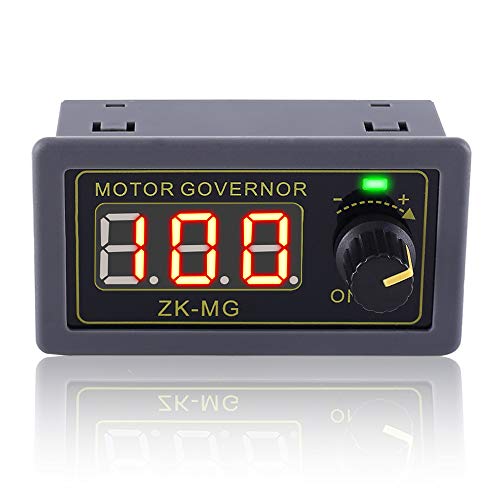
PEMENOL’s driver operates from 5-24V with up to 15A continuous current and 150W max. It includes a memory function for parameter retention and a soft-start feature to reduce inrush when starting the motor. This model is best for small-to-midsize bilge pumps and hobby motors where a gentle start and stable control matter. Avoid this if your pump requires more than 15A or higher voltage ranges than 24V, as the unit’s limits would be exceeded.
EPLZON DC 12-60V Motor Speed Controller

EPLZON’s controller covers a broad 12-60V range and 20A output, with forward/reverse rotation control and soft-start protection. The compact form fits tight spaces on boats or in instrumentation panels, and the controller is designed to minimize motor inrush. Choose this if you need reversible operation in confined installations. A caution: verify that the installation space can accommodate its dimensions and mounting pattern.
Buying Guide
What matters when choosing a bilge pump speed controller?
- Voltage and current range: Ensure the unit matches your bilge pump’s operating voltage and current draw, with a comfortable margin for startup surges.
- Control features: Look for PWM control, duty-cycle range (0-100%), and soft-start to protect the pump and wiring.
- Protection and reliability: Fuses, reverse polarity protection, and durable housings help prevent motor damage in marine environments.
- Size and mounting: Check installation dimensions and mounting holes to fit your bilge area or control panel.
- Feedback and monitoring: Digital displays or indicators can aid troubleshooting and ensure precise speed control.
- Ease of wiring: Clear wiring diagrams and labeled terminals reduce installation errors.
What’s the right choice for different users?
- Best for high-current needs: Choose models rated around 30A with solid protection, such as the Hosyond or RioRand units.
- Best for compact spaces: EPLZON or EC Buying variants offer smaller footprints and clear interfaces.
- Best with feedback monitoring: The EC Buying ZK-BMG includes a display for duty cycle and frequency.
- Best for soft-start and longevity: PEMENOL emphasizes soft-start and memory function to reduce motor wear.
Installation tips
- Measure the pump’s startup current and select a controller with a higher current rating.
- Use a fuse appropriate for the system’s maximum expected current to protect wiring.
- Place the controller and wiring away from moisture and vibration typical on boats.
- Test with a dummy load before connecting the bilge pump to ensure correct polarity and operation.
FAQ
- Q: Can I use any PWM controller for a bilge pump? A: Only if it matches the pump’s voltage and current and provides suitable protection features.
- Q: What is soft start, and why does it matter? A: Soft start gradually increases current to reduce motor stress on startup, extending motor life.
- Q: Do these controllers store settings after power off? A: Some models have memory for parameters; check product specs for confirmation.
- Q: Is a higher voltage always better for bilge pumps? A: Not necessarily; use the voltage range specified by the pump and controller to avoid overvoltage.
- Q: Should I use a controller with a display? A: Displays help monitor duty cycle and frequency, aiding precise control and troubleshooting.
- Q: How do I protect against short circuits? A: Use the included fuse and proper wiring practices to prevent shorts and protect components.