Best Onboard Marine Battery Chargers for 12V Systems in 2026
Answering the need for reliable, installable battery charging aboard boats, this guide compares top onboard marine chargers. The best options suit boat owners who want dedicated, multi-bank charging for lead-acid, AGM, and lithium batteries, with features like temperature compensation and overcharge protection. Ideal buyers include: hardcore coastal and saltwater sailors needing robust multi-bank solutions; weekend boaters seeking compact, easy-install chargers; and anglers or charter operators who require reliable 24/7 maintenance.
Below is a quick overview of the five selected products, showing who each is best for and why. This summary helps compare banks, output, and key features at a glance.
| Product | Banks | Output | Best For |
|---|---|---|---|
| NOCO Genius GEN5X2 | 2 | 10A total (5A/bank) | Balanced power for dual-bank boats with mixed battery types |
| NOCO Genius GEN5X3 | 3 | 15A total (5A/bank) | Triple-bank setups needing precise, independent charging |
| FirstPower Pro 2 Bank 5X2 | 2 | 10A total (5A/bank) | IP68-rated, rugged 12V charger for 24/7 use |
| NOCO GENPRO10X2 | 2 | 20A total (10A/bank) | High-output, compact option for demanding systems |
| 3 Bank Marine Charger (anegine) | 3 | 15A total (5A/bank) | Force mode and dead-battery recovery in rugged environments |
NOCO Genius GEN5X2: 2-Bank, 10A Onboard Battery Charger
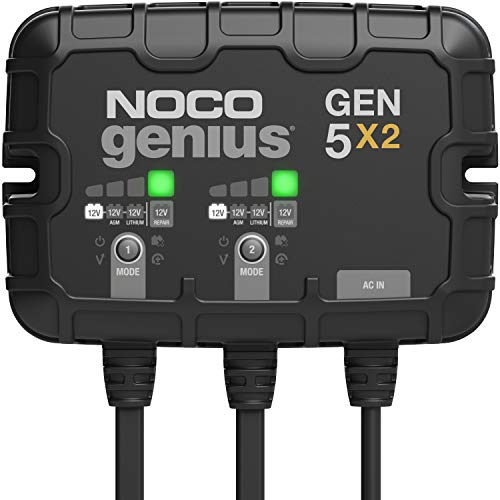
Product details indicate a compact, two-bank charger delivering 5A per bank with 12V modes for lead-acid and lithium. It’s designed to fit harsh marine environments and supports temperature compensation and overcharge protection. Best for boat owners who need independent bank control in a compact unit and can handle 12V AGM, 12V Lithium, and standard lead-acid batteries.
Who this is best for: dual-battery setups on boats requiring reliable, per-bank control. Why selected: strong balance of size, power, and modes for common marine battery chemistries. Caution: ensure mounting location accommodates its heat and space needs; monitor wiring for 5A per bank limits per battery.
NOCO Genius GEN5X3: 3-Bank, 15A Onboard Battery Charger
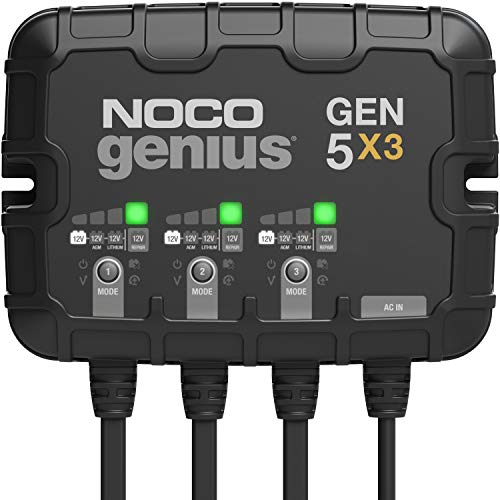
This three-bank unit provides 15A total (5A per bank) and supports 12V, AGM, Lithium, and Repair modes. It’s designed for multi-battery systems on larger boats or yachts that require dedicated charging across three banks. Best for: boats with separate starting, house, and auxiliary batteries needing independent maintenance. Caution: larger footprint than 2-bank units; confirm space and wiring capacity before installation.
FirstPower Pro 2 Bank 5X2 Marine Charger

Two-bank, 10A total output with 5A per bank, IP68 waterproof rating, and 24/7 onboard charging capability. Supports 12V SLA/AGM, Lithium (LiFePO4), and calcium batteries with independent mode selection per bank. Best for: frequent saltwater users needing a rugged, fully-sealed charger. Caution: check mode selection for each battery to prevent cross-control between banks.
NOCO Genius GENPRO10X2: 2-Bank, 20A Onboard Charger

High-output two-bank charger delivering 10A per bank for demanding systems. It includes the same selectable modes (12V, AGM, Lithium, Repair) and temperature compensation, making it suitable for boats with higher charging needs or larger battery banks. Best for: boats that require fast, simultaneous charging of two large 12V batteries. Caution: higher current draw means more robust power wiring and shore power capacity are necessary.
NOCO GENPRO10X1: 1-Bank, 10A Onboard Charger

One-bank, 10A charger designed for direct-mount installation near the battery. It supports 12V lead-acid and lithium modes with temperature compensation and overcharge protection. Best for: space-constrained installations where a single bank is sufficient. Caution: not ideal for multi-battery systems needing separate banks.
3 Bank Marine Charger (anegine)

Three-bank design with 5A per bank (15A total) and IP68 waterproof protection. Suitable for three separate 12V battery setups, including lead-acid and LiFePO4. Best for: boats requiring three independently controlled banks and rugged IP68 protection. Caution: brand has fewer widely available accessories compared to NOCO; confirm compatibility with existing boat wiring harnesses.
Buying Guide: Key Purchase Considerations
- Power needs: Match bank count and amperage per bank to your battery bank sizes and how quickly you want batteries charged.
- Battery chemistry: Ensure the charger supports your battery types (lead-acid, AGM, LiFePO4, Calcium) and provides appropriate charging modes.
- Waterproofing and ruggedness: For boats exposed to waves and spray, IP68 or higher ratings offer better protection.
- Install considerations: Check footprint, mounting method, and whether a direct-mount (like GEN2D) is preferred for under-hood installs.
- Independent bank control: If you have multiple batteries for different tasks (starting, trolling motor, house loads), a multi-bank charger with independent modes is advantageous.
- Safety features: Overcharge protection, temperature compensation, and repair modes help extend battery life and reduce maintenance.
- Wiring and power supply: Higher-output chargers still require adequate shore power and properly sized wiring to avoid voltage drop and heat buildup.
Frequently Asked Questions
- What is an onboard battery charger?
It is a device installed on a boat that charges 12V marine batteries through separate banks with selectable charging modes. - Do I need a multi-bank charger for a small boat?
If you have separate batteries for starting and house loads, a multi-bank charger helps keep each battery properly charged. - Can these chargers charge lithium batteries?
Yes, many models support Lithium (LiFePO4) in addition to lead-acid and AGM—check the specific modes for each bank. - Is IP68 waterproofing enough for marine use?
IP68 is highly resistant to water and immersion, suitable for most marine conditions when properly installed. - What installation considerations are important?
Consider space for mounting, wiring routes, proximity to the battery, and the amperage requirements of your batteries. - Should I choose a higher-output charger?
Higher output charges faster but requires adequate power supply and appropriate wiring to avoid overheating.