Best Night Vision Cameras for Boats: Stay Safe on the Water After Dark
Bright, reliable night vision is essential for safe boating, whether you’re navigating in unfamiliar waters or docking at night. This guide highlights five top night vision camera options designed for boats and yachts. Each pick is best for a different type of boater—from high-contrast thermal models to compact IP cameras for engine rooms. Use this overview to match the right camera to your vessel, operating environment, and visibility needs.
Top picks summary table:
| Product | Best For | Key Strength | Limitations |
|---|---|---|---|
| YEOIZO Marine Analog Camera | Boaters needing full-color night vision | Full-color image in very low light with long-range clarity | Analog styling, may require compatible display |
| FLIR E70354 M232 Pan Tilt Thermal Camera | Comprehensive thermal night vision | 320×240 thermal, pan/tilt, reliable in total darkness | Higher cost |
| GC 200 Marine IP Camera | Engine room and close-quarters monitoring | IP camera for easy integration | Limited detail in extreme low light |
| Garmin GC 14 Marine Camera | Above/below deck monitoring | Low-light visibility up to 15m | Analog image quality under certain conditions |
| FOURQ Underwater Fishing Camera | Underwater view and fishing visibility | IR night vision, 4.3″ LCD | Designed for fishing, not vessel-wide surveillance |
YEOIZO Marine Analog Full-Color Night Vision Camera

The YEOIZO Marine Analog Camera delivers full-color night vision, useful for boaters who want daylight-like clarity after dark. It uses a CMOS sensor to produce color images in very low light, helping you identify buoys, other vessels, and potential hazards. This camera is best for crews who prefer color imagery at night over grayscale thermal feeds.
Best for: boaters who value color detail at night and want reliable performance in extremely dark conditions. Why selected: combines color night vision with a long-range capability stated at up to 1000 meters, providing a bright display during night navigation.
Caution: as an analog camera, you may need compatible displays or converters to view the feed optimally on some modern digital systems.
FLIR E70354 M232 Pan Tilt Thermal Camera 9hz

The FLIR E70354 M232 is a thermal night vision option with pan and tilt capabilities, designed to help you spot hazards that aren’t visible to standard cameras. Thermal imaging detects heat signatures, providing a different perspective from visible-light cameras. This makes it particularly useful for spotting wake, vegetation, and living objects in low visibility conditions.
Best for: vessels needing reliable detection in complete darkness or fog. Why selected: offers pan/tilt for broader coverage and integrates with existing systems via Ethernet, aiding navigation and safety. Caution: thermal systems can be pricier and may require calibration for optimal performance in varying weather.
GC 200 Marine IP Camera

The Garmin GC 200 Marine IP Camera is designed for mounted surveillance around the boat or inside engine compartments. Its IP-based design supports easy integration with onboard networks and displays. It is a practical choice for crews seeking simple installation and dependable night monitoring in moderate lighting conditions.
Best for: boats requiring straightforward IP surveillance with reliable performance in moderate lighting. Why selected: easy-to-deploy IP camera for interior monitoring and near-deck areas. Limitation: may not match the depth of night detail seen in high-end thermal or ultra-low-light color cameras.
Garmin GC 14 Marine Camera

The Garmin GC 14 offers a clear view above or below deck with enhanced low-light performance and up to 15 meters of visibility. This analog camera excels in engine rooms and similar environments where lighting can be inconsistent. It complements other cockpit displays by providing a simple, dependable feed.
Best for: crews needing a durable, low-light monitoring camera for engine rooms or below-deck areas. Why selected: improved low-light visibility relative to earlier analog designs. Caution: image detail in very dim environments may be limited compared to color night vision or thermal options.
FLIR E70354 M232 Thermal Camera, Pan/Tilt

FLIR’s thermal night vision camera is compact yet powerful, featuring a 320 x 240 thermal sensor and 2x digital zoom. It’s designed to help with night navigation by revealing heat signatures of nearby vessels, bridges, docks, and other obstacles. This option suits skippers who want a compact, all-season thermal solution that works day or night.
Best for: users who prioritize thermal imaging for comprehensive night awareness. Why selected: newest generation thermal camera with pan/tilt to cover more area. Limitation: at times thermal detail can be influenced by weather and reflective surfaces, requiring interpretation of heat signatures.
FOURQ 220° Underwater Fishing Camera
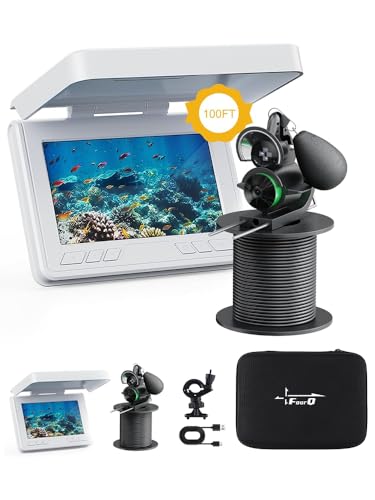
The FOURQ fishing camera provides a 220° wide-angle underwater feed with IR night vision and a 4.3″ LCD. Its 100ft cable and IP68 waterproof rating make it suitable for underwater monitoring or fish finding near the hull or in other water-adjacent areas. It’s best for anglers or skippers who want a dedicated underwater view alongside deck monitoring.
Best for: boater-fishers seeking underwater visibility to spot underwater contours or fish at night. Why selected: strong underwater imaging with long battery life and portability. Caution: primarily designed for fishing use; may not substitute for onboard security monitoring in all scenarios.
Buying Guide: Night Vision Solutions For Boats
What should I prioritize when selecting a night vision camera for a boat?
- Light sensitivity and color versus thermal: Color night vision provides detail in low light, while thermal offers heat-based detection in total darkness or fog.
- Field of view and distance: Wider angles help cover more water, but you may trade off some detail at long ranges.
- Power and mounting: Consider power supply, battery life (for portable units), and mounting options to fit your deck, cabin, or engine room.
- Integration: Ensure compatibility with existing displays or NVRs, especially for IP cameras versus analog cameras.
- Weather and water resistance: Look for IP ratings and waterproof sealing appropriate for marine use and exposure to spray.
Which camera type fits what boat type?
For small boats and yachts, a color night vision camera (like the YEOIZO) helps identify hazards with more detail at night. For engines and bilge areas, an IP camera (like the GC 200) can provide reliable situational awareness. If you frequently navigate in total darkness or fog, thermal cameras (like the FLIR E70354) deliver consistent detection of heat signatures, regardless of lighting.
How to plan camera placement?
Place cameras to cover main approaches to your vessel, access points, and potential blind spots. Consider at least one camera with a clear view of the bow and another monitoring the engine room or interior compartments. If you fish or anchor often, an underwater camera can supplement surface feeds.
Maintain and operate the system safely
Regularly test feeds, verify cable integrity, and ensure connectors are sealed against moisture. Keep displays protected from direct sun glare and ensure mounting hardware remains secure in rough seas.
FAQ
- What is the advantage of a color night vision camera on a boat? It provides color detail in low light, aiding quick identification of hazards and navigational aids.
- Do thermal cameras need frequent calibration? Thermal cameras typically require calibration for consistent performance under changing weather and ambient conditions, though many models include automatic adjustments.
- Is an IP camera better than an analog camera for boats? IP cameras offer easier network integration and scalability, while analog cameras can be simpler and cost-effective but may require converters for new displays.
- Can a single camera cover the entire deck? A wide-angle camera with a broad field of view helps, but using multiple cameras is common to cover bow, stern, and engine areas.
- What should I consider about water exposure? Look for IP ratings, waterproof enclosures, and secure mounting to withstand spray, rain, and wave impact.
- Do these cameras work in fog or rain? Thermal imaging performs well in obscured weather; color night vision and IP cameras can still provide useful feeds, but visibility may vary with weather.