Best Outboard Motor Gas Tank Options for Safe Refueling on Water
Choosing the right outboard motor gas tank depends on capacity, compatibility, and durability in harsh marine environments. This guide highlights five practical options, explaining who each is best for and why. Whether you need compact portability for small skiffs or larger capacity for extended trips, these tanks offer secure handling, clear fuel monitoring, and reliable transfer. The featured picks are suitable for various outboard engines and saltwater conditions, helping you avoid spills and evaporation while keeping refueling simple and safe.
| Product | Brand | Capacity | Best For | Notes |
|---|---|---|---|---|
| AloneGoer 3 Gallon | AloneGoer | 12L / 3 gal | Compact, portable setups | High-barrier multi-layer construction |
| VEVOR 3.17-Gallon | VEVOR | 12L / 3.17 gal | Everyday use on small boats | Long hose, easy transport |
| PeakPursuit 3 Gal | PeakPursuit | 3 gal | Under-seat storage friendly | Dual venting; universal hose |
| LIZHOUMIL 3 Gal | LIZHOUMIL | 3 gal | Clear fuel gauge, built-in filter | Ergonomic handle |
| Scepter 6 Gallon | Scepter | 6 gal | Higher capacity towing and longer trips | Underseat friendly; built-in gauge |
AloneGoer 3 Gallon Portable Gas Tank
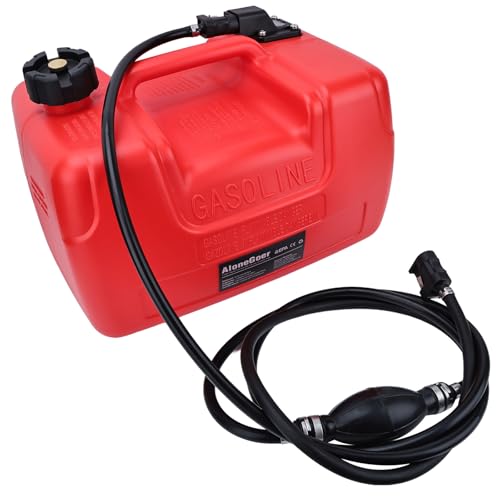
Best for boaters needing a compact, legally compliant spare or primary tank. The 12L/3-gallon tank uses a multi-layer barrier (HDPE-EVOH-HDPE) to reduce fuel permeation, helping minimize evaporation. It includes a marine fuel line connector compatible with Yamaha. UV stabilization and salt spray resistance improve durability in coastal conditions. Suitable for outboard motors, inflatable boats, or small motorboats.
Who it’s for: anglers and coastal boaters who value a compact, corrosion-resistant tank that travels easily and stores under seats or in lockers. Why selected: best balance of portability, barrier properties, and marine-ready construction. Caution: ensure proper venting when refueling to prevent pressure buildup.
VEVOR 3.17-Gallon Marine Outboard Tank

Best for regular, ready-to-use fuel transfer with a long hose. This 12L tank is built from high-density polyethylene and includes a 9.8 ft/3 m fuel hose, compatible with Yamaha connectors. It maintains shape under use and resists aging, corrosion, and impact. Note: avoid prolonged direct sunlight to limit aging and expansion.
Who it’s for: boaters who want a sturdy transfer tank for on-deck refueling or dockside topping off. Why selected: easy transport, robust build, and long hose for flexible use. Caution: extended sun exposure can accelerate aging.
PeakPursuit 3 Gal Outboard Tank

Best for lightweight, under-seat storage compatibility with a long 9.8 ft hose. It uses a dual venting design and a universal 0.3-inch hose, making refueling smoother while reducing spill risk. Built from impact-resistant HDPE to withstand marine use and everyday handling.
Who it’s for: boaters who prioritize venting flexibility and simple transport. Why selected: compact, versatile, and easy to store. Caution: verify hose compatibility with your specific fittings before use.
LIZHOUMIL Portable Gas Tank 3 Gal
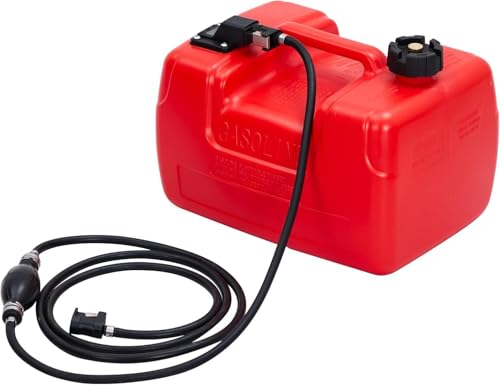
Best for users who want a clear fuel gauge and built-in filter. This 12L tank features an ergonomic I-shaped handle for easy carrying, a transparent viewing window to monitor fuel, and an integrated air inlet filter to help keep fuel clean. It focuses on convenient refueling and reliable engine performance.
Who it’s for: sailors seeking visibility and ease of use during fueling. Why selected: combines a practical gauge, filter, and portable design. Caution: ensure the fuel line length fits your boat’s layout to avoid kinks.
Scepter 6 Gallon Portable Marine Gas Can

Best for longer trips or boats with higher fuel needs. This 6-gallon tank includes a two-way vented cap, built-in fuel gauge, and a top handle. It is EPA & CARB compliant and designed for under-seat storage where space is limited. The vented cap helps prevent vapor buildup during rapid refueling.
Who it’s for: serious coastal or offshore users needing more fuel on longer outings. Why selected: proven design for stable storage and reliable gauge. Caution: ensure compatibility of the pickup and hose with your engine’s fittings for smooth transfer.
Buying Guide: Key Purchase Considerations
- Capacity and use case: Choose 3–6 gallon tanks for small to mid-sized boats; larger models suit extended trips.
- Material and barrier technology: HDPE with EVOH barriers reduces fuel permeation and evaporation, extending fuel freshness.
- Venting and safety: Look for dual venting or vented caps to prevent pressure buildup and spills during refueling.
- Compatibility: Check hose length and connector compatibility with your outboard motor and fittings.
- Gauge and visibility: Built-in gauges help monitor fuel levels at a glance, aiding planning and safety.
- Portability and storage: Consider handles, under-seat shape, and deck clearance when selecting a tank for your vessel.
Frequently Asked Questions
- What size marine fuel tank should I choose for a small outboard boat? A 3–4 gallon tank is typically suitable for small boats or as a spare.
- Are these tanks safe for saltwater use? Yes, many are designed with corrosion resistance for coastal and salt spray environments.
- Do tanks include hoses and connectors? Most options list hoses and connectors; verify compatibility with your engine.
- Can I store a tank under a boat seat? Some models are designed for under-seat storage; check dimensions and weight when full.
- How do I prevent fuel evaporation? Choose high-barrier, multi-layer tanks and avoid direct sunlight when possible.
- What is the benefit of a built-in fuel gauge? It helps you monitor fuel levels without additional tools, improving trip planning.