Best Oil Extractor for Boat: Top Picks for Clean, Fast Marine Oil Changes
Direct answer: these five oil extractors are among the best options for boat maintenance, offering spill-free draining, deep reach, and portable operation. Choose a model that matches your boat engine size, maintenance routine, and whether you prefer manual, pneumatic, or electric operation. The following selections suit DIY boaters, small-boat owners, and on-the-water service needs. The table below summarizes core details to compare at a glance.
| Product | Best For | Key Benefit | Power Type |
|---|---|---|---|
| Amarine Made Oil Pump | Small to mid-size engines | Portable, steady 0.8–1.0 L/min flow | Electric |
| EWK 6.5L Pneumatic/Manual | DIY garages, outdoor work | Dual mode suction, fast extraction | Pneumatic/Manual |
| FOUR UNCLES Oil Extractor | Versatile uses (oil, brake fluid) | 1.8 L/min, two modes | Pneumatic/Manual |
| FAITIO Oil Pump 12V | Engine oil, marine use | Copper motor, fast suction | Electric |
| EWK 6L Vacuum Oil Extractor | Deep reach drains | Long hoses, no-mess oil changes | Manual |
Amarine Made Oil Pump

Best for: boaters needing a compact electric oil extractor for engine, transmission, or generator maintenance. The 12V, 60W motor delivers a steady 0.8–1.0 L/min flow, making it suitable for routine oil changes with minimal noise and portable use aboard a small vessel.
Why selected: combines portability with a simple setup. The unit is easy to install—connect inlet/outlet hoses to the respective ports and clip to a vehicle battery. It is designed for quick, on-site oil transfer, which is ideal when a shore power source is available or the boat is on a trailer.
Limitations: not suitable for gasoline/petrol or flammable liquids. Properly verify hose orientation and power polarity before operation to avoid leaks or spills.
EWK 6.5L Pneumatic/Manual Oil Extractor
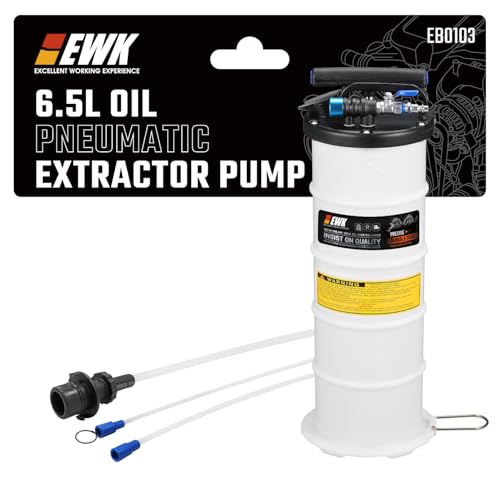
Best for: DIY mechanics who want a versatile extractor that works in the workshop or driveway. The two extraction modes—manual and pneumatic—provide flexibility when power sources are limited on a boat or in a garage, with suction up to 1.8 L/min.
Why selected: dual-mode operation gives shop-grade speed or field-ready capability. Deep suction tubes help reach through dipstick channels to remove almost all the oil, reducing the chance of leftovers that can affect engine performance.
Caution: pneumatic mode requires an air source; ensure hoses are sealed and directed correctly to prevent spills during transport and operation.
FOUR UNCLES Oil Extractor

Best for: boaters needing a flexible extractor that covers oil changes and brake fluid removal. Its 1.8 L/min extraction speed and two modes make it suitable for quick multi-vehicle maintenance on a budget-friendly setup.
Why selected: offers both pneumatic and manual operation, letting users switch methods without extra tools. The kit commonly includes multiple tubes to reach different depths in oil pans, aiding complete drainage.
Limitation: ensure you follow safety guidelines when using pneumatic power around fluids and ensure compatibility with the specific oil viscosities in marine engines.
FAITIO Oil Pump 12V 100W

Best for: boat owners who want a dedicated 12V electric oil extractor for engines, gear oil, and transmission fluid. The 100W motor supports relatively fast suction, and the copper motor construction is highlighted as efficient.
Why selected: designed for engine oil changes and marine use, with a note to warm up engines for faster extraction and to filter pumped oil if impurities are present. It suits regular maintenance cycles on light to mid-range marine engines.
Caution: not suitable for gasoline, diesel, water, or other non-oil fluids. Use a compatible filter when pumping oil with impurities to prolong the pump’s life.
EWK 6L Vacuum Oil Extractor

Best for: boaters seeking a no-electric, portable solution for deep oil draining. The 6L manual extractor covers extended drains without relying on electrical power, making it ideal for on-site marine service where power is unavailable.
Why selected: features a long hose and a robust base for stability, with a clear level gauge to monitor extraction progress. The lengthy hose and dipstick reach help avoid residual oil and simplify disposal.
Caution: manual pumping requires physical effort, and the 6L capacity means more frequent emptying on larger engines. Replacement hoses are available to maintain reach and performance.
Buying Guide
What should I consider when choosing an oil extractor for my boat?
- Engine size and oil type: Match the pump’s suction rate and tube reach to your boat’s engine oil pan size and oil viscosity.
- Power source: Decide between electric (12V), pneumatic, or manual. Electric is convenient for intermittent on-board use; pneumatic offers shop-grade speed; manual ensures independence from power.
- Reach and hoses: Look for long, flexible hoses and multiple tubes to reach dipsticks and pans in tight engine bays.
- Leak prevention: Choose units with sealed connections and robust seals to minimize oil spills during pumping and transport.
- Durability and materials: Brass and copper motors and corrosion-resistant components are preferable for marine environments.
- Maintenance requirements: Consider filter availability and ease of cleaning to prolong pump life and maintain oil clarity.
FAQ
- What is the typical flow rate to expect from these oil extractors?
Answer: Most models range from about 0.8 to 1.8 liters per minute, depending on power source and mode. - Can these extractors handle all engine fluids?
Answer: They are designed for engine oil and similar fluids; avoid gasoline, diesel, water, or fuel blends unless specified by the manufacturer. - Is it better to use manual or electric on a boat?
Answer: Electric is convenient for regular maintenance and limited space; manual is ideal when power is unavailable on deck or dockside. - Do these pumps require warm oil before pumping?
Answer: Some guides advise warming the oil to improve flow, but follow the specific product instructions for safe operating temperatures. - Will these work for brake fluid or other vehicle fluids?
Answer: Some models can extract brake fluid with the appropriate tubes; confirm with the product’s included tubes and usage notes. - What maintenance steps help extend life?
Answer: Use clean oil, replace worn hoses, check seals for leaks, and store the unit in a dry area away from salt spray when not in use.