Best Emergency Bilge Pump for Boat Buyers: Quick, Reliable Water Removal Options
If you need fast water evacuation on a boat or in nearby marine spaces, these emergency bilge pumps are designed to move water quickly, prevent flooding, and make maintenance easier. This guide highlights five strong options and explains who each is best for, so you can choose the right tool for your vessel and typical conditions.
Summary of selected products:
| Product | Type | Best For | Key Benefit |
|---|---|---|---|
| Better Boat Manual Bilge Pump | Manual | Small boats, kayaks, emergencies without power | 20 GPM with flexible 39″ hose |
| SEAFLO 4700 GPH Bilge Pump | 12V Submersible | High-volume needs, larger boats | Very high flow, long-term reliability |
| MAXZONE Automatic Submersible 1100 GPH | 12V Submersible with Float | Compact spaces, automatic operation | Built-in float for hands-free use |
| SEAFLO 2000 GPH Bilge Pump | 12V Submersible | Mid-range capacity, reliable daily use | Strong 2000 GPH with warranty |
| Rule 2000 GPH Bilge Pump | 12V Submersible | Quiet operation, durable build | Low-noise, reliable long-term use |
Better Boat Manual Bilge Pump For Quick, Portable Use
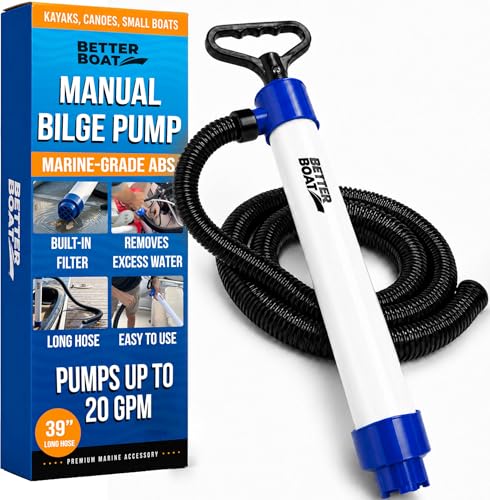
The Better Boat manual pump delivers 20 gallons per minute with a 39-inch discharge hose, directing water away from the boat to minimize splashing. It is ideal for small craft, kayaks, or emergency draws where power is unavailable. The built-in filter helps prevent clogs from leaves or debris while suction spacers keep the intake off the bottom to preserve prime.
Best for: small boats, kayaks, or emergency scenarios where a quick, portable solution is required without electricity. Better Boat is a solid pick when you need an affordable, hands-on option that works well in dirty water. Caution: manual pumping requires effort and may be slower during large volumes.
SEAFLO 4700 GPH Bilge Pump – High Capacity
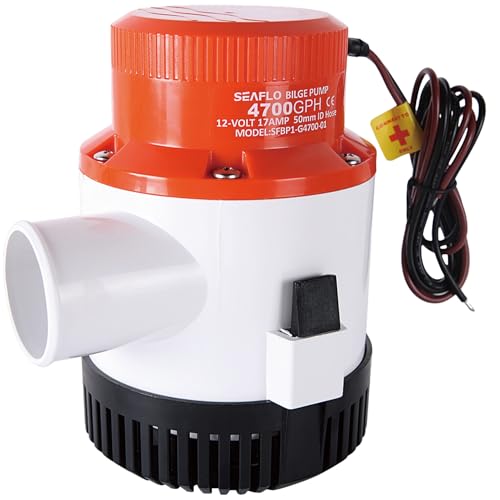
This 4700 GPH pump provides rapid water evacuation for larger boats or high-water conditions. It is 12V, has a 2″ outlet, and is backed by a four-year warranty. The combination of high flow and robust design makes it suitable for frequent use in demanding environments. It is best for: larger boats, frequent flooding risk, or applications requiring quick drainage.
Limitation: high power draw (approx. 17 A) means it’s most appropriate for vessels with reliable electrical capacity and a properly sized battery or power system.
MAXZONE Automatic Submersible Bilge Pump 1100 GPH

The MAXZONE model includes a built-in float switch, enabling automatic operation and reducing the need for manual intervention. At 1100 GPH, it’s compact enough for smaller bilges yet capable enough for routine water removal. Best for: boats with limited space, or users who want automatic control for stable, autonomous operation.
Caution: ensure correct wiring to avoid nuisance trips or improper activation during uneven mounting.
SEAFLO 2000 GPH Bilge Pump – Reliable Mid-Range Power

This SEAFLO 2000 GPH model balances power and efficiency. With a 1-1/8″ outlet and a four-year warranty, it’s designed for dependable daily use on mid-sized boats. It’s better for: steady bilge drainage without the high power draw of top-end units, and boats that need reliable performance over time.
Limitation: flow is lower than the 4700 GPH option, so it’s not ideal for rapid emergency flooding on large vessels.
Rule 2000 GPH Bilge Pump – Quiet, Durable

The Rule 2000 GPH pump emphasizes quiet operation and corrosion-resistant construction. With a 1-1/8″ discharge and robust marine-grade wiring, it is well-suited for boats where noise reduction and longevity are priorities. Best for: boaters who value silent bilge drainage during calm conditions or when living aboard. Limitation: not the highest-flow option, but dependable for routine use.
Buying Guide: How To Choose The Right Emergency Bilge Pump
- Flow rate needs: For large vessels or frequent flooding, prioritize higher GPH (gallons per hour) pumps. Smaller boats can rely on mid-range or manual options.
- Power availability: If you have reliable 12V power on board, submersible pumps provide automatic operation and high flow. In non-powered scenarios, a manual pump fills the gap.
- Automatic vs manual: Automatic pumps with float switches reduce hands-on work, but manual pumps give you control when power is limited or during power interruptions.
- Durability and materials: Look for corrosion-resistant housings and robust seals for saltwater environments. A longer warranty is a good indicator of confidence in endurance.
- Discharge considerations: Ensure the outlet size (1-1/8″ or 2″) and hose length meet your bilge geometry and drainage distance.
- Noise and vibration: If you boat near sleeping quarters or shared spaces, quieter models improve comfort during operation.
- Installation space: Consider the size and weight of the pump, especially in tight bilges or kayaks where space is at a premium.
Quick Decision Scenarios
- Choose this if you need fast water removal in a larger boat: SEAFLO 4700 GPH Bilge Pump.
- Choose this if you want an automatic, compact unit for a small craft: MAXZONE 1100 GPH with float switch.
- Choose this if you regularly operate without reliable power: Better Boat Manual Bilge Pump.
- Choose this if you want a balanced, dependable option with quiet operation: Rule 2000 GPH Bilge Pump.
FAQs
- What is the best bilge pump for a small kayak? A manual or small auto pump, like the Better Boat manual option or MAXZONE automatic model, is typically suitable for tight spaces and low power availability.
- Do I need a submersible pump with a float switch? A float switch provides automatic operation, reducing manual intervention, which is helpful for boats with continuous water ingress or when you’re away from the pump.
- Can I use any bilge pump for fresh and saltwater? Most marine pumps are designed for saltwater exposure, but verify corrosion resistance and material suitability for your water type.
- How should I size a bilge pump for my boat? Consider bilge volume, typical water intrusion rate, and available power. Higher GPH is better for frequent flooding; lower GPH may suffice for small craft or backup use.
- Is a higher wattage pump always better? Not always. Higher flow often means higher current draw, so ensure your electrical system can support it without draining batteries quickly.
- What maintenance is needed for bilge pumps? Regularly check for debris, clean intake strainers, and verify seals and hoses remain intact to prevent leaks.