Best Marine Fire Extinguishers for Boats and Watercraft in 2026
When choosing a marine fire extinguisher, select a model sized for boat fires (Class A, B, and C) and built to withstand harsh marine conditions. These five options are well-suited for different boat types and user needs, from small dinghies to larger vessels. The best pick depends on your boat size, typical fire risk, and whether you need a compact unit for storage or a slightly higher-rated option for higher-risk areas.
Summary table of selected products:
| Product | Best For | Key Advantage | Notes |
|---|---|---|---|
| Kidde Fire Extinguisher for Boats, Single-Use 5BC | Small to mid-size boats | All-metal construction, corrosion-resistant | Single-use; compact |
| Kidde Mariner 5 Fire Extinguisher for Boats, Single-Use 5BC | Raised risk areas on boats | Quick discharge, strong range | Lightweight, durable |
| First Alert Marine1 Fire Extinguisher, FE1A10GR | General marine safety | UL rated 1-A:10-B:C, all-metal | Rechargeable by pros after use |
| First Alert Fire Extinguisher | Personal Watercraft Fire Extinguisher, FE5R-PWCNA | PWC and smaller personal craft | UL 5-B:C, dry chemical | Ride-ready for PWC storage |
| Kidde Fire Extinguisher for Boats, Single-Use 10BC | Mid-to-larger boats | Better for mixed fires, 6-8 ft range | Single-use |
Kidde Fire Extinguisher for Boats, Single-Use 5BC
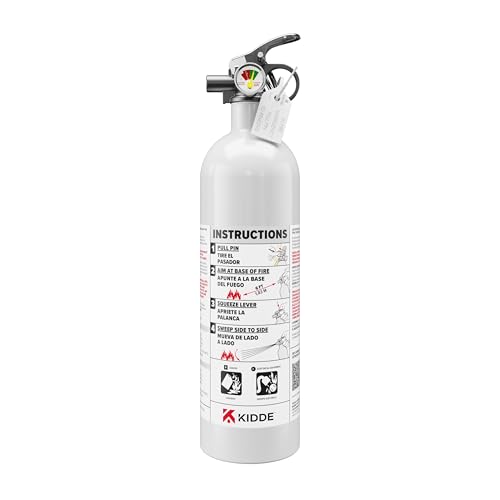
Best for small to mid-size boats with standard engine compartments and galley areas. This 5BC unit is engineered with all-metal construction and corrosion-resistant aluminum and stainless steel components, plus a durable stainless-steel lever and safety pin. Choose this if you want a compact, rugged extinguisher that covers Class B (flammable liquids) and Class C (electrical) fires. Caution: Limited to single-use; replacement required after discharge.
Kidde Mariner 5 Fire Extinguisher for Boats, Single-Use 5BC

Best for boats with higher fire risk due to equipment or galley appliances. This 5BC model emphasizes quick and powerful discharge, with a discharge time of 8-12 seconds and a 4-6 foot range at 100 PSI. Its aluminum and stainless steel construction adds corrosion resistance. Use this when you need faster response in tight spaces. Limitation: Single-use design means it must be replaced after discharge.
First Alert Marine1 Fire Extinguisher, UL Rated 1-A:10-B:C
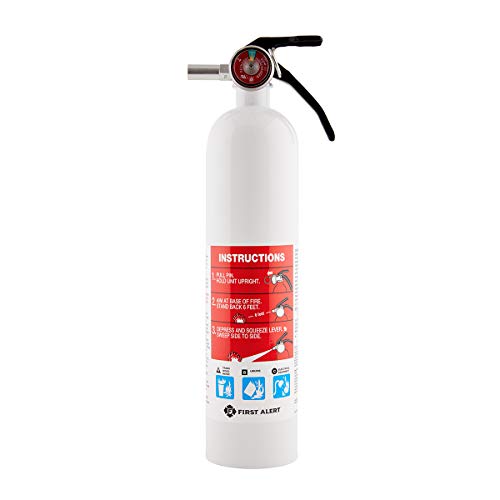
Best for wider safety coverage on larger boats or vessels storing in common living areas. The Marine1 is UL rated 1-A:10-B:C and features all-metal construction with a commercial-grade valve and trigger. It fights a variety of fires including wood, paper, plastics, and electrical equipment. Rechargeable by certified professionals after use. Consider this if you want a robust, reusability option along with broad fire coverage.
First Alert Fire Extinguisher | Personal Watercraft Fire Extinguisher, FE5R-PWCNA

Best for personal watercraft and small vessels. This unit meets U.S. Coast Guard Size I requirements and carries UL Classifications 5-B:C with a dry chemical agent to combat flammable liquids and electrical fires. It’s compact and ready for PWC storage. Limitation: Not ideal for large engine compartments or heavy-duty marine use where larger extinguishers are preferred.
Kidde Fire Extinguisher for Boats, Single-Use 10BC
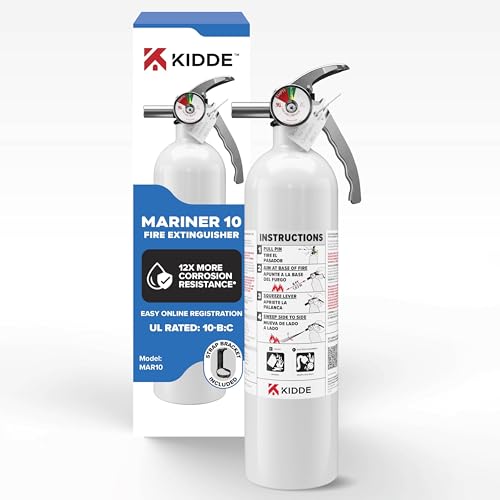
Best for mid-to-larger boats with diverse fire risks beyond basic galley fires. The 10BC rating broadens protection against typical marine fires and offers a longer reach with an 8- to 12-second discharge time and a 6-8 foot discharge range, at 100 PSI. A strong choice when a more capable extinguisher is desired without stepping up to a heavy unit. Limitation: Still a single-use model; replacement required after discharge.
Buying Guide: How To Choose The Right Marine Fire Extinguisher
What class rating do I need on a boat extinguisher?
Most small to mid-size boats benefit from 5BC or 10BC extinguishers. For larger vessels or higher risk areas (engine rooms, galleys), consider 10BC or higher with metal construction and corrosion resistance. Verify the unit covers Class A, B, and C fires where applicable.
Should I choose single-use or rechargeable extinguishers?
Single-use units are common on smaller boats and offer compact storage. Rechargeable extinguishers are preferred for larger boats or heavy-use settings, as they can be serviced after discharge by professionals, reducing ongoing replacement needs.
What about materials and build quality?
All-metal construction plus corrosion-resistant alloys is a strong indicator for marine use. Stainless-steel levers and robust valves withstand vibration, salt spray, and impacts common on water. Look for units with durable seals and corrosion-resistant components.
Where should I store marine extinguishers on a boat?
Store extinguishers in clearly marked, accessible locations near the galley, engine compartment, and living areas. Secure brackets or straps are recommended, especially for First Alert Marine1 products that come with mounting hardware.
How many extinguishers should a boat have?
Guidelines vary by vessel size, but a common recommendation is at least one main extinguisher in the cockpit or near the steering area and an additional extinguisher near the engine or galley. For larger boats, add at least one more unit near sleeping areas or primary living spaces.
FAQ
- What fire classes do these extinguishers address?
Most listed models handle Class A (ordinary combustibles), Class B (flammable liquids), and Class C (electrical) fires. Verify the rating on the specific unit before purchase.
- Are these extinguishers refillable?
Some models are rechargeable by certified professionals after use, while others are single-use. Check the product description for serviceability details.
- Do marine extinguishers require any special maintenance?
Regular inspection for pressure, seals, and accessibility is advised. Rechargeable units should be inspected and serviced per local maritime regulations after discharge.
- Where can I mount these extinguishers?
Mounts should be within easy reach of the cockpit, engine room, and galley. Use included brackets where provided to ensure secure placement during travel.
- Is a larger extinguisher always better?
Not always. A higher rating (like 10BC) provides broader protection but may be heavier and take more storage space. Balance fire risk with boat size and storage constraints.