Best Marine Hot Water Tank Solutions for Boats and Yachts
When choosing a marine hot water tank, the best option depends on your boat size, energy source, and daily hot water needs. This guide highlights five reliable 6- to 11-gallon marine water heaters that balance capacity, durability, and efficiency. Ideal buyers include small- to mid-sized boat owners seeking steady hot water, cruisers needing reliable on-demand heat, and anyone upgrading an old system. The following table summarizes key details to help compare at a glance.
| Product | Capacity | Power | Best For |
|---|---|---|---|
| Kuuma 6-Gallon Water Heater (Marine) | 6 gal | 120V / 1500W | Small boats needing quick hot water |
| Camco 11841 Kuuma Water Heater (11 gal) | 11 gal | 120V / 1500W | Mid-size boats with higher hot water demand |
| Whale S600 Water Heater | 6 gal | 120V | Rugged builds for boats requiring reliability |
| Kuuma 11811 6-Gallon Front Exchanger | 6 gal | 120V | Compact installations needing front-exchange design |
| Whale S1100 Water Heater | 11 gal | 120V | Higher capacity for larger cabins or frequent showers |
Kuuma 6 Gallon Water Heater for Marines and Boats

Best for: Small to midsize boats needing a compact, fast-heat hot water supply. This 6-gallon Kuuma unit runs on 120V and delivers up to 1500W for quick recovery between uses, making it suitable for showering and dishwashing aboard a modest vessel.
Why selected: It combines a front-mount design with a rear heat exchange, optimizing space on crowded engine rooms or cabins. The 6-gallon capacity matches typical daily needs without excessive bulk.
Caution: Installation space must accommodate a standard 13-15 inch width footprint, and 120V power should be sourced from a dedicated marine circuit to ensure consistent performance.
Camco 11841 Kuuma Water Heater (11 Gallon)

Best for: Boats with higher hot water draw, such as larger cabins or frequent entertaining aboard. The 11-gallon capacity provides longer intervals between reheat cycles, reducing the need for frequent heating between uses.
Why selected: The 120V, front heat exchange design supports efficient heat transfer while allowing flexible mounting options. It aligns well with vessels that need a reliable supply of hot water without oversized equipment.
Caution: Weight increases with 11 gallons of water; ensure secure mounting and ballast considerations are addressed during installation.
Whale S600 Water Heater (6 Gal, 120V)
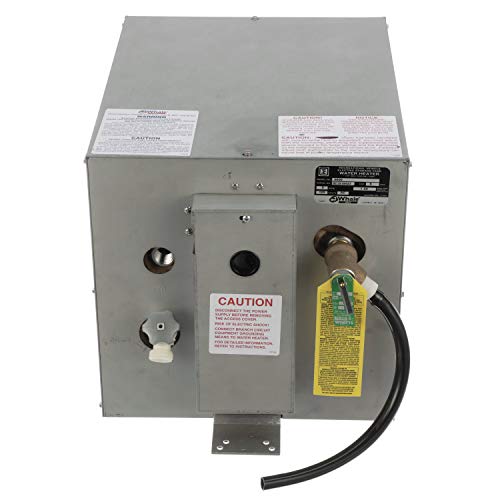
Best for: Boats needing a rugged, long-lasting option with dependable hot water supply on smaller engines or limited electrical systems. The 6-gallon size suits compact berths and single-occupant cruising.
Why selected: Whale’s unit emphasizes reliability and durable construction, offering strong value for routine marine hot water needs and stable performance over time.
Caution: Availability of power on a small vessel may constrain peak heating capability; consider pre-watching system energy usage to avoid dimming lights during heating cycles.
Kuuma 11811 6 Gallon Front Exchanger (Stainless)

Best for: Enthusiasts who want corrosion-resistant components for abrasive marine environments, with a compact footprint and straightforward front-rear mounting options.
Why selected: Stainless steel construction provides corrosion resistance, aligning with boats frequently exposed to saltwater. A 6-gallon capacity supports day-to-day hot water needs efficiently.
Caution: Stainless variants may carry a higher upfront cost; evaluate long-term maintenance versus initial investment when planning upgrades.
Kuuma Marine Water Heater (6 Gallon, Camco)

Best for: Small to mid-sized vessels where a dedicated 6-gallon electric heater fits within existing cabinetry or engine room footprints.
Why selected: This unit emphasizes a balanced combination of capacity and compact footprint, suitable for installations where space is at a premium yet hot water reliability remains essential.
Caution: Ensure electrical supply is compatible with 120V 60Hz circuits and that wiring can support continuous heating loads without overheating wiring paths.
Camco 11840 Water Heater with Front Heat Exchange (11 Gal)

Best for: Boats needing a robust 11-gallon solution with reliable front heat exchange, accommodating larger crew or frequent hot water use.
Why selected: The 11-gallon capacity paired with a front heat exchanger supports steady hot water production and simpler piping configurations on many marine layouts.
Caution: The 11-gallon configuration increases weight and space needs; verify fitment in the chosen installation area before purchase.
Whale S1100 Water Heater (11 Gal)

Best for: Larger boats or cabins with high hot water demands, such as multiple crew members or guests needing showers and dishwashing without frequent reheat cycles.
Why selected: The 11-gallon tank size delivers ample hot water reserve and a durable build designed for marine applications, making it a solid option for steady supply aboard bigger vessels.
Caution: Heavier and larger footprint than smaller units; ensure alignment with mounting supports and weight distribution on deck and hull sides.
Buying Guide: Key Considerations For Marine Hot Water Tanks
Size matters. Choose a capacity that matches your typical daily hot water needs, crew size, and shower frequency. Larger vessels benefit from 11-gallon tanks, while smaller boats can work efficiently with 6-gallon options.
Power and electrical load. Most marine water heaters run on 120V AC, with 1500W heating elements common in mid-range units. Confirm your boat’s electrical system can reliably supply the heater without overloading circuits.
Heat exchange design. Front or rear heat exchange can affect installation geometry and piping layouts. Consider space constraints and how the exchanger type interacts with existing hot water lines.
Material and corrosion resistance. Saltwater exposure requires corrosion-resistant materials such as stainless steel and robust seals. This extends life and reduces maintenance on rough seas.
Installation footprint. Measure mounting area, including width, height, and depth, to ensure the chosen model fits within the available space and leaves room for hoses and access panels.
Maintenance and accessibility. Look for models with accessible elements for periodic checks, easier replacements, and straightforward drainage procedures to minimize downtime.
Safety features. Verify electrical protection, thermal cutoffs, and insulation quality. Marine-rated units should comply with safety standards suitable for boat installations.
Warranty and service. While not a product fact, consider brands with accessible support and reasonable warranty terms to simplify future replacements or repairs on the water.
FAQ: Quick Answers For Buyers
- What size marine water heater should I choose?
– For small boats, 6 gallons is usually sufficient for daily needs. Larger cabins or higher usage may justify 11 gallons. - Do marine water heaters work with standard ship electrical systems?
– Most common marine heaters use 120V AC at about 1500W. Verify your circuit availability and wire gauge. - Is a front-exchanger model better than a rear-exchanger model?
– It depends on space and piping. Front-exchange designs offer flexible mounting in tighter spaces, while rear-exchange may simplify maintenance in some layouts. - Can I install a marine water heater myself?
– Basic installation is possible for those with electrical and plumbing experience. Always follow the manufacturer’s instructions and respect marine electrical standards. - Will a higher capacity tank save energy?
– Not directly. Higher capacity reduces the frequency of reheating but increases standby heat loss and weight. Choose capacity based on realistic hot water demand. - Are stainless steel heaters worth the extra cost?
– Yes, especially in saltwater environments where corrosion resistance improves longevity and reduces maintenance needs.