Best Marine Radio Remote Controls for Boats and Yachts
Looking for a reliable marine radio remote control to simplify cockpit commands? This guide highlights five top options, explaining who they’re best for and where they excel. The selections span universal remotes, wired controls, and IP-rated marine units so you can pair the right control with your receiver and boat setup. The goal is to help you pick a remote that mirrors your seating, safety, and entertainment needs while ensuring robust performance on the water.
Product Spotlight Table
| Product | Brand | Best For | Notes |
|---|---|---|---|
| Fusion MS-ARX70B ANT Wireless Remote | Fusion | Wireless control from multiple seating positions | Black model, ANT wireless |
| Fusion MS-ARX70W ANT Wireless Remote | Fusion | White, same wireless versatility | Weathered-friendly color option |
| Kenwood KCA-RC35MR Remote | Kenwood | Docked/console mounts for KMR receivers | Wired marine remote |
| Kenwood KCA-RC55MR | Kenwood | Marine receivers with LCD displays | Wired, dual-display-ready |
| KICKER 46KRC12 Commander | KICKER | Multiple zones with IP66 rating | Marine-grade remote system |
Note: The table lists five strong options; not all are identical in connectivity. Match the product to your head unit and seating layout for optimal control.
Fusion MS-ARX70B ANT Wireless Remote
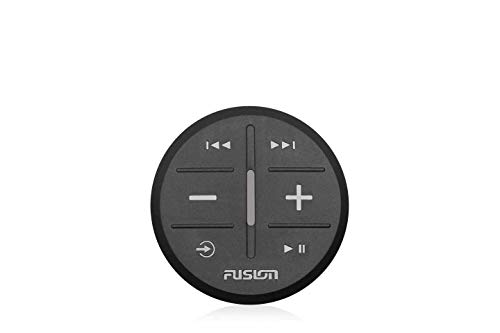
Overview: This wireless remote from Fusion provides ANT-based control for marine receivers, with a compact, boat-ready design. It’s best for sailors and boaters who want flexible placement without running new cables. The remote is positioned as a convenient interface for steering audio features from multiple seating zones.
Best for: Boat owners seeking wireless convenience across cockpits or bridge areas. The wireless capability reduces clutter and simplifies installation in larger boats or pontoons. It’s particularly suitable for users with Fusion head units that support ANT remotes.
Why selected: It pairs with Fusion ecosystems, offering straightforward control of media playback and volume without proximity constraints typical of older wired remotes. The wireless approach enhances deck layout flexibility.
Caution: Ensure your head unit supports ANT remotes and that the remote’s battery life meets your cruising expectations. Pairing setup may vary by model year.
Fusion MS-ARX70W ANT Wireless Remote

Overview: The white variant mirrors the black model with the same wireless capabilities, designed for Fusion-equipped boats. This option is best for riders who prefer a color-matched interior or a lighter installation aesthetic.
Best for: Users who want consistent wireless control with a color option that fits their boat’s cockpit design. It’s ideal for those with Fusion receivers in mid- to large-size boats.
Why selected: The product maintains the same functional benefits as the black version, offering flexible placement and easy integration with compatible Fusion gear.
Caution: As with other wireless remotes, battery management and compact key spacing can affect usability under rough sea conditions.
Kenwood KCA-RC35MR Remote

Overview: This wired Kenwood remote is designed for use with select KMR receivers, combining a compact form factor with straightforward wired control. It’s a practical choice for mounted consoles or near-chart tables where wired reliability matters.
Best for: Boat owners who prioritize a wired, low-latency control setup and have a compatible Kenwood head unit installed in the helm or cockpit console.
Why selected: It provides dedicated remote control for Kenwood ecosystems, ensuring compatibility and direct access to basic playback and volume commands.
Caution: It’s a wired solution, so the installation must account for wiring routes and reach between the helm and the remote location.
Kenwood KCA-RC55MR Remote
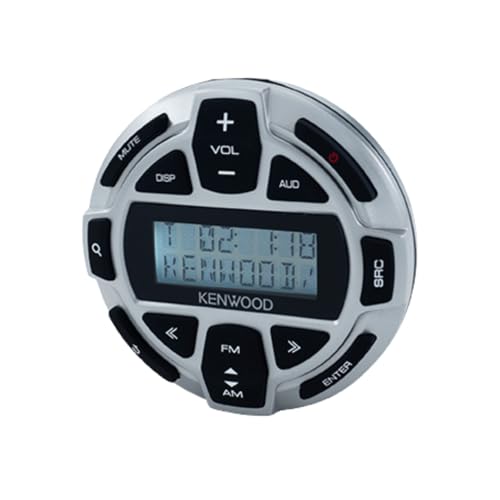
Overview: The KCA-RC55MR is a wired marine remote with LCD display features designed for compatibility with KMR receivers. It includes an anodized mounting kit for durable deck installation and provides two-line display feedback for status and track info.
Best for: Customers needing clear feedback, with a direct interface to medium- to full-feature Kenwood receivers, especially when space around the helm is limited.
Why selected: The LCD display supports readability in bright sunlight, aiding quick selections while underway.
Caution: Ensure your head unit supports this remote model; some older units may require firmware or model-specific interfaces.
Kicker 46KRC12 Commander

Overview: The Kicker 46KRC12 is a marine remote system designed to control multiple functions across KMC5 setups. It emphasizes a full-color LCD display and IP66-rated durability for exposure to water and spray.
Best for: Boats using KMC5 series head units who need robust, multi-zone control and a durable, water-resistant interface.
Why selected: The two and a half inch full-color LCD provides rich feedback for quick navigation through menus and functions, while the IP66 rating ensures resistance against moisture and salt spray.
Caution: When expanding to multiple remotes, verify compatibility with all KMC5 features and ensure proper mounting to prevent water intrusion.
Pyle Marine Bluetooth Stereo Remote

Overview: The Pyle PLMRB29B in-dash marine radio system includes a remote control feature with Bluetooth streaming and 12V operation. It offers a compact in-dash solution for controlling media while at sea and supports typical Bluetooth devices for playback integration.
Best for: Small-to-mid-sized boats that want a simple remote approach with in-dash control and Bluetooth audio streaming for guest entertainment.
Why selected: It combines Bluetooth streaming with a marine radio receiver, enabling hands-free calling and a straightforward remote interface for basic control tasks.
Caution: The remote distance is impacted by Bluetooth range; plan placement away from large metal structures or interference to maintain stable connection.
Buying Guide: Marine Radio Remote Controls
What type of remote should I choose?
Wireless remotes offer flexible placement and easier installation on larger boats. Wired remotes provide a simple, low-latency connection with fewer interference concerns. Choose wireless if your helm is sprawling; pick wired for minimal signal drop and reliability in rough seas.
What should I check before buying?
- Compatibility: Ensure the remote works with your head unit brand and model (Fusion, Kenwood, KICKER, Pyle, etc.).
- Connectivity: Wireless vs. wired; confirm ANT or IR signals, or direct cable connections.
- Durability: Look for IP ratings or marine-grade certifications to withstand spray, humidity, and salt.
- Display and feedback: LCD or multi-line displays help with quick navigation in bright conditions.
- Mounting options: Check mounting hardware availability and reach from the helm or seating areas.
What are common trade-offs?
Wireless remotes offer flexibility but may require battery upkeep and potential interference. Wired remotes deliver dependable performance but require precise routing through the vessel to reach the helm. If you operate a larger boat, consider multiple remotes or a system designed for multi-zone control.
How many remotes do I need?
For crewed boats and larger cabins, two or more remotes can simplify operations by placing controls at the bow, stern, and cockpit. Ensure the system supports multiple remotes if you plan expansion.
FAQ
- Do marine remotes work with any head unit? Not universally. Check compatibility with your specific head unit brand and model.
- Are wireless remotes water-resistant? Many are designed for marine use, but verify IP or ingress protection ratings for your model.
- Can I mix remote brands? Compatibility depends on the head unit; some ecosystems support only their own remotes.
- How far can wireless remotes reach? Range varies by model and environment; obstructions can shorten the distance.
- Do remotes require batteries? Wireless remotes typically use batteries; wired remotes do not require battery changes.
- Is a display important on a remote? A display helps with navigating menus and status, especially in bright daylight.