Best Gas Shocks for Boat Lids: Durable, Easy-Open Lift Supports
Answer: For boat lids, choose gas struts that offer reliable lift, smooth operation, and weight compatibility. This guide highlights five proven options that balance strength, size, and mounting needs for boats, RV lids, and other marine-grade lids. The best picks are suited for varying lid weights and lengths, from lightweight hatch covers to heavier boat compartments. Each product section explains who it’s best for, plus practical cautions. A quick buyer table follows to help compare specifications at a glance.
| Product | Approx. Length | Rated Lift | Best For |
|---|---|---|---|
| AUCLIDIS C16-18233 (Set of 2) | 10 in | 40 lb / 178 N | Smaller boat hatches and truck tool lids |
| PAMAGOO 20 in (2 Pack) | 20 in | 100–140 lb | Medium to heavy lids on RVs and boats |
| NIDAYE 10 in | 9.69 in (center-to-center) | 100 N / 22 lb | Light to medium lids, cabinets, boxes |
| ARANA C1608054 20 in | 20 in | 100 lb | Heavier lids like RV beds, truck boxes, boat lids |
| Vepagoo 15 in 2 Pack | 15 in | 300 N / 67 lb | Mid-size lids, slow-close and safe operation |
AUCLIDIS C16-18233 10 Inch Gas Struts (Set of 2)

Best for: Small to mid-size boat lids, truck tool boxes, and RV cabinet doors. The 10 inch, 40 lb/178 N capacity matches lighter lids or where space is tight. Interchange numbers are provided to aid compatibility checks with original OEM part numbers.
Why selected: This pair offers a reliable lift with a compact profile, making it suitable for boats with smaller hatches. The dual-pack helps ensure you have an identical replacement set for both sides, reducing misfits.
Caution: Confirm the original gas strut number on your lid before purchasing to avoid mismatches. The extended length is 9.84 inches when extended; ensure mounting clearances are sufficient.
PAMAGOO 20 Inch 100–140 Lb Gas Struts (2 Pack)

Best for: Heavier lids on RVs, boat compartments, and truck toolboxes that benefit from a longer stroke for easy lifting. The 20 inch length and 100–140 lb rating suit substantial lids without harsh force.
Why selected: The kit provides sturdy replacement for older, damaged struts, with broad application across heavy lids. Its longer extension helps clear taller compartments.
Caution: Do not manually compress before installation; verify the lid weight matches the 100–140 lb range to prevent over-stressing the hinge area.
NIDAYE 2 Pack Extended 10 Inch Gas Prop
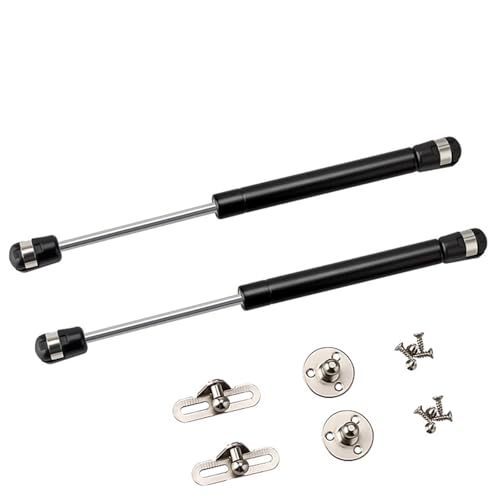
Best for: RV bed platforms, floor hatches, and outdoor cabinets where space is constrained but a modest lift is needed. The 9-11/16 inch extended length and 100 N capacity fit lighter lids well.
Why selected: This option emphasizes stability and reliability across wide temperatures and frequent cycling, suitable for marine environments with varying weather.
Limitation: It provides a maximum 22 lb lift per strut, so ensure the lid weight aligns with the combined two-strut setup for safe operation.
ARANA C1608054 20 Inch Gas Prop Spring Strut
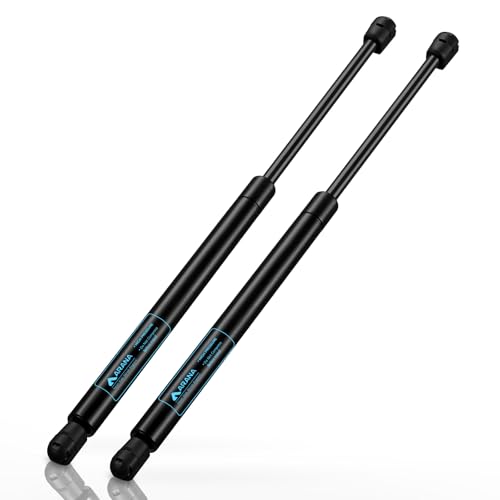
Best for: Heavy lids on boats, RV beds, and truck tonneau covers. With 100 lb capacity, these 20 inch struts work well for lids that require robust support over a wider span.
Why selected: ARANA’s 20 inch model provides a clear balance of reach and strength, accommodating longer lids often found on marine storage compartments.
Caution: Check the OEM interchange numbers to ensure compatibility; this model does not include mounting brackets, so plan for brackets if needed.
PAMAGOO 20 Inch 200 Lb Heavy Duty Lid Gas Struts (2 Pack)
Best for: Very heavy lids such as large RV beds, heavy-duty toolboxes, or big boat hatches that require higher lift and longer reach. The 200 lb max capacity suits lids in the upper range of marine use.
Why selected: This model is designed for heavy applications with a substantial lift force, reducing the need for multiple struts or aggressive manual lifting.
Caution: Ensure lid weights fit within the 185–215 lb range specified to avoid overextension stresses on the lid mounting points.
Buying Guide: Key Considerations For Gas Shocks On Boat Lids
- Weight rating: Match the lid weight (per strut) to the total lift provided by two struts. Under-sizing leads to inadequate support, over-size wastes space and can cause mounting issues.
- Stroke length: Choose extended length that provides full opening without hitting deck hardware. Longer strokes are useful for taller lids but require mounting clearance.
- Lifting direction and mounting: Confirm the hinge geometry and whether an L-type or standard mounting is needed. Rotatable ball sockets and brackets offer versatile installation angles.
- Material and environment: Marine and outdoor applications benefit from corrosion-resistant finishes and seals that withstand rain, salt, and temperature swings.
- OEM compatibility: Use interchangeable part numbers and OEM references when replacing existing struts to ensure proper fit and performance.
- Installation: Some sets include mounting hardware; others require separate brackets. Measure ball joint spacing to ensure compatibility with existing holes.
FAQ
- Q: How do I know if a gas strut is strong enough for my boat lid? A: Compare the lid’s weight to the combined lift rating of the installed struts, typically per strut, and ensure a safe margin.
- Q: Is a longer stroke always better for boat lids? A: Not always; longer strokes are beneficial for tall compartments but require enough clearance to avoid contact with hardware.
- Q: Do I need mounting brackets? A: Many lids require mounting brackets; check product specs and whether brackets are included in the package.
- Q: Can I mix different brands for left and right sides? A: Mixing is possible if specs (length, lift, and mounting) match, but for balanced performance it’s best to use identical models on both sides.
- Q: How many cycles can these struts handle? A: Most units are rated for tens of thousands of compression cycles; verify the cycle rating in the product details for marine use.
- Q: Do these gas struts slow down lid closing? A: Some models offer soft-close features; if that’s essential, choose a model described as soft-close or with damping.