Best Marine Boat Ladders for Safe, Easy Boarding From Shore to Boat
Choosing the right boat ladder depends on your vessel type, typical boarding needs, and the environment you’re in. This guide highlights five top marine ladders that perform well in saltwater and freshwater, with clear notes on who they’re best for. It’s ideal for boat owners, pontoon renters, and waterfront families who want safer, simpler on-board access.
| Product | Best For | Material | Load Capacity |
|---|---|---|---|
| Hoffen 4 Step Stainless Telescoping Ladder | Heavy-use pontoon boats | 316 Stainless Steel | 900 lbs |
| itayak 5 Step Rope Ladder | Compact, portable needs | UV-resistant Polyester Rope | 440 lbs |
| VEVOR 4 Step Telescoping Ladder | Space-saving decks | 304 Stainless Steel | 600 lbs |
| Mojiate 4-Step Aluminum Folding Ladder | Lightweight, removable | Aluminum | 500 lbs |
| marinexplore Stainless Steel Boat Ladder | Rear-entry boats | Stainless Steel | 500 lbs |
Hoffen 4 Step Telescoping Boat Ladder

Best for heavy-use pontoon boats and yachts, this ladder is built from marine-grade 316 stainless steel for harsh environments. It features extra-wide steps, two grab handrails, and non-slip pedals for secure boarding. The mirror-polished surface suits modern vessels and its 900 lb capacity supports most adult loads. A circle rope helps keep the ladder closed when not in use. This option is ideal for frequent water access and durable long-term use.
Who it’s best for: boat owners needing rugged, safe boarding on larger craft. Why selected: highest load capacity among the listed options, strong corrosion resistance, and a stable, wide-step design. Caution: extended exposure to saltwater requires routine cleaning to maintain the finish.
itayak 5 Step Rope Ladder

This foldable rope ladder emphasizes portability and easy storage, using UV-resistant polyester for durability in salt and fresh water. With a 440 lb maximum load, it’s suited for smaller boats, inflatable boats, and casual waterfront use. Steps are reinforced for stability, and the ladder folds compactly for transport and storage. A carrying case makes it convenient for travel or camping near the water.
Who it’s best for: boaters seeking a lightweight, portable boarding solution. Why selected: portability and simple storage note, with reliable step design. Caution: not ideal for very tall or heavy boarding needs due to lower load rating and potential sinking risk if not positioned correctly.
VEVOR 4 Step Telescoping Ladder

Constructed from 304 stainless steel, this ladder emphasizes corrosion resistance and a space-saving foldable design. It extends smoothly for use and retracts securely with an included cord, saving deck space on boats with limited stern access. Its 600 lb capacity makes it suitable for many adults and gear-heavy boarding scenarios. Best for: boats needing a balance of durability and deck space efficiency. Caution: like other stainless options, surface upkeep prevents pitting in aggressive environments.
Mojiate 4-Step Aluminum Folding Ladder

This ladder uses a lightweight aluminum frame with sturdy, non-slip plastic pedals. It folds for compact storage and is removable, allowing quick installation without permanent modification. It supports up to 500 lbs and weighs just 6.4 lbs, making it easy to handle. Best for: lighter boats, kayaks, or pontoon setups where portability matters. Caution: aluminum construction may be less robust than full stainless steel in extreme marine conditions over time.
marinexplore Stainless Steel Boat Ladder
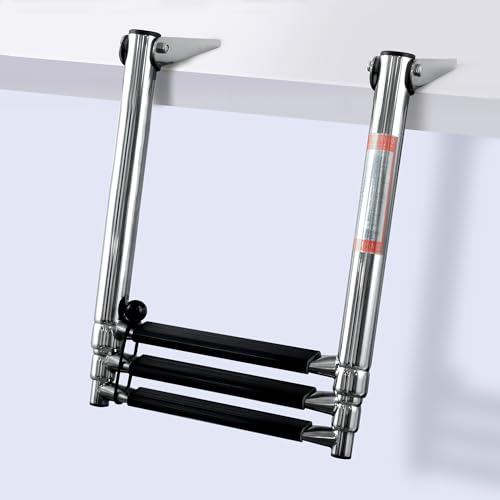
Premium marine-grade stainless steel with a telescoping design offers 10.6-inch step spacing for comfortable entry. It retracts compactly, using an elastic cord to secure it when not needed. It has a 500 lb load capacity, making it a solid choice for rear-entry boats, yachts, and fishing boats alike. Best for: boats requiring robust, easy-to-store access with generous step spacing. Caution: the telescoping mechanism may require occasional maintenance to ensure smooth operation.
Buying Guide: Key Considerations for Choosing a Boat Ladder
- Material matters. Stainless steel (316 or 304) resists corrosion in saltwater and typically lasts longer; aluminum offers lighter weight but may be less rigid over time. Rope ladders prioritize portability but usually carry lower load limits.
- Fixed vs. telescoping vs. rope. Telescoping ladders save deck space and are adjustable. Fixed ladders offer maximum stability; rope ladders are portable and easy to store but may require more effort to climb and have lower weight ratings.
- Step width and spacing. Wider, non-slip steps improve footing and reduce risk when wet. Consider the step spacing (closer spacing can reduce fatigue when boarding from the water).
- Load capacity and user profile. Match the ladder’s weight rating to the heaviest expected boarder, including gear. Higher capacity is useful for families or carrying gear.
- Mounting location and space. rear-entry or side-entry ladders require space and clearance; consider deck height, stern design, and whether a bungee or retention cord is provided to secure the ladder when stowed.
- Maintenance and care. Stainless steel requires occasional cleaning to prevent corrosion; aluminum may need protective coatings in aggressive environments. Rope ladders should be checked for wear and UV degradation.
FAQ
- What ladder material is best for saltwater? Marine-grade stainless steel (304 or 316) offers the best corrosion resistance in saltwater, followed by high-quality aluminum with protective coatings.
- Is a telescoping ladder harder to operate than a fixed ladder? Telescoping ladders save deck space and are versatile, but may require occasional maintenance to keep the extension and lock mechanisms smooth.
- Can a ladder support heavy loads? Yes, select a ladder with a load capacity that exceeds the heaviest expected person plus gear; many models in this list support 500–900 lbs.
- What is the advantage of a rope ladder? Rope ladders are highly portable, lightweight, and easy to store, ideal for compact boats or temporary boarding needs, but typically have lower stiffness and load capacity.
- How should I maintain a stainless steel ladder? Rinse with fresh water after exposure to salt, wipe dry, and apply a marine-grade polish occasionally to preserve the finish and prevent corrosion.
- Do these ladders require professional installation? Most are designed for simple installation with basic tools; check manufacturer instructions for mounting hardware and weight testing.