Best Marine Exhaust Insulation Wraps for Reliable Heat Management
If you’re looking to reduce heat under the hood and protect deck or engine compartments, marine exhaust insulation wraps are a practical choice. This guide highlights five strong options and explains who each is best for. Expect better heat containment, easier cut-and-fit installation, and improved reliability in engines and exhaust runs aboard boats or other marine applications.
| Product | Main Use | |
|---|---|---|
| LEDAUT 2″ x 50′ Titanium Exhaust Wrap | Fiberglass wrap with stainless ties | Performance engines needing high heat protection |
| SunplusTrade Titanium 2″ x 50′ | Volcanic rock fiber wrap with zip ties | High-temp marine exhausts up to 1400°F direct |
| NEZUIBAN 2″ x 16ft Exhaust Wrap | Fiberglass header wrap with 304 stainless ties | Compact runs and reinforced heat control |
| J-B Weld ExhaustWeld 2″ x 72″ Wrap | Fiberglass wrap impregnated with resin | Temporary repairs and wrap-based fixes |
| Peastorm Aluminum Muffler Wrap 12″ x 38″ | Aluminum-faced heat shield wrap | Rigid protection for mufflers and engine bays |
LEDAUT 2″ X 50′ Titanium Exhaust Heat Wrap Roll
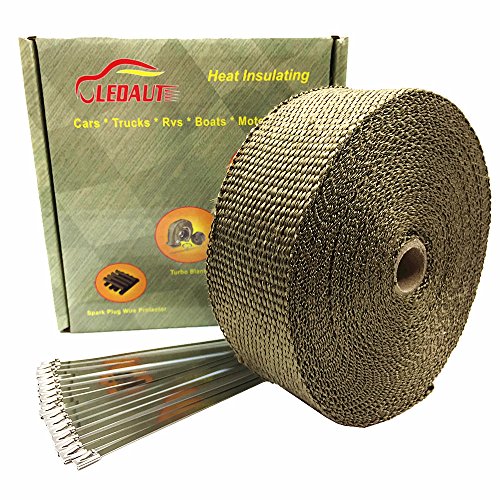
LEDAUT’s titanium wrap uses a 2-inch fiberglass-tape style roll with stainless steel locking ties. It is designed for tight exhaust runs and resists abrasion, oil spills, and vibration. The packaging notes soaking the wrap before installation to prevent fraying and recommends gloves to avoid itching. This option is best for marine engines where high heat containment and a durable tie system are priorities. Caution: fiberglass fibers can irritate skin; wear gloves and avoid direct skin contact during handling.
Best for: Marine engine exhaust lines that demand strong heat containment and a robust fastening system. Why selected: the included stainless ties and high-resistance construction support reliable, long-term use in challenging environments. Limitation: fiberglass handling requires care to prevent splinters and itching.
SunplusTrade 2″ x 50′ Titanium Exhaust Wrap

SunplusTrade offers a 2×50 foot roll designed for exhausts on motorcycles and cars, but it’s widely used in marine settings due to its heat containment and high-temperature compatibility. The kit includes six 12-inch stainless steel locking ties. It withstands direct heat up to 1400°F and radiant heat up to 2000°F. Best for: longer exhaust runs on vessels with demanding heat conditions. Why selected: strong heat resistance and reliable tie system. Caution: verify compatibility with marine exhaust components and ensure proper sealing to avoid water intrusion or moisture-related issues.
Best for: Users needing a long wrap with robust ties for high-heat scenarios. Limitation: intended for automotive exhausts; confirm marine compatibility before use.
NEZUIBAN 2″ x 16ft Exhaust Wrap

NEZUIBAN’s 2×16-foot wrap is built from fiberglass yarn and rated for 1400°F direct/2000°F radiant heat, with a 304 stainless steel locking tie system. Its shorter length makes it ideal for compact marine runs, such as small marine engines or tubing segments. Best for: small to mid-sized exhaust paths where precise fit is essential. Why selected: reliable high-temperature rating and included tie hardware. Limitation: shorter length may require multiple pieces for longer segments.
Best for: Shorter or segmented exhaust routes that demand tight wraps. Avoid this if you need very long continuous wraps without join points.
J-B Weld ExhaustWeld 2″ x 72″ Repair Wrap

ExhaustWeld from J-B Weld is a wrap impregnated with a resin for high-temperature repairs. It resists up to 1100°F when fully cured, with quick curing times under heat. Best for: on-spot repairs or wrap-based fixes where field expediency is needed. Why selected: combines wrap and repair capabilities for damaged sections. Limitation: temperature resistance tops at 1100°F after curing, so not ideal for the hottest direct exhaust areas.
Best for: quick field repairs or reinforcing damaged sections. Choose this if you want a repairable wrap option rather than a pure heat shield sleeve.
Peastorm Aluminum Muffler Wrap 12″ x 38″

Peastorm’s armor-wrapped aluminum heat shield provides a rigid, easy-to-cut solution. The 12″x38″ panel features a heavy-duty embossed aluminum face bonded to heat-resistant glass fiber, rated for up to 1000°F continuous use. Best for: static protection around mufflers and engine bays where rigid shielding is beneficial. Why selected: aluminum support adds rigidity and helps maintain spacing in tight marine spaces. Limitation: lower continuous temperature rating compared to some fiber wraps; ensure it matches your heat profile.
Best for: scenarios needing a durable, rigid shield rather than a flexible wrap. Avoid if you require ultra-high continuous heat protection beyond 1000°F.
Buying Guide: Key Considerations For Marine Exhaust Insulation Wraps
- Heat rating: Choose wraps with high direct and radiant heat tolerances appropriate for your exhaust system and engine load. Marine engines can experience intense bursts of heat, especially near exhaust manifolds and water jackets.
- Material and fit: Fiberglass wraps are flexible and wrap easily around curved pipes, while aluminum-faced shields provide rigid protection. Consider the space available and whether you need a contoured or flat layout.
- Fastening method: Stainless steel ties are common; ensure they withstand saltwater exposure and won’t corrode. Some kits include locking ties for a secure finish.
- Installation practicality: Some wraps require soaking before application to prevent shedding or fraying. Gloves are recommended to avoid skin irritation during handling.
- Marine compatibility: Verify that the wrap’s materials won’t degrade in a marine environment or interfere with boat components such as fuel lines, wiring, or vibration-mounts.
- Maintenance: Some wraps tolerate oil and water exposure better than others. Consider ease of cleaning and inspection during routine maintenance.
FAQ
- What is the primary benefit of exhaust wrap on marine engines?
It helps reduce heat transfer from the exhaust system, protecting nearby components and potentially improving overall engine efficiency. - Can I use automotive wraps on marine exhausts?
Yes, many wraps are designed for high-heat applications common to both automotive and marine settings, but always verify saltwater resistance and marine compatibility. - Are there safety considerations when installing heat wraps?
Wear gloves to prevent skin itching from fiberglass and ensure proper ventilation when cutting or handling; soak wraps as directed to minimize shedding. - Which wrap is best for a small engine bay with tight curves?
Shorter fiberglass wraps or aluminum shields like Peastorm 12″ x 38″ can be ideal due to easier shaping and placement in tight spaces. - Can I reuse or repair wraps if damaged?
Some products offer repair capabilities (like resin-impregnated wraps), but most wraps are replacement-based. Follow manufacturer guidance for durable repairs. - Do wraps affect exhaust flow or performance?
Properly wrapped exhausts can improve heat management, but improper installation may impact clearance or cause heat buildup if edges contact sensitive components. Follow installation instructions carefully.