Best Marine Two-Part Epoxy for Repairs and Projects
Answering the question “which marine two-part epoxy should I choose?” this guide highlights top marine epoxy pastes and syrups that perform well in dry, wet, and underwater environments. It helps boaters, DIYers, and professionals pick products for hull fixes, hardware repairs, and wet-area projects. The listed options cover fast-setting bonds, underwater cures, and high-strength formulas suitable for fiberglass, wood, metal, and composite materials.
The buyer is typically looking for: durable bonds in moisture, good gap-filling capability, ease of mixing, and clear guidance on where each epoxy shines. Below is a quick comparison to help decide which product fits your scenario. A compact buying table follows to summarize core specs for easy reference.
| Product | Best For | Notable Strength | |
|---|---|---|---|
| PC-11 Epoxy Adhesive Paste (1 lb, Two Cans) | Two-part paste | Wet or underwater repairs on fiberglass, concrete, metals | Wide material compatibility |
| J-B Weld MarineWeld Epoxy (2 oz) | Two-part epoxy | DIY marine and watercraft repairs | High strength, heat tolerance up to 550°F |
| PC-11 Epoxy Adhesive Paste (1 oz Syringe) | Two-part paste | Precision repairs on hard-to-reach areas | Same material versatility in a syringe form |
| Brampton Marine Epoxy | Two-part epoxy | Boat repairs in wet environments | Fast work life and underwater curing |
| J-B Weld KwikWeld | Two-part epoxy | Quick fixes and tight schedules | Fast set time with 1:1 syringe |
PC-Products PC-11 Epoxy Adhesive Paste, 1 lb Two Cans
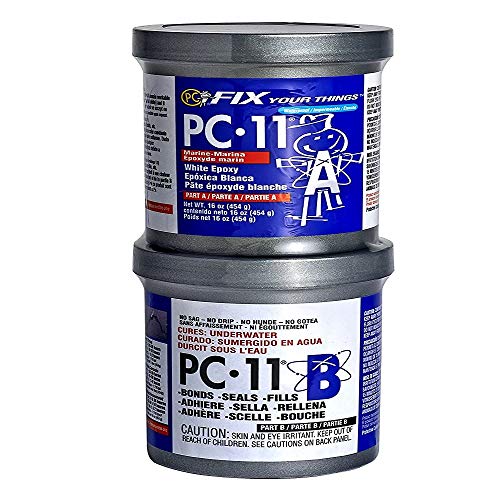
Formula highlights: Two-part marine epoxy adhesive paste bonds in dry, wet, and underwater environments. Suitable for fiberglass, concrete, many metals, glass, ceramic, and rubber. Indoor or outdoor use with a service range of -20 to +200 degrees F and operating range of 35 to 115 degrees F.
Best for: Complex repairs that may occur in wet or submerged conditions where material versatility matters. Why selected: It handles multiple substrates without needing a surface pretreatment, making it versatile for boat maintenance and dockside fixes.
Caution: The paste consistency may require thorough mixing to avoid uneven curing in larger gaps.
PC-Products PC-11 Epoxy Adhesive Paste, 1 oz Syringe

Formula highlights: A two-part marine epoxy in a precise 1 oz applicator syringe. Bonds a wide range of materials, including fiberglass, concrete, metals, glass, ceramic, and rubber. Suitable for indoor and outdoor use with a temperature range of 35 to 115 degrees F and a service temperature range of -20 to +200 degrees F.
Best for: Small, precision repairs where controlled application matters. Why selected: The syringe form reduces waste and enables careful placement in narrow gaps or joints.
Caution: The syringe form may require extra care to avoid clogging and ensure complete mixing for full cure.
Brampton Marine Epoxy, 5-Min Work Life

Formula highlights: 5-minute work life with full cure in about 1 hour at 72°F. Designed for underwater performance and wet environments. Bonds fiberglass, wood, most plastics, ceramics, and metal. Resists petroleum, solvents, impact, and weathering.
Best for: Quick, reliable boat repairs in wet settings where time matters. Why selected: A fast window helps minimize downtime for boating or dockside tasks.
Caution: Higher ambient temperatures can shorten working time, so plan accordingly.
J-B Weld KwikWeld Epoxy

Formula highlights: Fast-setting version with a 1:1 mix ratio in a syringe, enabling multiple uses. Sets in about 6 minutes and cures in 4-6 hours. Offers a tensile strength around 3127 PSI and is waterproof after curing, suitable for marine and household repairs.
Best for: Tasks needing rapid initial strength with a reliable cure timeline. Why selected: The syringe packaging supports precise application and reduced waste.
Caution: For larger gaps, supplement with additional epoxy or surface preparation to maximize adhesion.
J-B Weld WaterWeld Epoxy Putty

Formula highlights: A hand-mixable two-part epoxy putty that cures underwater. NSF-certified and safe for contact with potable water. Sets in about 25 minutes and cures in 1 hour. Provides approx. 1300 PSI lap shear strength and withstands continuous temperatures up to 300°F (149°C).
Best for: Plumbing, tanks, and underwater fixes where a putty is easier to mold than paste. Why selected: Underwater cure capability expands application beyond dry repairs.
Caution: Not ideal for structural bonding in large loads; use where dynamic stresses are limited.
WEST SYSTEM G/flex Epoxy

Formula highlights: G/flex epoxy is a toughened, versatile option for permanent waterproof bonding of fiberglass, ceramics, metals, plastics, and damp woods. It can bond damp surfaces and even be used underwater with specific techniques.
Best for: Projects involving moisture-prone substrates or wet environments where reliable adhesion is required. Why selected: Its wetsurface capability broadens usable situations beyond dry bonding.
Caution: For exceptionally dry substrates, surface preparation can improve final strength.
TotalBoat High Performance Epoxy Kit
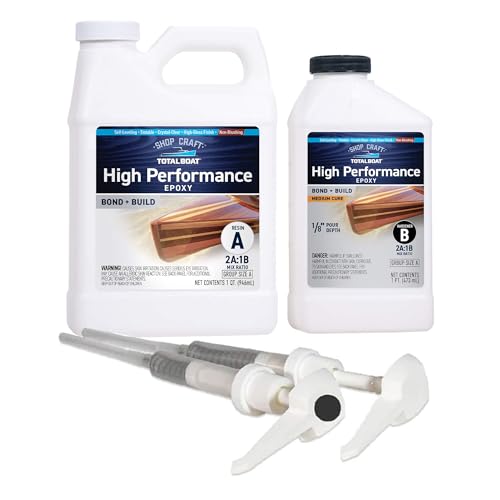
Formula highlights: Crystal clear marine grade resin and hardener, designed for woodworking, fiberglass, and boat building. Features a simple 2:1 resin-to-hardener mix, low odor and low VOCs, and a non-blushing system for faster finishing. Choose from slow, medium, or fast hardeners to control working time and cure speed.
Best for: Clear coating, laminating, and projects where a transparent, high-strength finish matters. Why selected: The non-blushing system reduces post-application washing and speeds up project completion.
Caution: For large, structural builds, confirm compatibility with your substrate and ensure adequate ventilation during use.
Buying Guide
What features matter most for marine epoxy?
Key factors include cure time, underwater capability, substrate compatibility, and temperature range. Fast-set formulas save time, while underwater or damp-surface epoxy adds versatility for boat maintenance and repairs.
How to choose by material?
If bonding fiberglass or wood, prioritize epoxies noted for marine wood and fiberglass adhesion. For metal or concrete, look for bonds explicitly listing metal or concrete compatibility and consider fillers for gap filling.
What about application and handling?
Some products come as pastes, others as syringes or putty. Pastes fill gaps well; syringes offer precise placement; putty sticks are handy for underwater or plumbing repairs. Follow mixing ratios exactly and work within the stated time window.
Environmental and safety considerations
Consider cure temperature, surface prep requirements, and ventilation. Non-blushing and low-VOC formulations are preferable for indoor projects. NSF-certified or food-contact safe options are relevant for potable water applications.
How to plan a repair project
- Identify substrate materials and exposure (wet, underwater, or dry).
- Choose a formula with appropriate hardening time and set strength.
- Ensure proper surface prep and mixing accuracy for full cure.
- Test fit and dry-run to prevent waste and ensure clear cure paths.
FAQ
- What epoxy cures underwater?
Several products listed support underwater curing; WaterWeld putty and Brampton epoxy are designed for wet or underwater conditions.
- Can these epoxies bond to metal, plastic, and fiberglass?
- Which epoxy dries fastest for urgent repairs?
- Are there food-safe epoxy options for potable water?
- Is a syringe better than paste for precision work?
Yes, many of the options advertise adhesion to fiberglass, metal, plastic, concrete, and ceramics. Check each product’s materials list for specifics.
Fast-set options like KwikWeld and Brampton’s epoxy offer shorter work times, but always verify the stated cure times for your ambient temperature.
WaterWeld is NSF-certified for potable water contact; always confirm current certifications on the product page.
Yes, syringes minimize waste and allow precise placement in tight areas, while pastes are better for larger gaps.