Best Boat Control Panel Switches for 12V Systems on Water and Land
Looking for the right boat control panel switches means prioritizing waterproofing, durability, and practical features like USB charging, voltmeters, and built-in breakers. This guide compiles five solid options that fit 12V to 24V electrical systems, are suitable for boats and other watercraft, and provide clear, reliable operation in marine environments.
| Product | Key Features | Best For |
|---|---|---|
| DaierTek 6 Gang Marine Rocker Switch Panel | Dual LED lights, USB/Cigarette Lighter Socket, voltmeter | Simple, all-in-one control for small vessels |
| xhtechnology 8 Gang Boat Rocker Switch Panel | Waterproof, dual USB and voltmeter, DIY sticker kit | Medium-sized boats needing multiple circuits |
| Nilight 90101E 5Gang Multi-Function Panel | Dual USB, digital voltmeter, 12V outlet, breakers included | Versatile control with built-in protection |
| FXC 5 Gang Marine Boat Rocker Switch Panel | Blue LED, voltmeter, dual USB, IP66 rating | Rugged offshore use with clear voltage readout |
| Haoguo 6 Gang Boat Electrical Panel | Breaker included, IP67 waterproof coating, LED indicators | Durable, high-water exposure environments |
DaierTek 6 Gang Marine Rocker Switch Panel

The DaierTek 6 Gang Marine Rocker Switch Panel combines six rocker switches with dual LED indicators and a built-in USB/Cigarette Lighter Socket, plus a voltmeter. The dual-LED design makes locating controls in low light easier, a practical feature for night-time boating. Best for smaller boats or RVs where space is limited and a compact, all-in-one panel is preferred. A potential caveat is that the data doesn’t specify IP rating; ensure installation away from direct water exposure in your craft.
xhtechnology 8 Gang Boat Rocker Switch Panel
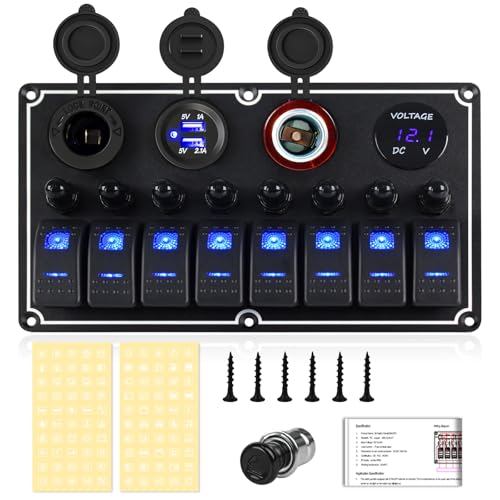
This 8-gang panel integrates dual USB ports, a voltmeter, and a cigarette lighter socket, with a waterproof design and DIY sticker options for labeling. It’s best for boats that require more control points without sacrificing visibility. The product emphasizes panel durability and a secure fit, thanks to buckle designs on each switch. A limitation is the absence of explicit IP66/IP67 rating in the description; verify water exposure conditions before choosing for open-water use.
Nilight 90101E 5Gang Multi-Function Panel

The Nilight 90101E offers five gangs with a built-in voltmeter, 12V outlet, dual USB charger, and a pre-wired design with protection features. It’s well suited for vehicles, boats, trailers, and RVs requiring voltage monitoring and reliable power distribution. The inclusion of a fuse and the robust pre-wired setup supports safer, simpler installation. Note that the demonstrates a generic rating of 12V-24V; confirm your system’s voltage range fits your boat’s electrical design.
FXC Waterproof Marine Boat Rocker Switch Panel 5 Gang
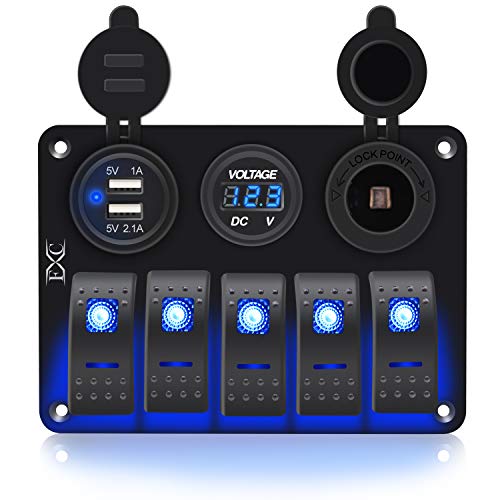
The FXC 5-gang panel features blue LED lighting, a voltmeter, and a dual USB charger, designed for 12V–24V vehicles with IP66 waterproof protection. It’s a strong option for boats that demand a rugged, water-resistant control surface with clear electrical status. A potential limitation is that the product relies on LED indicators for status; if lighting conditions are extreme, consider additional lighting or labeling to ensure readability.
Haoguo 6 Gang Boat Electrical Panel

The Haoguo 6-gang panel includes a breaker for added circuit protection and an IP67 waterproof coating. This makes it suitable for harsh marine environments where components face splashes and humidity. LED indicators help users quickly assess the operational state of each circuit. A caution is that the product description emphasizes components and coatings over exact electrical ratings for each switch; verify current ratings match your intended loads before installation.
Buying Guide: Key Considerations For Your Boat Panel Choice
- Voltage range and load capacity: Most marine panels support 12V to 24V systems. Confirm the maximum current per switch and total panel load to avoid wiring issues or component overheating.
- Waterproofing and durability: Look for IP ratings (IP66, IP67) and corrosion-resistant materials like marine-grade aluminum, ABS, and PC plastics. Panels mounted in exposed locations should handle spray and humidity.
- Built-in features: Voltmeters help monitor electrical health; USB charging and cigarette-lighter sockets add convenience. Consider whether you need PD Type-C, QC charging, or separate breakers for safety.
- Protection and safety: Circuit breakers or fuses protect loads from overloads. Short-circuit protection and reverse-polarity safeguards reduce risk of component damage.
- Wiring and installation: Pre-wired panels simplify install, but check included hardware, sticker labeling options, and whether the panel uses a simple main power feed or more complex wiring schemes.
- Visibility and labeling: LED indicators and glow-in-the-dark labels improve nighttime operation. DIY label kits can help tailor controls to your specific gear.
- Boat size and layout: Smaller boats benefit from compact 4–6 gang panels, while larger vessels may require 8–12 gang systems to organize multiple circuits efficiently.
Frequently Asked Questions
- What is the difference between IP66 and IP67 for marine panels?
IP66 indicates protection against powerful water jets, while IP67 means immersion up to 1 meter for a limited time. For boats, IP66/IP67 panels resist water exposure but always mount according to manufacturer guidance.
- Do I need a voltmeter on my panel?
A voltmeter helps monitor battery health and electrical load in real time, reducing the risk of unexpected power loss during trips.
- Are USB PD or QC charging worthwhile on a panel?
PD and QC charging provide faster charging for devices, which can be convenient on longer voyages, but verify port amperage supports your devices without overloading circuits.
- Can I install a panel myself, or should I hire a pro?
Many panels are designed for DIY installation with pre-wired harnesses. For complex wiring, high-current loads, or upgrading multiple circuits, consult a marine electrician.
- How do I label switches effectively?
Use provided label sheets or DIY stickers to clearly mark each circuit. Clear labeling reduces user error and speeds troubleshooting at sea.